For Families: How to Create a Minimalist Kids’ Room That Sparks Joy (and Stays Tidy)
Over 70 percent of American parents admit that clutter in their children’s playrooms leads to daily stress and less creative play. A messy room can make it tough for kids to focus and for families to feel relaxed at home. Discover practical minimalist strategies to create a tidy, joyful environment that supports your child’s imagination while making cleanup easy for everyone.
Table of Contents
- Step 1: Assess What Sparks Joy and Declutter Together
- Step 2: Design Zones for Play, Rest, and Creativity
- Step 3: Organize Essentials in Easy-to-Reach Storage
- Step 4: Style Simply With Joyful, Minimal Decor
- Step 5: Maintain and Tidy With Kid-Friendly Routines
Quick Summary
| Key Point | Explanation |
|---|---|
| 1. Involve Kids in Decluttering | Let children assess their toys to identify what brings them joy, fostering decision-making skills. |
| 2. Create Defined Activity Zones | Designate specific areas for play, creativity, and reading to support different activities and development. |
| 3. Use Simple, Accessible Storage | Implement easy-to-use storage solutions, allowing children to organize independently and maintain tidiness. |
| 4. Choose Minimal, Joyful Decor | Select meaningful, functional decor that reflects your child’s personality while avoiding visual clutter. |
| 5. Establish Kid-Friendly Cleaning Routines | Develop routines that make cleaning enjoyable, helping children cultivate lifelong organizational skills. |
Step 1: Assess What Sparks Joy and Declutter Together
Transforming your child’s room into a minimalist haven starts with a fun family activity: collaborative decluttering. This process goes beyond simply removing items it’s about creating a space that genuinely makes your little ones happy.
Involve your kids in the mindful joy assessment process. Sit together and ask them to pick up each toy or item, paying attention to how they feel. Does the item make them smile? Do they still play with it? Teach them to recognize what truly brings them happiness. Some items might hold sentimental value while others are just taking up unnecessary space.
Create three sorting piles: keep, donate, and maybe. The “maybe” pile gives kids space to process letting go without feeling pressured. When sorting kids’ toys, remember that fewer toys often mean more imaginative play. Encourage your children to think about which items spark genuine excitement and which have become background noise in their room.
Pro tip: Make decluttering a positive game by turning it into a playful sorting challenge with small rewards for thoughtful decisions.
Step 2: Design Zones for Play, Rest, and Creativity
Creating a minimalist kids’ room means thoughtfully designing distinct areas that support different activities and your child’s natural development. By establishing clear zones, you transform a chaotic space into a purposeful environment that nurtures imagination and relaxation.
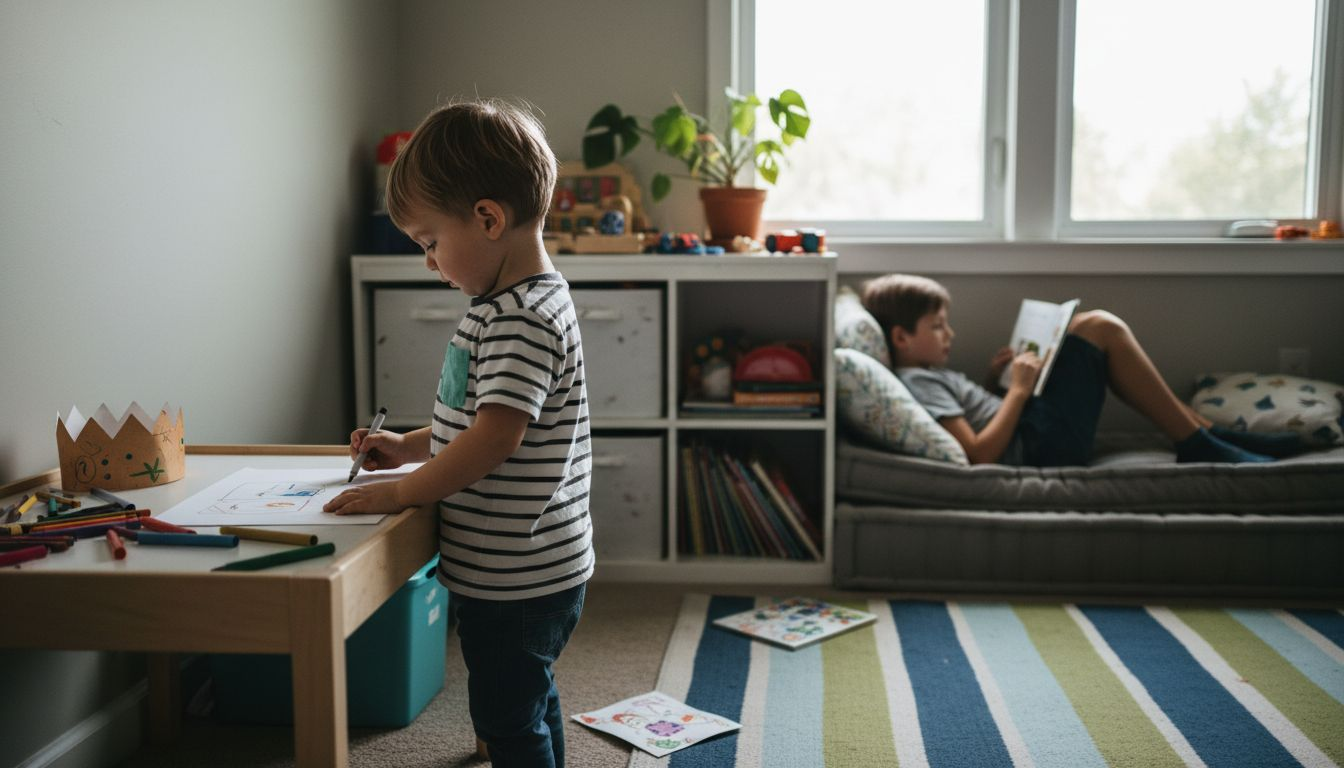
Start by designing intentional play spaces within the room. Designate a specific corner for active play with a soft rug or play mat. Another area can focus on quiet creativity with a small table for drawing or building. Include a cozy reading nook with comfortable cushions near a bookshelf, allowing your child to transition easily between energetic and calm activities.
Ensure each zone has clear boundaries but remains flexible. Use lightweight, movable furniture and storage solutions that can adapt as your child grows. Incorporate open-ended materials that encourage imaginative play and creativity. A simple bookshelf, a designated art supply drawer, and a compact play table can help maintain organization while supporting your child’s developmental needs.
The following table summarizes how each zone in a minimalist kids’ room serves your child’s growth:
| Zone | Main Purpose | Developmental Benefit |
|---|---|---|
| Play Area | Active, energetic play | Boosts imagination and movement |
| Creative Space | Drawing, building | Fosters creativity and focus |
| Reading Nook | Quiet time and reading | Encourages relaxation and literacy |
Pro tip: Use removable floor markers or colorful rugs to define different zones without permanent modifications, making the space easy to update as your child’s interests change.
Step 3: Organize Essentials in Easy-to-Reach Storage
Minimalist storage is all about creating intuitive systems that help your child become more independent while keeping their room tidy and functional. The goal is to design storage solutions that are simple, accessible, and easy for kids to maintain on their own.
Start by helping children organize their items with clear categorization. Use open shelves, transparent bins, and low drawers that allow your child to see and reach their belongings without assistance. Label each storage area with picture labels or simple words to help younger children understand where things belong. Consider color-coding storage containers or using matching bins to create a cohesive and visually appealing minimalist look.
Incorporate vertical storage solutions that maximize space without overwhelming the room. Wall-mounted shelves, hanging organizers, and slim storage units can keep essentials within reach while maintaining a clean visual aesthetic. Choose multipurpose furniture like storage ottomans or beds with built-in drawers that offer hidden storage without cluttering the space. Remember that the key is making organization feel natural and effortless for your child.
Here’s a quick comparison of common minimalist storage solutions and their benefits for kids’ rooms:
| Storage Solution | Key Benefit | Example Use Case |
|---|---|---|
| Open shelves | Encourages easy access | Books, daily toys |
| Transparent bins | Items visible, easy to sort | Art supplies, building blocks |
| Vertical organizers | Saves floor space | Hanging baskets, wall racks |
| Multipurpose furniture | Combines storage with seating | Storage ottomans, bed drawers |
Pro tip: Create a weekly five-minute tidying routine with your child to help them maintain their organized space and develop lifelong organizational skills.
Step 4: Style Simply With Joyful, Minimal Decor
Creating a minimalist kids’ room that sparks joy means carefully selecting decor that is both functional and emotionally uplifting. Your goal is to design a space that feels calm, inspiring, and uniquely tailored to your child’s personality without overwhelming their senses.
Apply minimalist design principles by choosing a neutral color palette with soft, muted tones that create a sense of tranquility. Select a few meaningful wall art pieces that reflect your child’s interests artfully instead of cluttering walls with multiple decorations. Choose multipurpose furniture pieces with clean lines and simple shapes that provide both aesthetic appeal and practical functionality. Natural materials like wood and soft textiles can add warmth and texture without creating visual chaos.
Prioritize quality over quantity when selecting decor elements. Each item should serve a purpose or bring genuine happiness to the space. Incorporate personal touches through carefully curated accessories like a special photograph, a handmade art piece, or a meaningful keepsake. These intentional design choices will help create a room that feels both minimalist and deeply personal.
Pro tip: Rotate decorative items seasonally to keep the space feeling fresh and prevent visual monotony without accumulating unnecessary clutter.
Step 5: Maintain and Tidy With Kid-Friendly Routines
Transforming a minimalist kids’ room into a consistently tidy space requires developing gentle, predictable routines that make cleaning feel like a natural part of daily life. The key is creating systems that feel effortless and even fun for your child.
Establish consistent tidying routines that become second nature. Create a simple morning checklist where making the bed and putting away pajamas are quick morning tasks. Design an after-play cleanup game where toys return to their designated spots within a short time frame. Use visual charts with stickers or simple checklists to help younger children track their progress and feel a sense of accomplishment.
Make routines age appropriate and celebrate small victories. For younger children, turn cleanup into a playful race or musical activity. Older kids can manage more complex organization tasks like weekly shelf straightening or monthly toy rotation. The goal is building self management skills while keeping the room peaceful and functional. Consistency matters more than perfection.
Pro tip: Create a fun reward system where consistent room maintenance earns small privileges or special time with parents, making tidiness feel like an exciting achievement.
Create a Joyful and Tidy Kids’ Room
Struggling to keep your child’s room both joyful and clutter-free is a common challenge for families seeking peace at home. This article highlights key goals like decluttering together, designing purposeful zones, and establishing easy-to-maintain storage that empower kids toward independence and calm. The idea of a “minimalist kids’ room that sparks joy” goes hand in hand with creating spaces that truly support your family’s lifestyle and well-being.
Discover how you can take control of clutter and build mindful habits by exploring our Decluttering Archives | Simple Neat Home and dive deeper into the principles of Minimalism | Simple Neat Home. At Simple Neat Home, we guide you through practical tips and easy routines designed specifically for busy families looking to reclaim calm from chaos. Start your journey today and transform your kids’ rooms into joyful, organized retreats your whole family will appreciate.
Frequently Asked Questions
How do I start the decluttering process in my child’s room?
Begin by involving your child in a fun sorting activity to identify items that spark joy. Create three piles: keep, donate, and maybe, allowing your child to process what they want to let go of without feeling pressured.
What are some effective ways to design play and creative zones in a kids’ room?
Establish distinct areas for play, creativity, and rest by using furniture and storage solutions that support these functions. Use soft rugs for play areas and a small table for creative activities to provide clear boundaries while encouraging flexibility.
How can I organize my child’s toys for easy access and maintenance?
Organize toys using open shelves and clear bins to make them easily visible and reachable for your child. Label each storage space with pictures or words, so your child knows where everything goes, making cleanup simple and intuitive.
What minimalist decor can I use to create a joyful atmosphere in my child’s room?
Select decor that is meaningful and uplifting while maintaining a calm aesthetic, such as a neutral color palette with a few impactful art pieces. Prioritize quality over quantity and incorporate personal touches to create a space that feels uniquely tailored to your child’s personality.
How can I encourage my child to maintain a tidy room?
Establish consistent tidying routines that feel fun and natural, such as a morning checklist or a cleanup game after playtime. Celebrate their small victories to build a sense of accomplishment and encourage independence in maintaining a tidy space.
What are some age-appropriate tasks for kids to help keep their room organized?
Assign age-appropriate organization tasks, like making their bed for younger children or managing toy rotation for older kids. Focus on simple, enjoyable activities that empower your child to feel involved and responsible for their space.
Recommended
- How to Declutter Your Kids Toys the Easy Way
- The Ultimate Guide to Decluttering Your Tween’s Bedroom
- How to Organise Your Child’s Keepsakes | Simple Neat Home
- How to Maintain an Organised Home With a Family
- Cozee Bay – 7 Essential Tips for Your Kitchen Organization Checklist


