The One-Touch Rule: Effortless Tidiness for Busy Families
Every American parent knows how hectic home life gets when clutter piles up on counters and floors. Research shows that over 60 percent of families feel stressed by household mess, affecting energy and mood. Tackling organization is about more than tidiness, it’s about creating calm for yourself and your kids. Discover how one fast, easy habit can cut chaos, simplify routines, and help you reclaim valuable time with your family.
Table of Contents
- Defining the One-Touch Rule at Home
- How the One-Touch Rule Prevents Clutter
- Key Steps for Family-Friendly Implementation
- Common Mistakes and How to Avoid Them
- Real-Life Applications by Room
- Long-Term Benefits for North American Parents
Key Takeaways
| Point | Details |
|---|---|
| One-Touch Rule | Handle items immediately to reduce clutter and stress within the home. |
| Family Involvement | Engage all family members to create a collaborative and effective organizational system. |
| Room-Specific Strategies | Tailor the One-Touch Rule to each room’s unique needs for better implementation and organization. |
| Long-Term Benefits | Consistent use of the One-Touch Rule improves mental clarity and family dynamics for a more enjoyable home life. |
Defining the One-Touch Rule at Home
The One-Touch Rule is a simple yet powerful home organization strategy designed to reduce clutter and simplify daily household management. At its core, this approach means handling an item only once before putting it in its designated place, preventing the buildup of scattered objects that create visual and mental chaos.
Psychologically, the One-Touch Rule addresses how clutter accumulates. Research on household psychology suggests that most people struggle with managing items immediately, leading to gradual mess and increased stress. By touching an item just once and immediately placing it where it belongs, families can dramatically reduce the time spent reorganizing and cleaning.
The rule works across multiple home scenarios. Whether it’s mail on the kitchen counter, shoes near the entrance, or clothes draped over furniture, the principle remains consistent: deal with the item instantly. This means when you pick up mail, sort and file it immediately. When you take off your shoes, place them directly in the closet. When you change clothes, hang them up or put them in the laundry right away.
Pro tip: Create designated drop zones in key areas of your home to make the One-Touch Rule easier to implement, like a mail sorter near the entrance or hooks for coats and bags.
How the One-Touch Rule Prevents Clutter
The One-Touch Rule serves as a powerful strategy for preventing household clutter by transforming how we interact with our everyday items. Consumer behavior research suggests that this approach encourages more conscious decision-making about possessions, ultimately reducing unnecessary accumulation of objects.
Psychologically, the method addresses the root causes of clutter. When people delay dealing with items, they create multiple touch points that increase disorder. By handling something only once and immediately placing it in its designated location, families can short-circuit the procrastination cycle that leads to messy spaces. Psychological studies on clutter demonstrate that this immediate action reduces stress and prevents the gradual buildup of disorganization.
The prevention mechanism works through immediate decision-making. Instead of setting down mail and thinking “I’ll deal with this later” or dropping clothes on a chair, the One-Touch Rule demands instant action. This means sorting mail directly into files or recycling, hanging clothes immediately, and putting tools back in their specific storage spaces right after use. By eliminating the intermediate steps where items can languish and multiply, families create a more streamlined and organized living environment.
Pro tip: Create a 60-second rule for yourself: if an item can be put away in less than a minute, do it immediately to prevent potential clutter accumulation.
Key Steps for Family-Friendly Implementation
Implementing the One-Touch Rule requires a collaborative approach that involves every family member. Family engagement principles emphasize the importance of shared responsibility and clear communication when introducing new household strategies. This means creating a system that works for everyone, not just imposing rules from the top down.
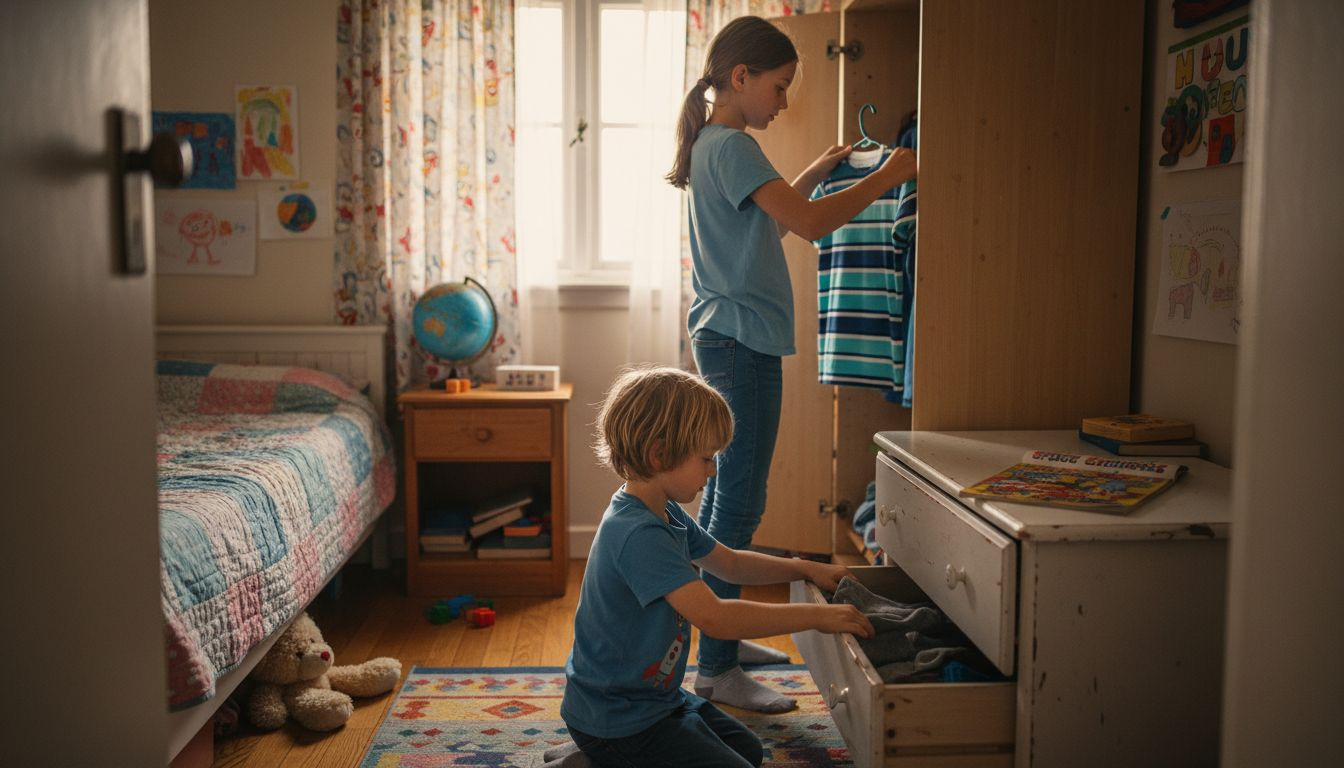
Age-appropriate implementation is crucial for success. For younger children, the rule can be simplified into fun, game-like challenges. Teenagers might need more nuanced explanations about how the One-Touch Rule can reduce daily stress and create more free time. Family systems research highlights that positive reinforcement and consistent modeling are key to helping family members adopt new organizational habits.
To make the One-Touch Rule work, families should create designated spaces for common items and establish clear expectations. This might mean installing hooks for backpacks near the entrance, creating a mail sorting station in the kitchen, or setting up specific drawers for each family member’s personal items. The goal is to make putting things away as easy and convenient as possible, reducing the mental friction that leads to procrastination and clutter.
Pro tip: Create a simple visual tracking system, like a sticker chart or digital checklist, to help younger family members track their One-Touch Rule progress and build positive habits.
Common Mistakes and How to Avoid Them
One of the most significant challenges in implementing the One-Touch Rule is overcoming deeply ingrained habits of procrastination and disorganization. Research on clutter management reveals that many people struggle with letting go of items and developing consistent organizational strategies. The first step is recognizing these patterns and consciously working to break them.
Emotional attachment to possessions can be a major roadblock. People often keep items out of sentiment, fear of losing memories, or the belief that they might need something “someday.” Psychological studies on clutter demonstrate that this emotional hesitation directly contributes to household disorganization. To overcome this, families need to develop a more intentional approach to managing their belongings, focusing on functionality and current value rather than potential future use.
Another common mistake is creating overly complicated organizational systems. The One-Touch Rule works best when it’s simple and straightforward. Families often fail by designing complex sorting methods or buying numerous storage containers that ultimately become another source of clutter. Instead, focus on creating minimal, easy-to-maintain spaces with clear, simple designated areas for frequently used items. This means fewer storage solutions, not more, and making it incredibly easy to put things away immediately.
Here’s a comparison of common pitfalls versus best practices for the One-Touch Rule:
| Common Mistake | Impact on Home | Best Practice |
|---|---|---|
| Delaying item organization | Leads to clutter | Handle and put away items immediately |
| Emotional attachment to objects | Blocks decluttering | Prioritize function over sentiment |
| Overcomplicated systems | Causes confusion | Keep organization simple and clear |
| Excess storage containers | Adds to mess | Use minimal, essential storage only |
Pro tip: Do a monthly “reality check” where you critically evaluate items that haven’t been used in the past 90 days, helping you overcome emotional attachments and reduce unnecessary possessions.
Real-Life Applications by Room
Every room in your home presents unique challenges for implementing the One-Touch Rule. Cleaning organization guidelines suggest tailoring the approach to each space’s specific needs and daily usage patterns. By developing room-specific strategies, families can transform cluttered areas into streamlined, efficient spaces.
In the kitchen, the One-Touch Rule becomes particularly powerful. Immediately after cooking, return ingredients to their designated spots, wash dishes right away, and wipe down surfaces before moving to the next task. The goal is to prevent small messes from accumulating into overwhelming cleanup sessions. Evidence-based design principles emphasize creating clear pathways and maintaining organized surfaces to improve overall room functionality and reduce stress.
Bedrooms and home offices require slightly different approaches. In bedrooms, handle clothing immediately: hang clean items, place dirty laundry directly in hampers, and put away accessories the moment you take them off. For home offices, establish a strict system where papers, electronics, and work materials are returned to specific storage locations immediately after use. This prevents desk clutter and helps maintain a productive workspace that supports mental clarity and focus.
Here’s how the One-Touch Rule applies in different rooms:
| Room | Primary Challenge | One-Touch Solution |
|---|---|---|
| Kitchen | Post-meal mess accumulation | Clean and store items at once |
| Bedroom | Piled clothes and accessories | Hang or store immediately |
| Home Office | Desk and paper clutter | File or store after each use |
| Entryway | Scattered bags and shoes | Assign dedicated drop spots |
Pro tip: Create a “launch pad” near your home’s main entrance where each family member has a designated spot for keys, bags, and daily essentials to streamline the One-Touch Rule implementation.
Long-Term Benefits for North American Parents
The One-Touch Rule offers far more than just a clean home for busy North American families. Family well-being research demonstrates that consistent organizational habits can dramatically transform family dynamics, reducing stress and creating more meaningful interactions between parents and children. By establishing predictable routines, parents can reclaim mental energy typically spent managing household chaos.
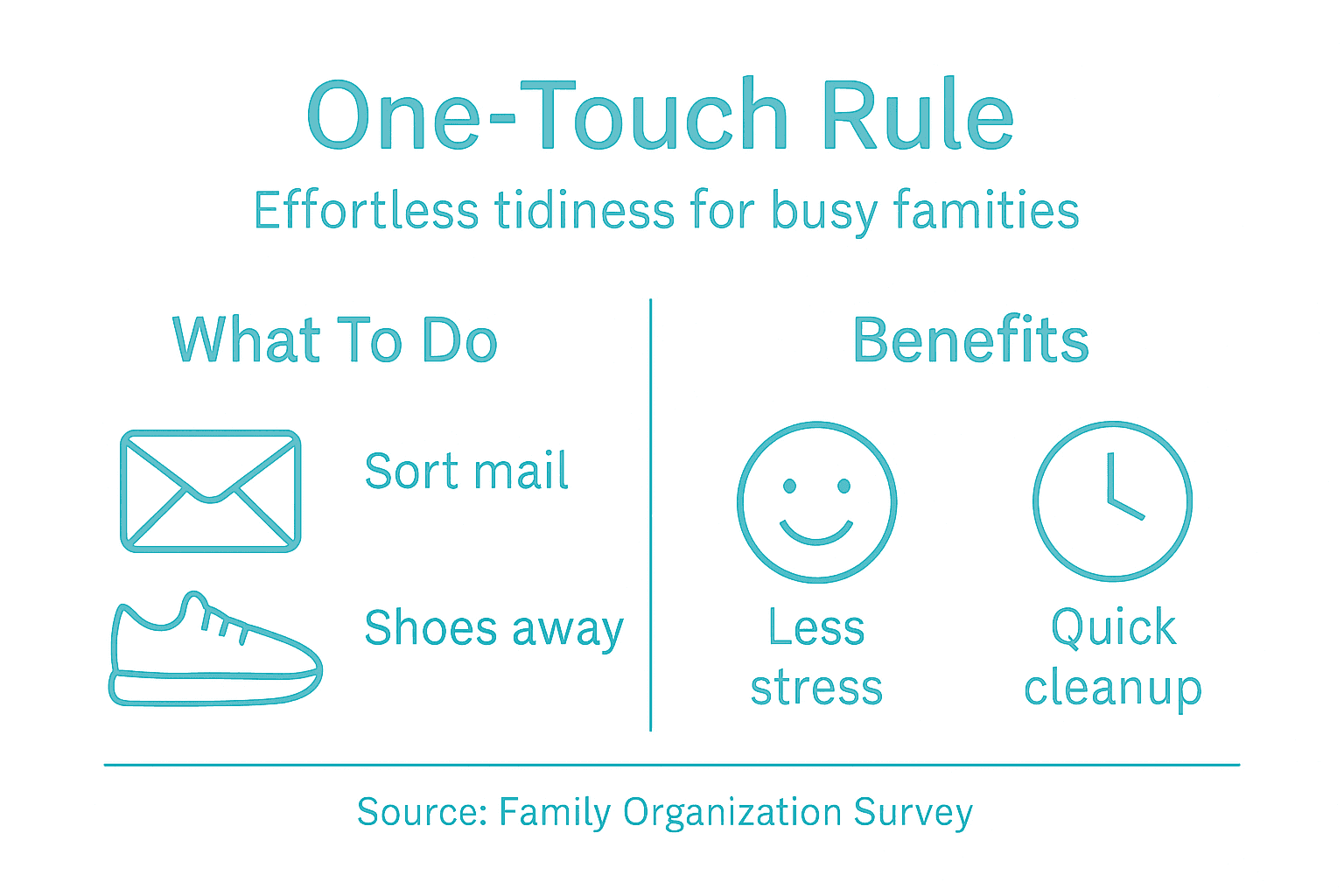
Psychologically, this approach provides profound mental health benefits. Parents who implement the One-Touch Rule experience reduced daily stress, improved time management, and a greater sense of control over their living environment. Family routine studies indicate that children also benefit from these structured approaches, developing better organizational skills and experiencing a more stable home environment. The ripple effect extends beyond immediate tidiness, helping families create more intentional, connected living spaces.
For working parents juggling multiple responsibilities, the One-Touch Rule becomes a strategic life management tool. It minimizes decision fatigue by eliminating repeated choices about where to put things, streamlines household maintenance, and creates more opportunities for quality family time. Instead of spending weekends doing massive cleaning sessions, families can enjoy more leisure activities and meaningful connections, transforming household management from a burden into a smooth, almost invisible process.
Pro tip: Schedule a monthly family “reset” where everyone spends 15 minutes together tidying up, turning organizational habits into a collaborative, positive family ritual.
Take Control of Clutter with the One-Touch Rule Today
Struggling with household clutter and feeling overwhelmed by managing daily chaos is a common challenge for busy families. The One-Touch Rule offers a simple yet effective way to handle items once and put them away immediately to prevent clutter buildup and reduce stress. If your goal is an effortlessly tidy home where everyone shares responsibility, this strategy can transform your daily routine.
Discover practical tips and inspiration to implement this method successfully by exploring our Organization Archives | Simple Neat Home and strengthen your decluttering habits with insights from our Decluttering Archives | Simple Neat Home. Start reclaiming calm from chaos now.
Frequently Asked Questions
What is the One-Touch Rule?
The One-Touch Rule is a home organization strategy that encourages individuals to handle items only once before putting them in their designated places, thereby reducing clutter and simplifying household management.
How can the One-Touch Rule help reduce household clutter?
By implementing the One-Touch Rule, families handle items immediately instead of delaying organization. This prevents multiple touch points that lead to disorder and promotes conscious decision-making about possessions.
What are some easy ways to implement the One-Touch Rule in a busy household?
To effectively implement the One-Touch Rule, create designated spaces for common items, establish clear expectations, and simplify organizational systems. Use visual tracking methods and make putting things away convenient for all family members.
How does the One-Touch Rule benefit mental health for busy parents?
The One-Touch Rule reduces daily stress and improves time management by streamlining household maintenance. It creates a sense of control over the living environment, allowing families to spend more quality time together instead of engaging in lengthy cleaning sessions.
Recommended
- How to Maintain an Organised Home With a Family
- 7 Essential Cleaning Hacks for Busy Homes | Simple Neat Home
- One-Pot Meals That Minimize Cleanup (Busy Parents, This is for You!) | Simple Neat Home
- Kitchen Hacks that Cut Cleanup Time in Half | Simple Neat Home
- Top 10 Kitchen Organization Hacks


