Complete Guide to Revive Dull Wood Furniture
Most people think reviving old wood furniture means hours of sanding and messy chemicals, but that’s not always true. Studies reveal that regular cleaning and minor repairs can restore up to 80 percent of a piece’s original beauty without full refinishing. If you want to bring new life to a worn-out chair or table but dread the hassle, simpler methods can freshen its look and protect its history. Learn practical ways to renew your furniture while keeping its unique character intact.
Table of Contents
- Defining Furniture Revival Without Refinishing
- Common Causes of Dull Wood Finishes
- Effective Cleaning and Conditioning Methods
- Scratch and Blemish Repair Techniques
- Safe Alternatives to Refinishing Furniture
- Mistakes to Avoid When Reviving Wood
Key Takeaways
| Point | Details |
|---|---|
| Furniture Revival Techniques | Regular maintenance, surface cleaning, and minor repairs can restore wood furniture without full refinishing. |
| Common Causes of Dull Finishes | Issues like moisture, dust, and improper cleaning can dull wood finishes; proactive maintenance helps prevent these problems. |
| Effective Cleaning Methods | Use gentle, wood-specific cleaning solutions and microfiber cloths to maintain the natural beauty of wood surfaces. |
| Avoiding Mistakes | Avoid over-sanding and using harsh chemicals; take time to understand the needs of different wood types to ensure successful restoration. |
Defining Furniture Revival Without Refinishing
When your wood furniture starts looking tired and worn, the first thought might be to completely refinish it. But what if I told you there’s a smarter, easier way? Furniture revival doesn’t always mean stripping everything down and starting over.
According to Fine Woodworking, proper maintenance and minor touch-ups can often restore wood furniture without the extensive process of complete refinishing. This approach saves you time, money, and preserves the original character of your cherished pieces.
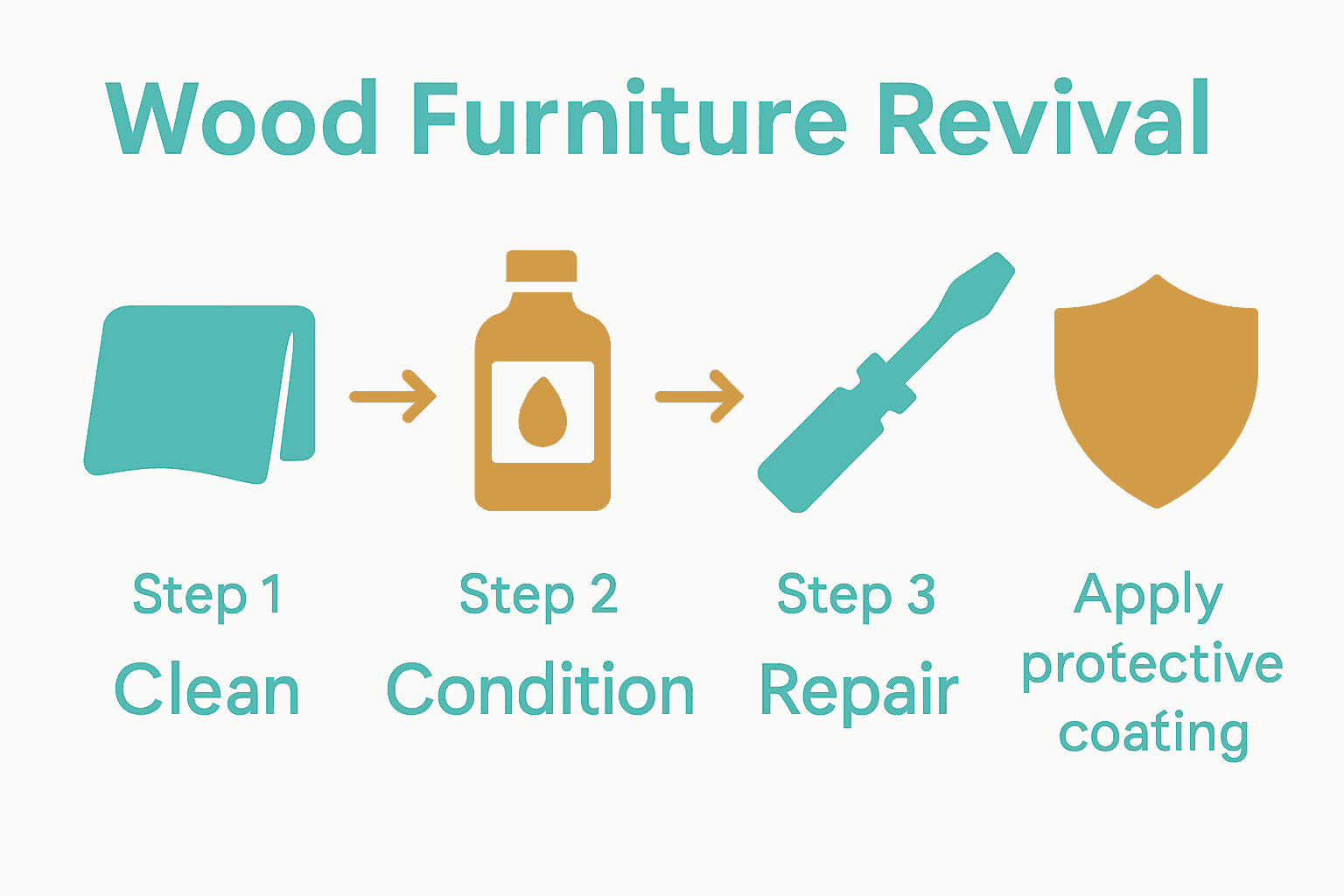
Here are some key strategies for furniture revival without full refinishing:
- Surface Cleaning: Remove years of grime and buildup with gentle, wood-specific cleaners
- Conditioning: Apply nourishing wood oils to restore moisture and sheen
- Minor Repairs: Address small scratches and dings without major reconstruction
- Protective Coating: Add a light protective layer to prevent future damage
As Wood Industry explains, addressing surface issues and applying appropriate protective coatings can rejuvenate dull wood furniture dramatically. The secret is understanding your wood’s specific needs and treating it with targeted care.
The goal of furniture revival isn’t perfection – it’s bringing back life and luster while honoring the piece’s original craftsmanship. With the right approach, you can transform tired furniture without the hassle of complete refinishing.
Common Causes of Dull Wood Finishes
Sometimes your beautiful wood furniture loses its shine, and understanding why can help you prevent and fix the problem. Wood finishes can become dull due to a variety of environmental and application-related factors that gradually strip away their original luster.
According to RMP Finishes, several specific issues can contribute to a lackluster wood surface. These problems often stem from technical challenges during the finishing process or ongoing environmental exposure.
Key culprits behind dull wood finishes include:
- Moisture Entrapment: Creates cloudy or blushing effects in the finish
- Dust Contamination: Tiny particles that interrupt smooth surface application
- Trapped Air Bubbles: Cause uneven and bumpy finish texture
- Improper Cleaning: Residue buildup that masks the wood’s natural shine
- UV Exposure: Gradual breakdown of finish’s protective properties
As RMP Finishes highlights, many of these issues can be prevented with careful application techniques and proper maintenance. Recognizing these common problems is the first step in preserving your furniture’s beautiful finish.
The environment plays a significant role in wood finish degradation. Factors like humidity, temperature fluctuations, direct sunlight, and even the type of cleaning products you use can dramatically impact how your wood furniture looks and ages. By understanding these dynamics, you can take proactive steps to protect and maintain your wood’s natural beauty.
Effective Cleaning and Conditioning Methods
Restoring the beauty of wood furniture isn’t just about deep cleaning – it’s about using the right techniques that protect and nourish the wood’s natural character. Wood maintenance requires a delicate balance of gentle cleaning and strategic conditioning.
According to Hardwood Floors Magazine, proper cleaning practices are crucial in preserving the aesthetic and functional qualities of wood surfaces. This means going beyond simple dusting and understanding the unique needs of different wood finishes.
Here are some essential cleaning and conditioning methods:
- Microfiber Magic: Use soft microfiber cloths to trap dust without scratching
- Gentle Cleaning Solutions: Create mild cleaners with water and pH-neutral soap
- Natural Oil Conditioning: Apply specialized wood oils to restore moisture
- Avoid Harsh Chemicals: Stay away from silicon-based or petroleum products
- Regular Light Maintenance: Clean weekly, condition quarterly
Hardwood Floors Magazine emphasizes that consistency is key in maintaining wood surfaces. This means developing a regular care routine that prevents buildup and protects the wood’s original finish.
The secret to successful wood furniture revival is understanding that each piece is unique. Different woods – from oak to maple to cherry – have distinct characteristics that require tailored care. By paying attention to your furniture’s specific needs and using gentle, consistent maintenance techniques, you can keep your wood looking beautiful for years to come.
Scratch and Blemish Repair Techniques
Wood furniture tells a story, but sometimes those stories come with unwanted marks and scratches that can make your beloved pieces look worn and tired. Surface restoration isn’t about erasing history – it’s about bringing your furniture back to life while preserving its character.
According to RMP Finishes, repairing scratches and blemishes requires a strategic approach that matches the severity and type of damage. Not all scratches are created equal, and understanding the nuanced techniques can mean the difference between a professional-looking repair and an obvious patch job.
Here are effective strategies for addressing different types of wood surface damage:
- Surface Scratches: Use furniture markers or wax sticks matching wood tone
- Light Abrasions: Gently buff with fine-grade steel wool
- Deep Gouges: Fill with wood putty, then sand and refinish
- Water Rings: Apply specialized wood restoration compounds
- Color Matching: Test repair materials on hidden areas first
RMP Finishes emphasizes that successful repair isn’t just about fixing the visible damage, but also about blending the repair seamlessly with the surrounding wood surface. This requires patience, the right tools, and a gentle touch.
The art of wood furniture repair is part science, part creativity. Each scratch is a unique challenge that requires careful assessment and tailored treatment.
 By approaching repairs with respect for the wood’s original finish and careful technique, you can restore your furniture’s beauty while maintaining its authentic charm.
Safe Alternatives to Refinishing Furniture
Full furniture refinishing can be time-consuming, expensive, and sometimes unnecessary. Furniture restoration offers multiple gentler approaches that can breathe new life into your wooden pieces without completely stripping and rebuilding their finish.
According to Fine Woodworking, understanding finish chemistry and employing strategic maintenance practices can effectively address surface problems without resorting to complete refinishing. This approach saves both time and the unique character of your furniture.
Safe alternatives to full refinishing include:
- Surface Conditioning: Applying specialized wood oils and moisturizers
- Protective Coating: Adding light, protective layers to restore shine
- Spot Treatment: Addressing specific damaged areas instead of entire surfaces
- Professional Touch-ups: Hiring experts for targeted restoration work
- Gentle Cleaning: Using specialized wood cleaning techniques to revive appearance
As Wood Industry highlights, rejuvenating dull furniture surfaces is possible through proper maintenance and strategic protective treatments. The key is understanding your specific piece’s needs and applying targeted, minimally invasive restoration techniques.
Every piece of wood furniture has a story, and aggressive refinishing can sometimes erase that history. By choosing gentler alternatives, you preserve the unique character and patina that makes your furniture special while still keeping it looking beautiful and well-maintained.
Mistakes to Avoid When Reviving Wood
Restoring wood furniture can be tricky, and one wrong move can turn a potential revival into a restoration nightmare. Wood revival requires patience, knowledge, and a delicate touch that many DIY enthusiasts overlook.
According to RMP Finishes, there are several critical mistakes that can compromise your wood furniture restoration efforts. Understanding these potential pitfalls is crucial to achieving a professional-looking result that preserves your furniture’s original beauty.
Common mistakes to steer clear of include:
- Over-Sanding: Removing too much of the original surface or destroying delicate wood grain
- Wrong Cleaning Products: Using harsh chemicals that strip protective layers
- Ignoring Wood Type: Applying one-size-fits-all solutions instead of type-specific treatments
- Rushing the Process: Skipping essential preparation and drying stages
- Improper Environmental Conditions: Working in humid or extremely dry spaces
RMP Finishes emphasizes that technical challenges like moisture entrapment, dust contamination, and application bubbles can completely derail your restoration efforts. These issues often stem from impatience or lack of proper technique.
The art of wood revival isn’t about perfect restoration – it’s about respectful transformation. Each mistake is a learning opportunity, and understanding what not to do is just as important as knowing the right techniques. Take your time, research your specific wood type, and approach the process with care and curiosity.

Bring Your Wood Furniture Back to Life with Simple Neat Home
If you are struggling with dull wood finishes, surface scratches, or uncertain about how to revive your furniture without costly refinishing, you are not alone. Many homeowners face challenges like moisture damage, dust buildup, and the frustration of choosing the right cleaning and conditioning techniques. This guide highlights the importance of gentle restoration methods and the dangers of rushing the process or using harsh chemicals.
At Simple Neat Home, we understand how important it is to protect your cherished pieces while making your home feel calm and organized. Dive into our practical cleaning tips and discover easy-to-use strategies that respect your wood’s character and preserve its beauty. Don’t wait until your furniture worsens—start your revival journey today with expert advice tailored for your home’s unique needs.
Explore how small changes can make a big difference. Reclaim the timeless charm of your wood furniture now.
Frequently Asked Questions
What is furniture revival without refinishing?
Furniture revival without refinishing involves cleaning, conditioning, minor repairs, and applying protective coatings to restore the appearance of wood furniture without stripping the original finish.
How can I prevent my wood furniture from losing its shine?
To prevent dull finishes, avoid moisture entrapment, clean regularly with gentle, wood-specific cleaners, and minimize exposure to direct sunlight. Applying a protective coating can also help maintain the shine.
What are effective methods for cleaning and conditioning wood furniture?
Use soft microfiber cloths for dusting, create mild cleaning solutions with water and pH-neutral soap, and apply specialized wood oils for conditioning to restore moisture without harming the finish.
What common mistakes should I avoid when reviving wood furniture?
Avoid over-sanding, using harsh cleaning products, ignoring the type of wood, rushing the process, and working in unsuitable environmental conditions, as these can significantly compromise your restoration efforts.
Recommended
- How to Use White Vinegar for Cleaning
- 21 Brilliant TikTok Cleaning Hacks to Transform Your Home
- How to Clean Your Walls the Right Way
- The Best Autumn Cleaning Tips for a Cosy and Fresh Home


