Role of Home Organization in Family Wellness
Over 70 percent of American families say clutter adds daily stress to their lives. When your household feels chaotic, it can impact everyone’s mood and make simple tasks harder. Home organization is not just about cleaning up—it is about creating peaceful, functional spaces that truly fit your family’s needs. Discover practical strategies and easy systems to help busy parents reclaim time, reduce overwhelm, and build a calming home environment.
Table of Contents
- Defining Home Organization For Families
- Types Of Home Organizational Systems
- Key Benefits For Parents And Children
- Practical Strategies For Everyday Organization
- Common Challenges And How To Avoid Them
Key Takeaways
| Point | Details |
|---|---|
| Home Organization Enhances Well-Being | A strategic approach to home organization supports emotional and physical health for families. |
| Different Systems for Different Needs | Select from various organizational systems, like zone-based or minimalist, to suit your family’s unique dynamics. |
| Involve the Whole Family | Engaging all family members in the organization process fosters collaboration and accountability. |
| Embrace Practical Strategies | Implement actionable strategies like creating a family command center to streamline responsibilities and reduce chaos. |
Defining Home Organization for Families
Home organization is more than just tidying up – it’s a strategic approach to creating calm and functional living spaces that support your family’s emotional and physical well-being. Family structures and household management patterns have evolved significantly in recent decades, making intentional organization crucial for modern families.
At its core, home organization involves systematically arranging living spaces to maximize efficiency, reduce stress, and create environments that nurture family connections. This goes beyond simply keeping rooms clean – it’s about designing spaces that help everyone feel comfortable, supported, and able to thrive. Successful home organization considers each family member’s needs, daily routines, and unique lifestyle challenges.
Effective home organization typically involves several key strategies:
- Creating designated spaces for different activities
- Establishing consistent storage systems
- Developing routines that distribute household responsibilities
- Implementing smart decluttering techniques
Implementing home organization strategies requires understanding your family’s specific dynamics and adapting solutions to fit your unique situation. No single approach works for every household.
Pro Tip: Start Small: Begin your home organization journey by focusing on one room or area at a time. This prevents feeling overwhelmed and helps build sustainable organizational habits gradually.
Types of Home Organizational Systems
Home organizational systems are structured approaches families use to manage their living spaces and daily routines effectively. These systems help transform chaotic environments into streamlined, functional spaces that support individual and collective family needs. Essential home organization tips can make a significant difference in creating harmonious household management.
There are several primary types of home organizational systems, each designed to address specific household challenges:
- Zone-Based Organization
- Divides home into functional areas
- Assigns specific purposes to different spaces
- Helps minimize clutter and maximize efficiency
- Categorical Organization
- Groups items by type or purpose
- Uses storage solutions like bins, shelves, and dedicated containers
- Simplifies finding and storing household items
- Flow-Based Organization
- Creates systems that align with family’s daily routines
- Prioritizes accessibility and convenience
- Adapts organizational strategies to family’s lifestyle
- Minimalist Organization
- Focuses on reducing unnecessary possessions
- Emphasizes quality over quantity
- Creates clean, simplified living environments
Successful home organization requires understanding your family’s unique dynamics and selecting systems that complement your lifestyle. Kitchen organization essentials can serve as an excellent starting point for implementing these broader organizational strategies.
Here’s a quick comparison of common home organizational systems and which families might benefit most from each:
| Organizational System | Ideal For | Key Strength |
|---|---|---|
| Zone-Based | Busy households, multiple children | Reduces overlap, clarifies use |
| Categorical | Families with lots of hobbies | Makes locating items easier |
| Flow-Based | Families with unpredictable routines | Adapts to schedule changes |
| Minimalist | Families seeking simplicity | Reduces decision fatigue |
Pro Tip: Flexible Approach: Remember that no single organizational system works perfectly for every family. Be willing to experiment, adapt, and modify your approach as your family’s needs change over time.
Key Benefits for Parents and Children
Home organization isn’t just about keeping spaces tidy – it’s a powerful strategy that directly impacts family mental health, emotional well-being, and overall quality of life. How to maintain an organized home with a family reveals the profound psychological benefits of creating structured living environments.
Emotional Benefits:
- Reduces family stress and anxiety
- Creates predictable, secure home environments
- Helps children develop self-regulation skills
- Improves overall family communication
For parents, organized spaces translate into significant mental and practical advantages. Reduced visual clutter means less cognitive overwhelm, allowing more energy for meaningful family interactions. Children benefit equally – structured environments provide a sense of safety, helping them develop critical executive functioning skills like planning, time management, and personal responsibility.
Physical benefits are equally compelling. Organized homes minimize safety risks, create more functional play and learning spaces, and establish healthy habits. When children observe systematic approaches to managing spaces, they internalize valuable life skills about responsibility, cleanliness, and personal management.
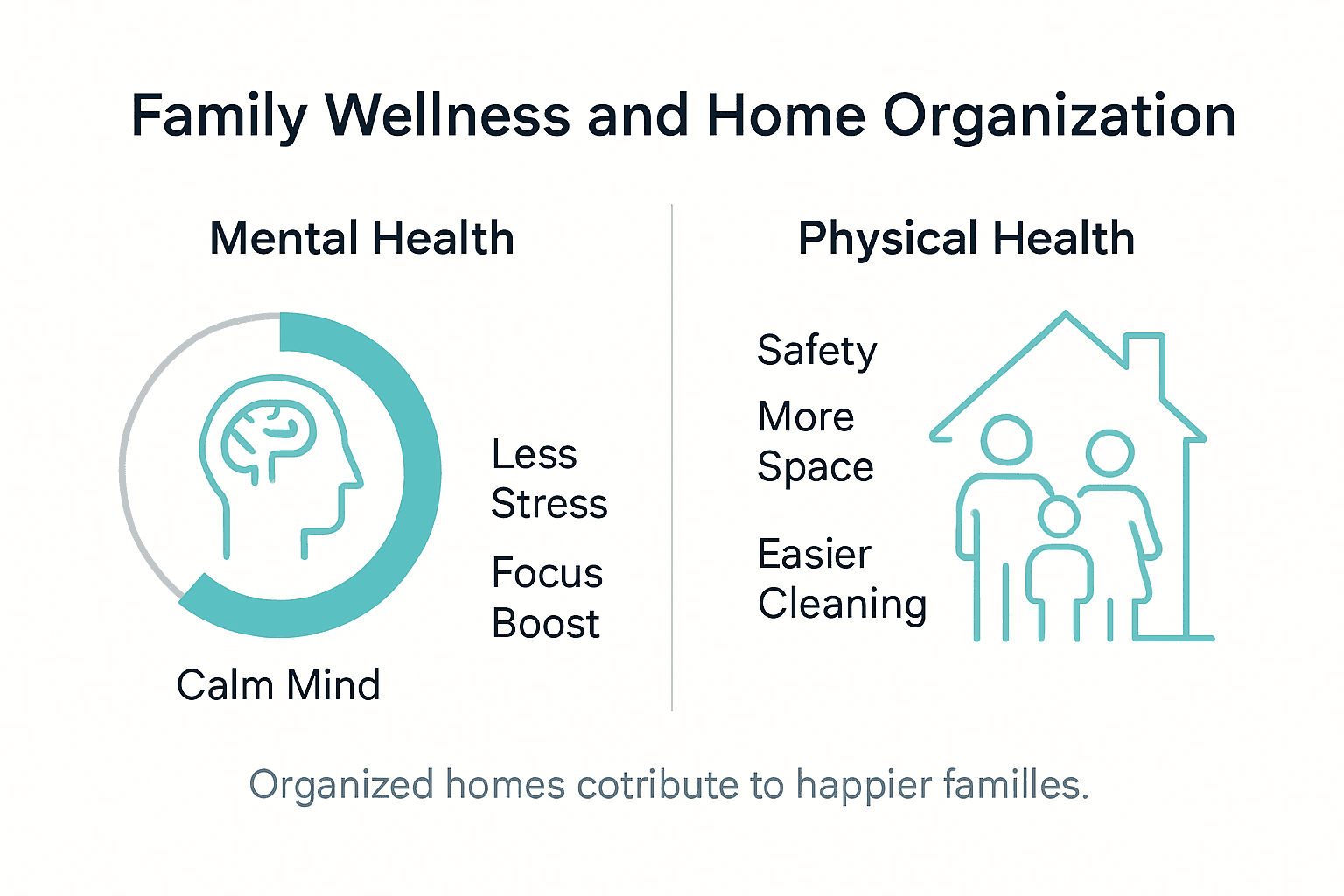
The psychological impact extends beyond immediate family dynamics. Well-organized spaces can:
Below is a summary of how home organization benefits both parents and children in tangible ways:
| Benefit Area | Effect on Parents | Effect on Children |
|---|---|---|
| Mental Health | Lowers overwhelm, less stress | Increases focus, better mood |
| Time Savings | Frees up time for family | More efficient routines |
| Emotional | Improves family relationships | Builds security, self-reliance |
- Decrease parental burnout
- Improve children’s focus and concentration
- Create positive emotional atmospheres
- Establish predictable family routines
Pro Tip: Family Involvement: Engage all family members in organizational processes, making it a collaborative and educational experience rather than a chore.
Practical Strategies for Everyday Organization
Successful home organization requires more than good intentions – it demands practical, actionable strategies that work with your family’s unique rhythm. Family organization techniques from expert insights reveal that systematic approaches can dramatically reduce household stress and create harmonious living environments.
Key Practical Strategies:
- Create a Family Command Center
- Centralize important documents
- Use a shared calendar
- Establish a communication hub
- Track schedules and responsibilities
- Implement Routine-Based Systems
- Design morning and evening routines
- Assign specific daily and weekly tasks
- Create predictable household workflows
- Encourage individual and collective accountability
Digital tools can significantly enhance organization efforts. Tips on becoming a more organized person suggest utilizing smartphone apps, shared digital calendars, and task management platforms to streamline family coordination. These technologies help synchronize schedules, distribute responsibilities, and maintain transparent communication across family members.
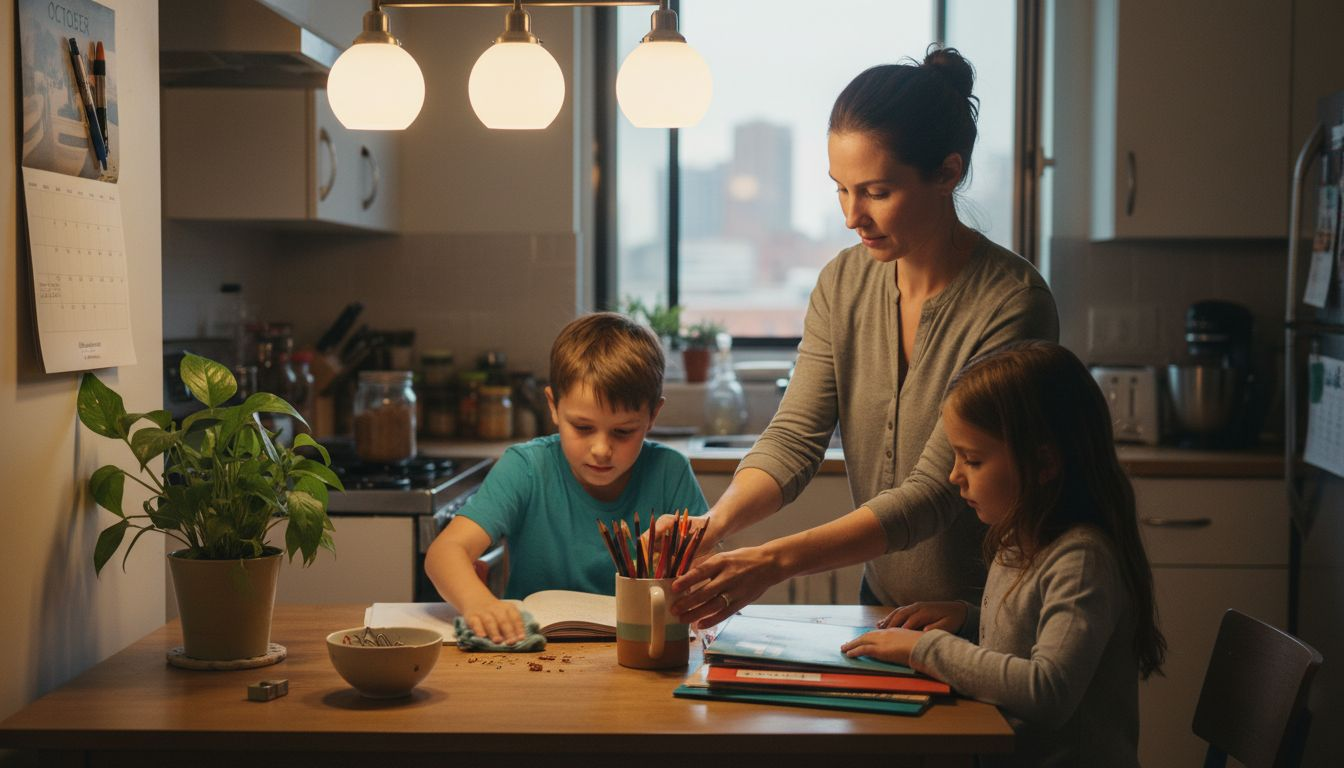
Zoning your home is another critical strategy. Designate specific areas for different activities – homework stations, play zones, cleaning supply storage – which helps everyone understand expectations and maintain order. This approach reduces mental clutter and creates intuitive spaces that naturally support organization.
Pro Tip: Consistency Wins: Start small by implementing one organizational strategy at a time, and maintain it consistently until it becomes a natural family habit.
Common Challenges and How to Avoid Them
Household chaos and its impact on child development reveals significant challenges families face when attempting to maintain organized environments. Understanding these obstacles is the first step toward creating more structured, peaceful home spaces.
Major Organizational Challenges:
- Inconsistent family routines
- Overwhelming accumulated clutter
- Lack of personal accountability
- Miscommunication about responsibilities
- Competing individual schedules
One primary challenge is resistance to change. Family members often struggle with new organizational systems, viewing them as additional work rather than time-saving solutions. This psychological barrier can derail even the most well-intentioned organizational efforts. Successful implementation requires gradual introduction, positive reinforcement, and demonstrating tangible benefits.
Technology can both help and hinder organization. While digital tools offer incredible coordination potential, they can also create distractions. Decluttering strategies suggest establishing clear boundaries around device usage and creating dedicated spaces for focused family interaction.
Communication breakdowns frequently undermine organizational systems. Families must establish clear expectations, create visual tracking methods, and develop consistent accountability mechanisms. Regular family meetings, shared digital calendars, and rotating responsibility charts can transform chaotic households into well-orchestrated environments.
Pro Tip: Collaborative Design: Involve every family member in creating organizational systems, ensuring buy-in and making the process feel like a shared adventure rather than an imposed mandate.
Transform Your Family Wellness with Smart Home Organization
Struggling with chaotic schedules and clutter that steals your family’s peace? The article highlights how intentional home organization is key to reducing stress, creating predictable routines, and improving emotional well-being for both parents and children. Whether you want to establish zone-based systems or implement routine-driven workflows, addressing these challenges head-on can unlock calm and connection in your daily family life.
Discover practical tips and strategies tailored to families at Organization Archives | Simple Neat Home. Start reclaiming control with targeted decluttering methods from Decluttering Archives | Simple Neat Home to create inviting spaces where everyone thrives.
Frequently Asked Questions
What are the key benefits of home organization for family wellness?
Home organization reduces stress and anxiety, creates a predictable environment, and fosters better communication within the family. It also helps children develop essential skills like self-regulation and personal responsibility.
How can I start organizing my home without feeling overwhelmed?
Begin your organizational journey by focusing on one room or area at a time. This gradual approach helps prevent overwhelm and allows you to build sustainable organizational habits.
What types of organizational systems are best for families?
Families can benefit from various organizational systems, including zone-based, categorical, flow-based, and minimalist organization. The best system depends on your family’s unique dynamics and lifestyle.
How can I involve my children in home organization processes?
Engage your children by making home organization a collaborative effort. Assign age-appropriate tasks, explain the benefits of maintaining an organized space, and encourage them to take responsibility for specific areas or items.
Recommended
- How to Maintain an Organised Home With a Family
- 7 Hobbies Will Make You Happier and Healthier for Adults | Simple Neat Home
- Why Organize Your Kitchen: Benefits and Impact | Simple Neat Home
- How to Organise Your Child’s Keepsakes | Simple Neat Home
- Home Away From Home – Why Predictability Matters Most – Guestly Homes