Role of Minimalism at Home – Creating Calm Spaces
Over 80 percent of American homeowners say too much clutter leaves them feeling stressed and overwhelmed. This growing frustration is driving more people to seek out minimalist solutions for their modern living spaces. Minimalism is not just an aesthetic trend for American families, it is a pathway to calmer, more purposeful homes. Discover how a minimalist approach can transform your environment into a place of peace where every item matters.
Table of Contents
- Defining Minimalism For Modern Homes
- Common Myths About Home Minimalism
- Minimalist Design Styles And Approaches
- How Minimalism Reduces Household Stress
- Practical Steps For Adopting Minimalism
- Mistakes To Avoid When Going Minimalist
Key Takeaways
| Point | Details |
|---|---|
| Embrace Intentionality | Minimalism is about living with intention, selecting items that serve a purpose and reflect one’s authentic self. |
| Dispelling Myths | Common misconceptions include the belief that minimalism means owning nothing or creating cold spaces; it can be warm and personal. |
| Design Flexibility | Minimalist design can take various forms, such as Scandinavian and Japanese Zen, demonstrating that it is not a one-size-fits-all approach. |
| Stress Reduction | A minimalist lifestyle can significantly lower household stress by simplifying environments and reducing decision fatigue. |
Defining Minimalism for Modern Homes
Minimalism is more than just an aesthetic trend. It’s a thoughtful approach to living that strips away excess and focuses on what truly matters. At its core, minimalism transforms your home into a calm, intentional space where every item serves a purpose. Modern architecture emphasizes how minimalism creates serene and efficient living environments.
In practical terms, minimalism isn’t about living with nothing. It’s about living with intention. Think of it like curating a personal museum where each object has meaning and value. Your home becomes a carefully selected collection that reflects your most authentic self. This means fewer decorative items, more purposeful furniture, and spaces that breathe and invite tranquility.
Key characteristics of minimalist home design include:
- Neutral color palettes
- Clean lines and uncluttered surfaces
- Functional furniture with simple designs
- Emphasis on quality over quantity
- Strategic storage solutions that hide unnecessary items
Adopting minimalism doesn’t mean your home becomes sterile or cold. Instead, it becomes a sanctuary that supports your mental clarity and reduces daily stress. By consciously choosing what surrounds you, you create an environment that feels peaceful and genuinely reflects your priorities.
Common Myths About Home Minimalism
Minimalism is surrounded by numerous misconceptions that prevent people from embracing this transformative lifestyle. Many people mistakenly believe minimalism requires removing all possessions and creating cold, sterile living spaces, but the reality is far more nuanced and personalized.
Myth 1: Minimalism Means Getting Rid of Everything
Contrary to popular belief, minimalism isn’t about owning nothing. It’s about being intentional with what you keep. Think of it as curating your living space, not stripping it bare. You can absolutely keep items that bring genuine joy, serve a practical purpose, or hold meaningful memories. The goal is to eliminate excess, not eliminate everything.
Myth 2: Minimalist Spaces Are Boring and Impersonal
Minimalism is more than an aesthetic choice – it represents a deliberate lifestyle shift towards sustainability and emotional well-being. A minimalist home can be warm, inviting, and deeply personal. It’s about creating space for what matters most, not creating a sterile museum-like environment.
Key minimalism myths to challenge:
- Minimalism is expensive
- You must have all-white or neutral decor
- Minimalist homes are uncomfortable
- Minimalism means living with bare walls
- Only young, single people can be minimalists
Ultimately, minimalism is a flexible approach to living that adapts to your unique lifestyle and needs. It’s not about following strict rules, but about creating a space that supports your well-being, reduces stress, and helps you focus on what truly matters.
Minimalist Design Styles and Approaches
Minimalist design is a versatile philosophy that spans multiple aesthetic approaches, each offering unique ways to create calm and intentional living spaces. Scandinavian design exemplifies minimalism through its emphasis on simplicity, clean lines, and functional furnishings, providing a perfect blueprint for those seeking a streamlined home environment.
Architectural Minimalist Styles
Minimal Traditional architecture represents another fascinating approach, blending historical influences with modern simplicity and minimal ornamentation. This style proves that minimalism isn’t about stark emptiness, but about thoughtful, purposeful design that prioritizes function and elegance.
Key minimalist design approaches include:
- Japanese Zen Minimalism
- Scandinavian Minimalism
- Industrial Minimalism
- Modern Minimalism
- Organic Minimalism
Each design style offers a unique interpretation of minimalism, demonstrating that this approach isn’t a one-size-fits-all concept. Whether you prefer the warm neutrals of Scandinavian design, the clean lines of Japanese Zen, or the raw textures of Industrial minimalism, there’s a minimalist style that can transform your living space into a sanctuary of calm and intentionality.
How Minimalism Reduces Household Stress
Adopting a minimalist lifestyle can dramatically reduce household stress by promoting sustainable living and enhancing emotional well-being. The connection between your physical environment and mental state is profound – when your living space feels chaotic, your mind feels chaotic too.

Mental Clarity Through Physical Simplicity
Clutter isn’t just a physical problem – it’s a psychological burden. Each unorganized drawer, overcrowded shelf, and random pile of items creates invisible mental weight. Minimalism transforms your home into a sanctuary of calm, where every item has purpose and nothing competes for your attention. Minimalist housing principles aligned with sustainable development goals contribute to a balanced and efficient living environment, reducing the mental energy typically spent managing unnecessary possessions.
Practical ways minimalism reduces stress:
- Eliminates decision fatigue
- Reduces cleaning and maintenance time
- Creates more physical and mental space
- Lowers financial strain from unnecessary purchases
- Promotes intentional living
The beauty of minimalism isn’t about having less – it’s about creating more space for what truly matters. By consciously curating your environment, you’re not just organizing your home. You’re designing a lifestyle that supports your mental health, creativity, and personal growth.
Practical Steps for Adopting Minimalism
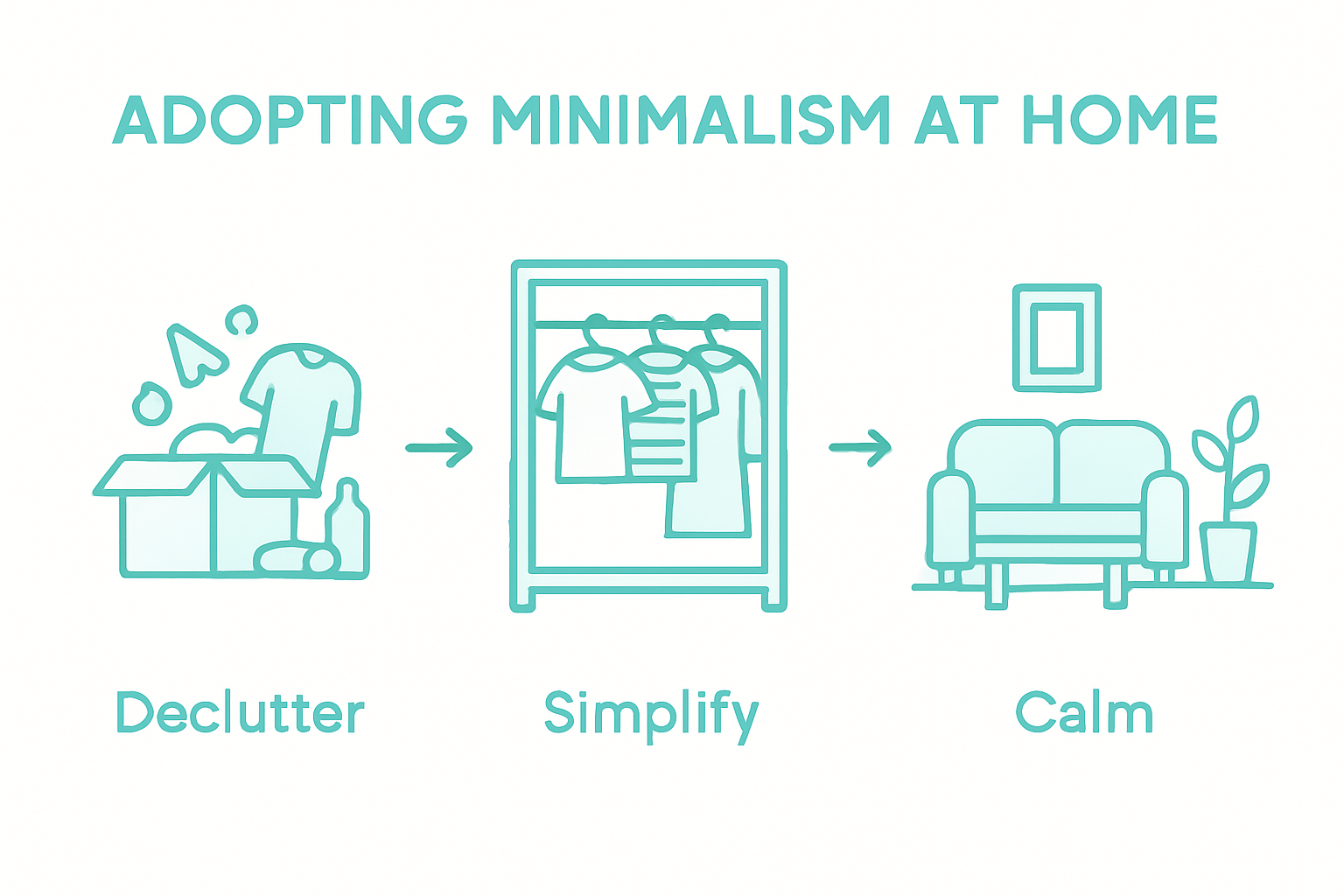
Implementing minimalism requires deliberate changes in consumer behavior towards creating a more sustainable and emotionally balanced lifestyle. This isn’t about throwing everything away, but about making thoughtful choices that align with your values and reduce unnecessary complexity.
Starting Your Minimalist Journey
Begin by examining one area of your home at a time. Your closet, kitchen, or home office are perfect starting points. Integrating minimalist design principles provides a structured approach to transforming your living space, making the process less overwhelming and more manageable.
Detailed steps for adopting minimalism:
- Conduct a comprehensive inventory
- Sort items into keep, donate, and discard categories
- Implement a one-in-one-out rule for new purchases
- Create designated spaces for essential items
- Practice mindful consumption
Remember, minimalism is a personal journey. There’s no universal rulebook. Your version of minimalism might look different from someone else’s, and that’s perfectly okay. The goal is to create a space that brings you peace, reduces stress, and allows you to focus on what truly matters in your life.
Mistakes to Avoid When Going Minimalist
Don’t fall into the trap of believing minimalism requires removing all possessions from your living space. Minimalism is about intentionality, not deprivation. It’s a thoughtful approach to curating your environment, not creating an empty, lifeless space.
The Pitfalls of Misunderstanding Minimalism
Avoid viewing minimalism as merely an aesthetic choice – it’s a comprehensive lifestyle shift towards sustainability and personal well-being. Many people make the mistake of thinking minimalism is about having stark white walls and throwing away everything they own.
Common minimalism mistakes to avoid:
- Discarding items impulsively without careful consideration
- Buying cheap replacement items that won’t last
- Focusing only on visual aesthetics
- Comparing your minimalist journey to others
- Feeling guilty about keeping sentimental items
Remember, minimalism is deeply personal. Your journey will look different from someone else’s, and that’s perfectly okay. The goal is creating a space that brings you peace, reduces stress, and helps you focus on what truly matters in your life.
Create Your Calm Sanctuary with Minimalism Today
Feeling overwhelmed by clutter and chaos at home is common but unnecessary. The article highlights how minimalism brings mental clarity and peacefulness by focusing on intention and purposeful living. If your goal is to reduce stress, eliminate excess, and build a space that truly supports your well-being minimalism offers a transformative path.
Explore our Minimalism Archives | Simple Neat Home for practical decluttering tips and inspirational ideas to reclaim your calm. Take control of your space and mind now to enjoy lasting calm every day.
Frequently Asked Questions
What is the core principle of minimalism in home design?
Minimalism focuses on living with intention by stripping away excess and emphasizing what truly matters. It transforms your home into a calm space where every item serves a purpose.
How can minimalism reduce household stress?
Minimalism helps reduce stress by eliminating clutter, which creates mental clarity. A well-organized space allows for easier cleaning and less decision fatigue, promoting a more peaceful living environment.
Do I need to get rid of all my belongings to become a minimalist?
No, minimalism does not require you to eliminate all possessions. It is about curating your belongings intentionally and keeping only what brings joy or serves a practical purpose.
How can I start adopting a minimalist lifestyle in my home?
Begin by assessing one area of your home at a time. Sort items into categories like keep, donate, or discard, and implement a one-in-one-out rule for new purchases to maintain your minimalistic space.
Recommended
- Understanding the Advantages of Minimalism at Home | Simple Neat Home
- Understanding the Meaning of Calm Home for Peaceful Living | Simple Neat Home
- What is Minimalist Living? Understand Its Essence | Simple Neat Home
- Understanding the Benefits of Minimalist Living | Simple Neat Home
- Effective Body Scan Meditation to Reduce Anxiety and stress – MOMORO & Friends