Sentimental Items: Letting Go Without Guilt
Research shows nearly 62 percent of American adults struggle to part with sentimental items, even when yearning for a clutter-free space. The emotional weight tied to these objects turns decluttering into an exhausting inner debate instead of a simple sorting task. If you crave practical strategies to honor memories while lightening your load, you are not alone—this guide offers clear solutions for minimalist-minded Americans ready for a lighter home and heart.
Table of Contents
- What Makes Sentimental Items So Hard to Release
- Types of Sentimental Items and Their Emotional Weight
- Why Guilt Develops When Letting Go
- Minimalist Methods to Honor Memories
- Avoiding Common Pitfalls and Regrets
Key Takeaways
| Point | Details |
|---|---|
| Emotional Attachment | Sentimental items are emotionally charged, representing personal narratives tied to memories and experiences. Their release can evoke anxiety and grief due to their symbolic value. |
| Guilt and Regret | Feelings of guilt often arise when letting go of these items, as they may represent significant memories or relationships. Careful reflection is necessary to avoid future regrets about discarding meaningful objects. |
| Minimalist Strategies | Employ minimalist methods, such as creating digital memory books and selective preservation, to honor memories without accumulating clutter. This enables emotional connections without physical burden. |
| Gradual Process | Decluttering should be a gradual process, allowing time for emotional processing and thoughtful decisions about each item’s fate. A strategic approach can help balance preservation and practicality. |
What Makes Sentimental Items So Hard to Release
Letting go of sentimental items feels like trying to untangle an emotional knot. These objects aren’t just things – they’re memory capsules packed with experiences, connections, and deep personal history. Psychological research reveals that our attachment to these items stems from complex emotional mechanisms that go far beyond simple ownership.
The challenge lies in how these objects connect directly to our personal narrative. Each item – whether it’s your grandmother’s worn wedding ring, a childhood stuffed animal, or concert ticket stubs – represents more than its physical form. They’re tangible representations of moments that shaped who we are. Psychological studies confirm that these possessions serve as emotional anchors, connecting us to specific memories and experiences that feel precious and irreplaceable.
Our brain creates powerful emotional associations that make releasing these items feel like losing a piece of ourselves. Attachment anxiety plays a significant role, transforming ordinary objects into extraordinary emotional artifacts. Some people experience genuine grief at the thought of discarding an item, not because of its monetary value, but because of the memories it represents. This emotional weight makes decluttering sentimental items an incredibly challenging psychological process.
Pro tip: Create a digital memory book where you photograph sentimental items before letting them go, preserving the memory without keeping the physical object.
Types of Sentimental Items and Their Emotional Weight
Sentimental items are deeply personal artifacts that carry emotional significance beyond their physical form. Neurological research reveals that these possessions trigger complex psychological responses connected to memory, identity, and personal narrative.
Different categories of sentimental items emerge from various life experiences. Family heirlooms often represent generational connections, carrying stories passed down through generations. Photographs capture frozen moments of joy, grief, achievement, and transformation. Gifts from loved ones symbolize relationships and emotional bonds, making them particularly challenging to release. Personal mementos like ticket stubs, childhood toys, and travel souvenirs represent specific moments that have shaped our individual journeys.
Research studies highlight that these items carry different emotional weights depending on individual experiences. A wedding ring might represent profound love and commitment for one person, while for another, it could symbolize a painful chapter of life. The emotional significance isn’t universal but deeply personal and context-dependent.
Pro tip: Create a tiered emotional sorting system where you categorize sentimental items by their true emotional value, helping you prioritize which memories to preserve.
Here’s a comparison of common sentimental item types and their typical emotional impacts:
| Item Type | Emotional Trigger | Typical Memory Connection |
|---|---|---|
| Family heirlooms | Generational belonging | Ancestry, family history |
| Photographs | Nostalgia, happiness | Specific life events, milestones |
| Gifts | Relationship bonds | Love, friendship, gratitude |
| Personal mementos | Identity formation | Achievement, travels, personal growth |
Why Guilt Develops When Letting Go
Getting rid of sentimental items isn’t just about physical objects – it’s an emotional minefield where guilt becomes the unexpected landmine. Psychological research explores how these feelings of guilt are deeply rooted in complex emotional landscapes, often representing more than simple attachment to things.
The guilt typically emerges from multiple psychological triggers. Sometimes it stems from feeling like you’re betraying a memory or disrespecting someone’s legacy by letting go. Other times, the guilt is connected to fears of forgetting important moments or relationships. Emotional studies suggest that this guilt is less about the physical item and more about the emotional narrative we’ve constructed around it. We worry that by releasing the object, we’re somehow diminishing the significance of the experience or person it represents.
These guilt mechanisms are particularly powerful when the sentimental items connect to loved ones who have passed away or significant life chapters that have ended. The items become symbolic representations of entire emotional experiences, making their release feel like an act of emotional amputation. Our brains create powerful associations that transform simple objects into repositories of complex feelings, memories, and unresolved emotional experiences.
Pro tip: Create a memory preservation ritual where you acknowledge the item’s emotional significance before letting it go, helping transform guilt into gratitude.
Minimalist Methods to Honor Memories
Preserving memories doesn’t mean hoarding every single item from your past. Innovative research suggests that strategic memory curation can help you maintain emotional connections while reducing physical clutter.
Minimalist memory preservation involves transforming physical items into meaningful narratives. Instead of keeping every ticket stub or trinket, focus on selecting a few representative pieces that truly capture the essence of an experience. Digital photography provides an excellent way to document items without maintaining physical storage. Create digital albums or scrapbooks that allow you to revisit memories without accumulating unnecessary objects. For family heirlooms, consider taking high-quality photographs and writing detailed stories about their significance, creating a rich archival record that takes up zero physical space.
Storytelling becomes a powerful tool in minimalist memory management. By recording oral histories, writing personal essays, or creating family documentaries, you transform sentimental objects from physical artifacts into living, breathing narratives. This approach allows you to honor memories while simultaneously decluttering your physical environment. The goal isn’t to erase memories but to ensure they remain vibrant and accessible without being weighed down by physical possessions.

Pro tip: Create a digital memory box where you scan or photograph sentimental items, add a brief story about their significance, and then thoughtfully release the physical object.
This table summarizes effective minimalist strategies for honoring memories while decluttering:
| Strategy | Key Action | Emotional Benefit |
|---|---|---|
| Digital memory book | Photograph items | Retain memory, reduce clutter |
| Selective preservation | Keep one representative | Focus on meaningful memories |
| Storytelling | Record stories or essays | Transform object to narrative |
| Archival documentation | Write significance records | Deepen emotional connections |
Avoiding Common Pitfalls and Regrets
Research on emotional decision making reveals that decluttering sentimental items is more complicated than simply throwing things away. The biggest pitfall is acting impulsively without understanding your emotional attachment and potential future impact.
One primary regret stems from discarding items too quickly without proper reflection. People often realize later that they’ve lost more than just an object – they’ve lost a tangible connection to a memory. The key is creating a strategic approach that balances emotional preservation with practical minimalism. Consider photographing items, writing their stories, or selecting one representative piece from a collection instead of keeping everything. This method allows you to honor the memory while preventing overwhelming physical clutter.
Emotional preparedness is crucial in avoiding long-term regret. Psychological studies highlight that gradual decluttering and maintaining social support can significantly reduce anxiety about letting go. Before releasing an item, ask yourself critical questions: Does this object truly represent the memory? Can the memory survive without this specific physical item? Would documenting the item’s significance be more meaningful than keeping the object itself?
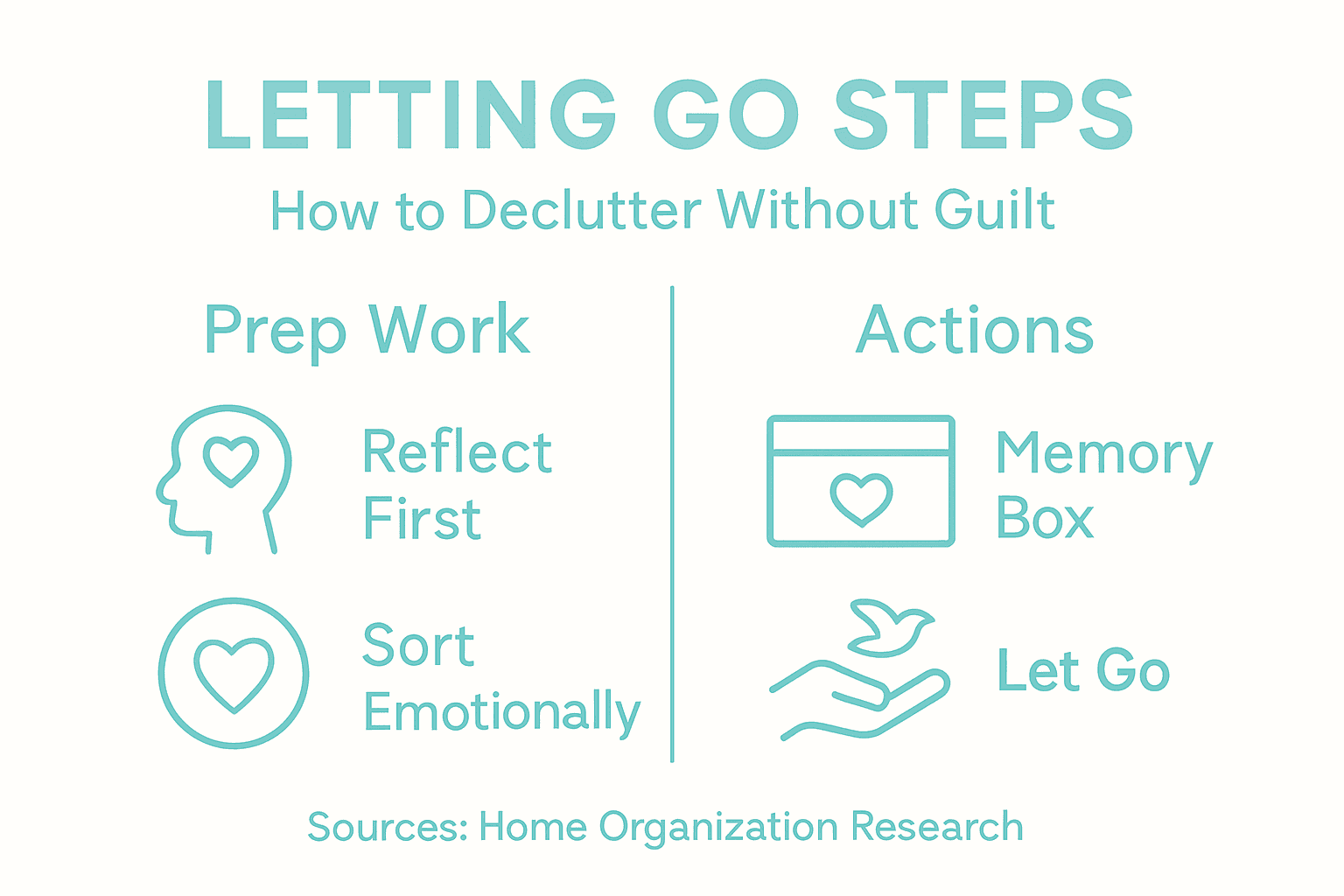
Pro tip: Create a 30-day holding box where you place items you’re unsure about, allowing yourself time to emotionally process and make deliberate decisions about their fate.
Ease Your Journey of Letting Go and Embrace a Clutter-Free Home
Letting go of sentimental items can feel overwhelming because these objects hold deep emotional attachments and memories. If you struggle with the guilt and anxiety of releasing treasures tied to your personal story you are not alone. At Simple Neat Home we understand the emotional complexity of decluttering sentimental belongings and offer practical guidance to help you honor your memories while creating a peaceful living space.
Explore effective strategies for mindful decluttering in our Decluttering Archives | Simple Neat Home and discover minimalist approaches that respect your emotional ties in our Minimalism Archives | Simple Neat Home. You can also digitize your memories without the clutter by visiting our Digital Organization Archives | Simple Neat Home. Reclaim your calm from chaos today and start your journey toward letting go without guilt and living simply and meaningfully.
Frequently Asked Questions
What are sentimental items?
Sentimental items are personal artifacts that carry emotional significance and memory connections, such as family heirlooms, photographs, gifts from loved ones, and personal mementos.
Why is it hard to let go of sentimental items?
Letting go of sentimental items can be challenging because they are often tied to our personal narrative and evoke strong emotional associations, making their release feel like losing part of ourselves.
How can I minimize guilt when decluttering sentimental items?
To minimize guilt, consider creating a memory preservation ritual, such as acknowledging the emotional significance of each item before letting it go, or making a digital memory book to keep the essence of the item without the physical weight.
What are some effective strategies for honoring memories without keeping physical items?
Effective strategies include creating a digital memory book, selectively preserving representative items, storytelling through personal essays or recordings, and documenting the significance of items for future reference.
Recommended
- How to Deal With Declutter Remorse
- 11 Tips for Letting Go of Clothes | Decluttering Made Easy
- How to Organise Your Child’s Keepsakes | Simple Neat Home
- 10 Key Questions to Ask Yourself When Decluttering
- 7 Best Robe Colors for Gifting: Choices for Everyone – Lotus Linen