Step by Step Decluttering Guide for a Calm Home
Over half of American adults admit they are overwhelmed by clutter, making it one of the most common stress triggers at home. Decluttering is not just about cleaning, it is about reclaiming mental clarity, saving time, and creating a space that actually feels relaxing. With the right approach, anyone can turn chaos into order and develop practical habits for maintaining a tidy home every day.
Table of Contents
- Step 1: Prepare Your Decluttering Tools
- Step 2: Sort Areas By Priority
- Step 3: Remove Unnecessary Items Strategically
- Step 4: Organize Essentials For Daily Use
- Step 5: Evaluate And Refine Your Space
Quick Summary
| Key Point | Explanation |
|---|---|
| 1. Gather essential decluttering tools | Use sturdy trash bags, boxes, and markers to categorize items into keep, donate, trash, and relocate. |
| 2. Prioritize decluttering areas effectively | Focus on high-traffic and stress-inducing zones first to manage overwhelm and see quick results. |
| 3. Remove unnecessary items systematically | Create distinct piles for keep, donate, and trash to make clear decisions about what to discard. |
| 4. Organize daily essentials intuitively | Arrange frequently used items within easy reach to streamline your daily routines and reduce clutter. |
| 5. Regularly evaluate and refine your space | Assess organized areas frequently to ensure they meet your needs and make adjustments as necessary to maintain clarity. |
Step 1: Prepare your decluttering tools
Getting ready to declutter means assembling the right tools and mindset for success. Before diving in, you will want to gather several essential items that will make your decluttering process smoother and more efficient.
First, grab some sturdy trash bags, a few cardboard boxes, and some markers. You will use these to sort items into categories: keep, donate, trash, and relocate. Setting clear goals before starting helps create a structured approach. I recommend labeling your boxes clearly with categories to avoid confusion. Your basic toolkit should include:
- Large trash bags
- Donation boxes
- Permanent markers
- Cleaning wipes
- Gloves
- Small trash container
Approaching decluttering systematically means planning your attack. Start with one small area like a drawer or closet shelf. This prevents feeling overwhelmed and helps build momentum. Break your project into manageable zones so you can see progress quickly.
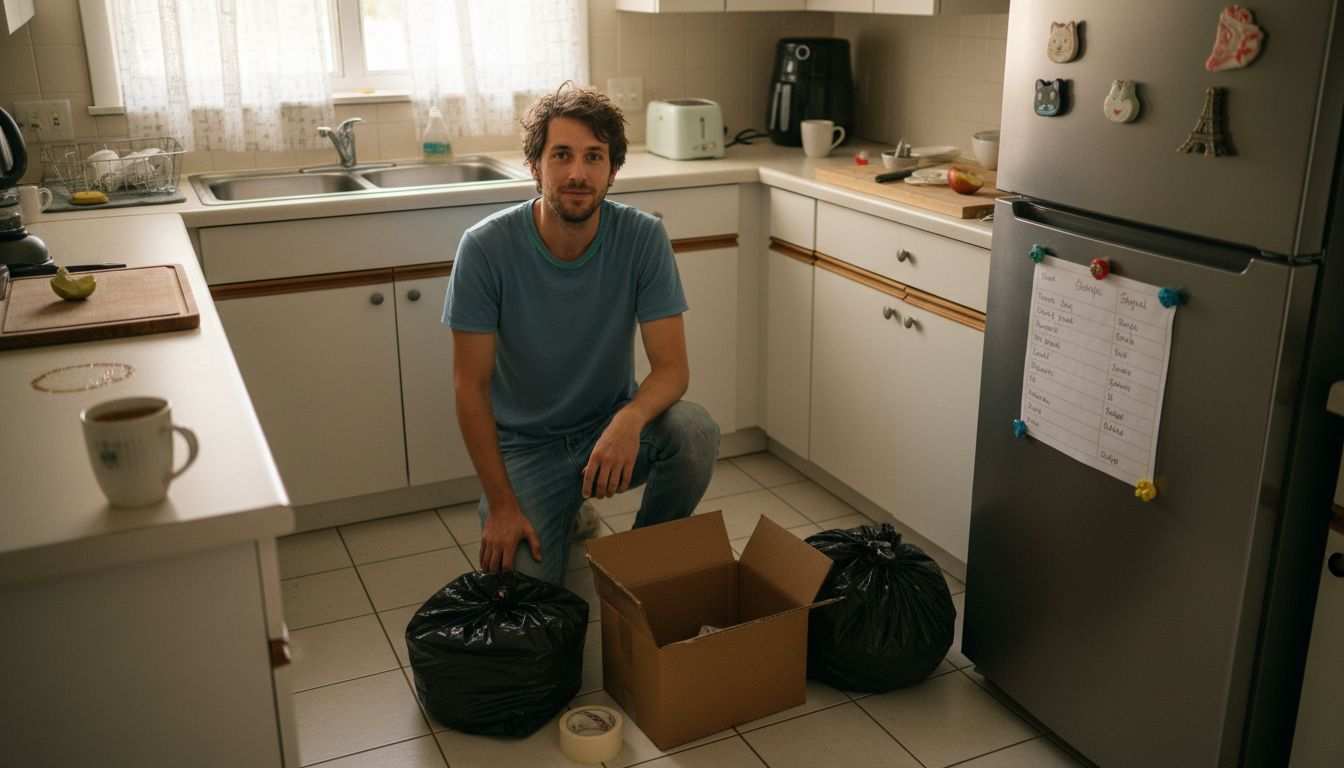
Pro tip: Take a before photo of your space. This not only motivates you by showing your starting point but also helps you appreciate how much you will accomplish during your decluttering journey.
Step 2: Sort areas by priority
Now that you have your decluttering tools ready, it is time to strategically map out which areas of your home need the most attention. Understanding how to prioritize your spaces will make your decluttering journey much more manageable and effective.
The 80/20 rule suggests that we typically use only 20% of our possessions 80% of the time, which means focusing on high traffic and most used areas first makes the most sense. Start by walking through your home and identifying spaces that create the most daily stress or feel the most overwhelming. These might include entryways, kitchen counters, home office spaces, or bedroom closets.
Create a simple ranking system for your spaces. Consider factors like frequency of use, current chaos level, and emotional impact. Rate each area from 1 to 5 with 5 being the most critical zone needing immediate attention. Your top priority zones are typically shared spaces or areas that impact your daily routine the most.
Begin with the highest ranked space and break it down into smaller, more manageable sections. If your home office is a level 5 disaster zone, start with just one desk drawer or a single shelf. This approach prevents burnout and gives you quick wins to build momentum.
Pro tip: Create a visual map or checklist of your spaces. Marking areas as you complete them provides a satisfying sense of progress and keeps you motivated throughout your decluttering journey.
Step 3: Remove unnecessary items strategically
Now comes the most transformative part of your decluttering journey: systematically removing items that no longer serve a purpose in your life. Strategic item removal is about making intentional decisions that simplify your living space and reduce unnecessary mental clutter.
When evaluating items to remove, ask yourself critical questions about their current usefulness: Is this broken or outdated? When was the last time I used this? Am I keeping this out of genuine need or mere habit? Start by creating three distinct piles: keep, donate, and trash. This method helps you make clear decisions about each item without feeling overwhelmed.
Focus first on high traffic areas that create daily stress. Spaces like under the kitchen sink or bathroom cabinets are perfect starting points for strategic decluttering. These compact zones can be quickly transformed and provide immediate satisfaction. Remove expired products, duplicate items, and things you have not used in the past year. Be ruthless but thoughtful in your approach.
Remember that removing unnecessary items is not about creating empty spaces but about curating a environment that supports your current lifestyle. Each item you remove creates mental and physical space for things that truly matter.
Pro tip: Create a one in one out rule. For every new item you bring into your home, commit to removing one similar item. This prevents future clutter accumulation and maintains the streamlined space you are creating.
Here’s how different decluttering strategies address common household challenges:
| Challenge | Best Decluttering Approach | Benefit for Your Home |
|---|---|---|
| Daily stress from clutter | Prioritize high-traffic areas | Reduces overwhelm quickly |
| Lack of storage | Use vertical and micro-zones | Maximizes usable space |
| Sentimental items | Curate, keep only essentials | Keeps memories, limits excess |
| Ongoing clutter buildup | Implement one in, one out rule | Maintains organization long-term |
Step 4: Organize essentials for daily use
With unnecessary items removed, it is time to create smart organizational systems that make your daily life smoother and more efficient. Organizing essentials means creating intuitive spaces where everything you need is easily accessible and logically arranged.
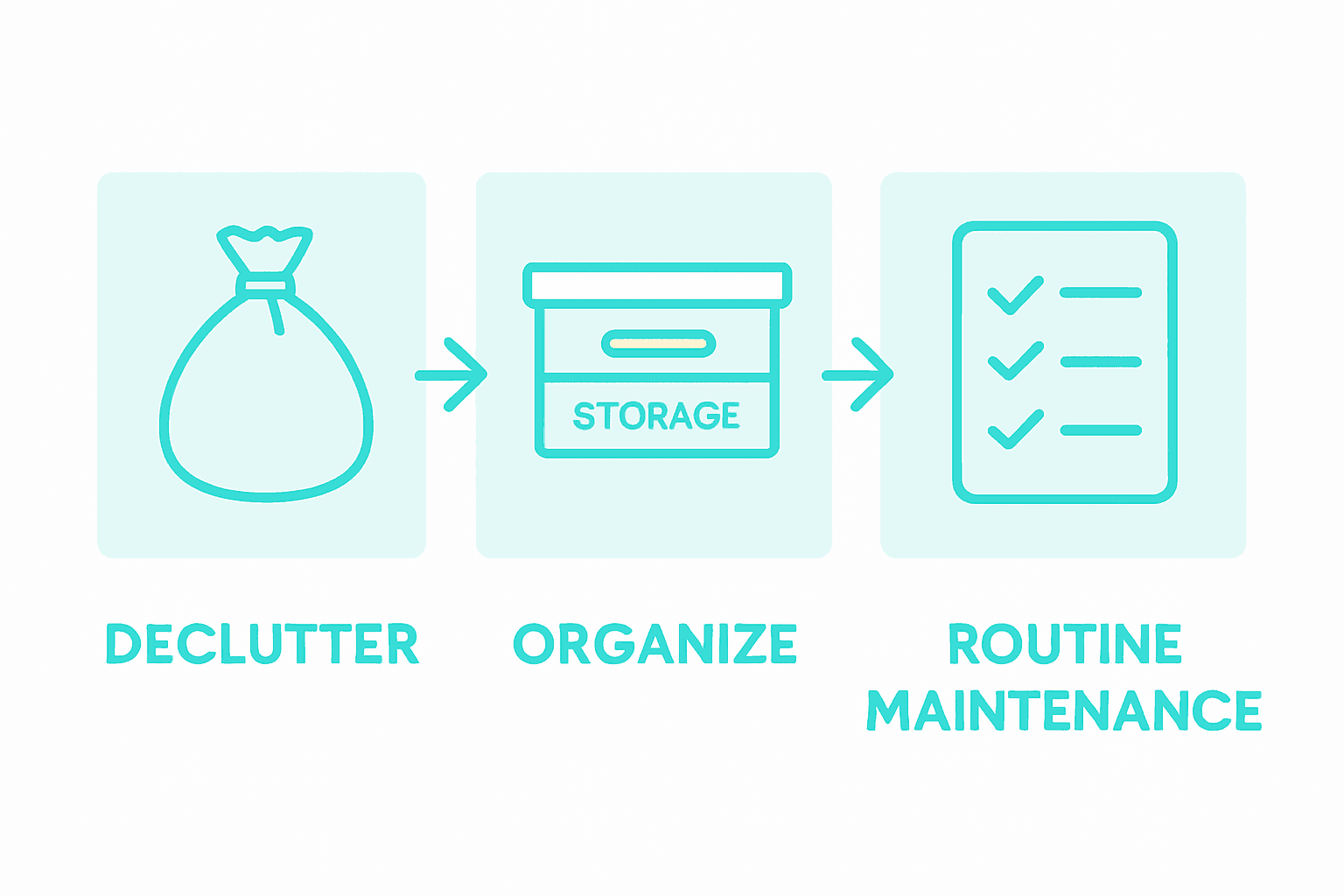
Kitchen organization can transform your daily cooking and meal preparation routine, starting with strategically placing frequently used items within immediate reach. Group similar items together in designated zones. Your coffee supplies should live near the coffee maker. Cooking utensils belong close to the stove. Cutting boards and knives should be stored together in a convenient location.
Think about your morning and evening routines when organizing. Your nightstand should contain only items you use daily like a book, phone charger, water glass, and perhaps a small lamp. In your bathroom, arrange toiletries in clear containers or drawer organizers so you can quickly find what you need. Use vertical space with shelves or hanging organizers to maximize storage without creating visual clutter.
Consider implementing the concept of accessibility first. Items you use most frequently should require the least effort to retrieve. This might mean keeping workout clothes at the front of your closet, placing spices on a convenient shelf, or keeping your most used tools in a designated drawer near your workspace.
Pro tip: Invest in drawer dividers and small containers to create micro zones within your storage spaces. These tools help maintain organization and prevent items from becoming jumbled over time.
Step 5: Evaluate and refine your space
After organizing your essentials, the final step is critically assessing your newly streamlined environment. Evaluation is not just about visual appearance but about creating a space that genuinely supports your lifestyle and promotes peace of mind.
By applying the 80/20 rule, you can strategically focus on the 20% of items that you actually use 80% of the time, making your refinement process more targeted and effective. Walk through each organized area and ask yourself critical questions. Does this setup truly make my daily routine easier? Are these spaces functional and intuitive? Do I feel calm and in control when I move through this area?
Take time to sit in each room and observe how the space feels. Notice your emotional and physical response to the new arrangement. If something feels off or uncomfortable, do not hesitate to make adjustments. Your living space should be a dynamic environment that evolves with your needs. Look for friction points where your current setup might create unnecessary stress or inconvenience. Small tweaks can make significant differences in how smoothly your daily life flows.
Consider taking photos of your newly organized spaces. These visual records will help you track your progress and provide motivation for maintaining your decluttered environment. They can also serve as a reference point when you want to make future adjustments or remind yourself of the calm you have created.
The following is a breakdown of decluttering evaluation criteria for ongoing success:
| Evaluation Focus | What to Assess | Adjustment Tip |
|---|---|---|
| Functionality | Ease of daily use | Relocate items causing inconvenience |
| Visual Calm | Visual clutter or disorder | Add baskets or dividers to disguise mess |
| Emotional Reaction | Stress or calmness in the space | Remove items that create negative feelings |
Pro tip: Schedule a quarterly review of your organized spaces. Set a calendar reminder to reassess your systems, ensuring they continue to serve your changing lifestyle and prevent clutter from creeping back in.
Create Your Calm Space with Simple Neat Home
Feeling overwhelmed by clutter and unsure where to start? This guide highlights the challenge of transforming chaotic, high-traffic areas into serene, organized spaces using strategies like the 80/20 rule and strategic item removal. If your goal is to reclaim peace of mind and build efficient systems that support your daily routines, you are not alone.
Discover more hands-on tips and inspiration in our Decluttering Archives | Simple Neat Home and explore easy ways to keep your home orderly in Organization Archives | Simple Neat Home. Start your journey now and feel the calm return.
Frequently Asked Questions
What are the essential tools needed for decluttering?
Gather large trash bags, donation boxes, permanent markers, cleaning wipes, gloves, and a small trash container. These items will help you sort, organize, and clean as you declutter your home.
How should I prioritize the areas to declutter first?
Focus on high-traffic areas that create daily stress, like entryways or kitchen counters. Rank these spaces from 1 to 5 based on their chaos level and start with the top priority zone to gain quick wins.
What is a good strategy for removing unnecessary items?
Use the keep, donate, and trash system to evaluate each item based on its current usefulness. Ask yourself critical questions and be decisive about what stays and what goes—aim to clear out at least 20% of unused items in your first round.
How can I organize essentials for daily use effectively?
Group similar items together in designated zones based on your routines. For example, keep daily-use items at arm’s reach in the kitchen, ensuring that your coffee supplies are near the coffee maker for easy access.
How do I evaluate my decluttered space for ongoing effectiveness?
Walk through each area and assess its functionality and calmness. Adjust the setup based on your daily experience—make small tweaks to improve accessibility and comfort.
What is the one in, one out rule, and how can it help?
The one in, one out rule means every time you bring a new item into your home, you remove one similar item. This practice helps maintain organization and prevents clutter from accumulating over time.
Recommended
- The Ultimate Guide: How to Declutter Your Home, Step by Step
- Understanding Ways to Reduce Household Clutter Effectively | Simple Neat Home
- How to Start Decluttering When You’re Overwhelmed: A Guide
- Gradual Decluttering Tips | Simple Neat Home
- How to Improve User Experience in 2025: A Step-by-Step Guide|BM


