Capsule Pantry: 20 Ingredients for Month-Long Meals
Every parent faces that evening rush when deciding what to cook feels overwhelming and fridge ingredients go unused. For health-conscious American families and couples, a crowded pantry can lead to wasted food, extra expense, and added stress. Adopting a capsule pantry changes the game by focusing on essential, versatile staples that help simplify meal planning and keep nutritious meals easy and approachable. Discover how a curated kitchen can reduce food waste and save time while supporting your commitment to healthy eating.
Table of Contents
- What Is a Capsule Pantry and Why It Matters
- Core Categories: Pantry Staples Explained
- How 20 Ingredients Support Meal Variety
- Meal Planning Strategies for Families
- Common Mistakes and How to Avoid Them
Key Takeaways
| Point | Details |
|---|---|
| Capsule Pantry Concept | A capsule pantry involves curating essential ingredients for efficient meal preparation, reducing stress and food waste. |
| Core Categories | Focus on fundamental pantry categories like proteins, grains, and legumes to maximize meal variety with minimal ingredients. |
| Meal Planning Strategies | Conduct weekly inventories and involve family members in meal planning to enhance engagement and streamline cooking. |
| Common Mistakes | Avoid impulse buying and poor organization by regularly tracking pantry inventory to prevent waste and unnecessary purchases. |
What Is a Capsule Pantry and Why It Matters
A capsule pantry is a strategic approach to food storage that transforms how you think about meal preparation. A streamlined collection of essential ingredients allows you to create multiple meals with just a few versatile staples, reducing stress and simplifying your cooking process.
At its core, a capsule pantry mimics the minimalist concept of a capsule wardrobe, but for your kitchen. Instead of keeping countless random ingredients that rarely get used, you focus on high-quality, multipurpose items that can be mixed and matched to create diverse dishes. This approach dramatically cuts down on food waste, saves money, and eliminates the daily panic of “What’s for dinner?”
The magic of a capsule pantry lies in its intentionality. By maintaining an organized collection of non-perishable and longer-lasting foods, you create a flexible culinary foundation. Think of it like having a kitchen toolkit where each ingredient serves multiple purposes. Beans become the base for chili, salads, and quick dips. Grains transform from side dishes to main courses. Spices turn simple ingredients into gourmet meals.
Pro tip: Start your capsule pantry journey by selecting 10-15 core ingredients that you genuinely enjoy and know how to use in multiple ways.
This table compares traditional pantries to capsule pantries for home cooks:
| Feature | Traditional Pantry | Capsule Pantry |
|---|---|---|
| Ingredient Variety | Large, often unplanned | Select, curated essentials |
| Meal Flexibility | Limited by unused items | High due to multipurpose staples |
| Food Waste | Frequent, due to spoilage | Minimal, through smart rotation |
| Cost Efficiency | Higher spending overall | Lower food costs over time |
Core Categories: Pantry Staples Explained
Building a successful capsule pantry requires understanding the fundamental core categories that provide maximum meal flexibility. These categories represent the strategic building blocks of your cooking arsenal, ensuring you can create diverse meals with minimal ingredients. Pantry staple recipes demonstrate how versatile these categories can be when thoughtfully selected.
The primary categories include proteins, grains, legumes, aromatics, oils and fats, seasonings, and preservable produce. Proteins might include canned fish, dried beans, eggs, and nuts. Grains could feature rice, quinoa, pasta, and oats. Legumes expand your options with lentils, chickpeas, and various beans. Aromatics like onions, garlic, and dried herbs provide foundational flavor, while cooking oils and vinegars help create depth in your dishes.
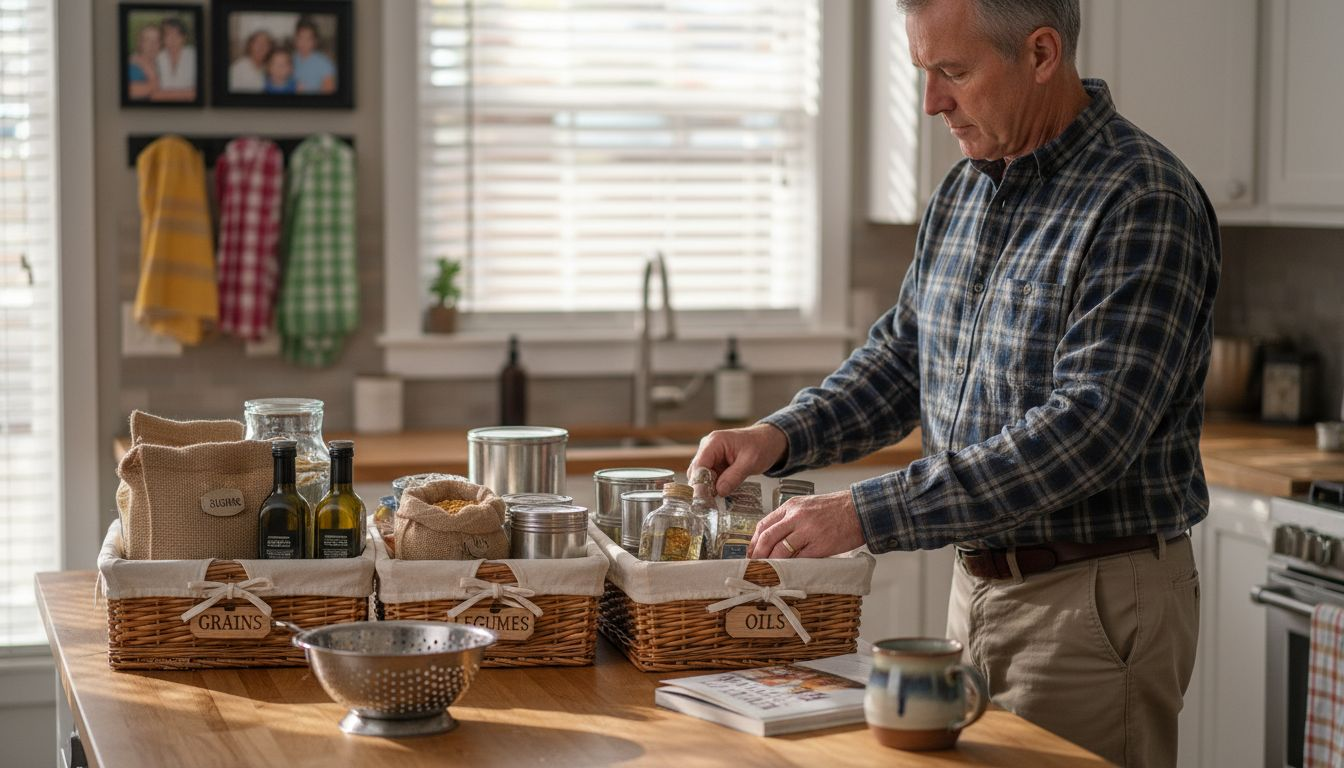
Each category serves a critical purpose in your capsule pantry. Proteins offer essential nutrients and satiety. Grains provide energy and serve as meal foundations. Legumes add protein and fiber. Aromatics transform simple ingredients into complex, delicious meals. By carefully selecting 2-3 items from each category, you create a flexible system that adapts to different cuisines, dietary needs, and cooking styles.
Here’s a quick overview of capsule pantry categories and how they contribute to efficient meal planning:
| Pantry Category | Primary Role | Example Items |
|---|---|---|
| Proteins | Enhance nutrition and fullness | Canned fish, eggs, nuts |
| Grains | Provide energy and versatility | Rice, quinoa, oats |
| Legumes | Add protein and fiber | Lentils, chickpeas, beans |
| Aromatics | Build foundational flavor | Onions, garlic, dried herbs |
| Oils & Fats | Improve taste and texture | Olive oil, vinegar |
| Seasonings | Create flavor variety | Spices, salt, pepper |
| Preservable Produce | Increase meal options | Potatoes, onions, carrots |
Pro tip: When selecting items for each pantry category, prioritize ingredients with long shelf lives and multiple cooking applications to maximize your investment.
How 20 Ingredients Support Meal Variety
Creating a capsule pantry with just 20 ingredients might seem challenging, but it’s actually a strategic approach to maximizing meal diversity. These carefully selected ingredients work together like culinary building blocks, allowing you to create numerous dishes without constant grocery shopping. The key is choosing versatile items that can transform across different cuisines and cooking styles.
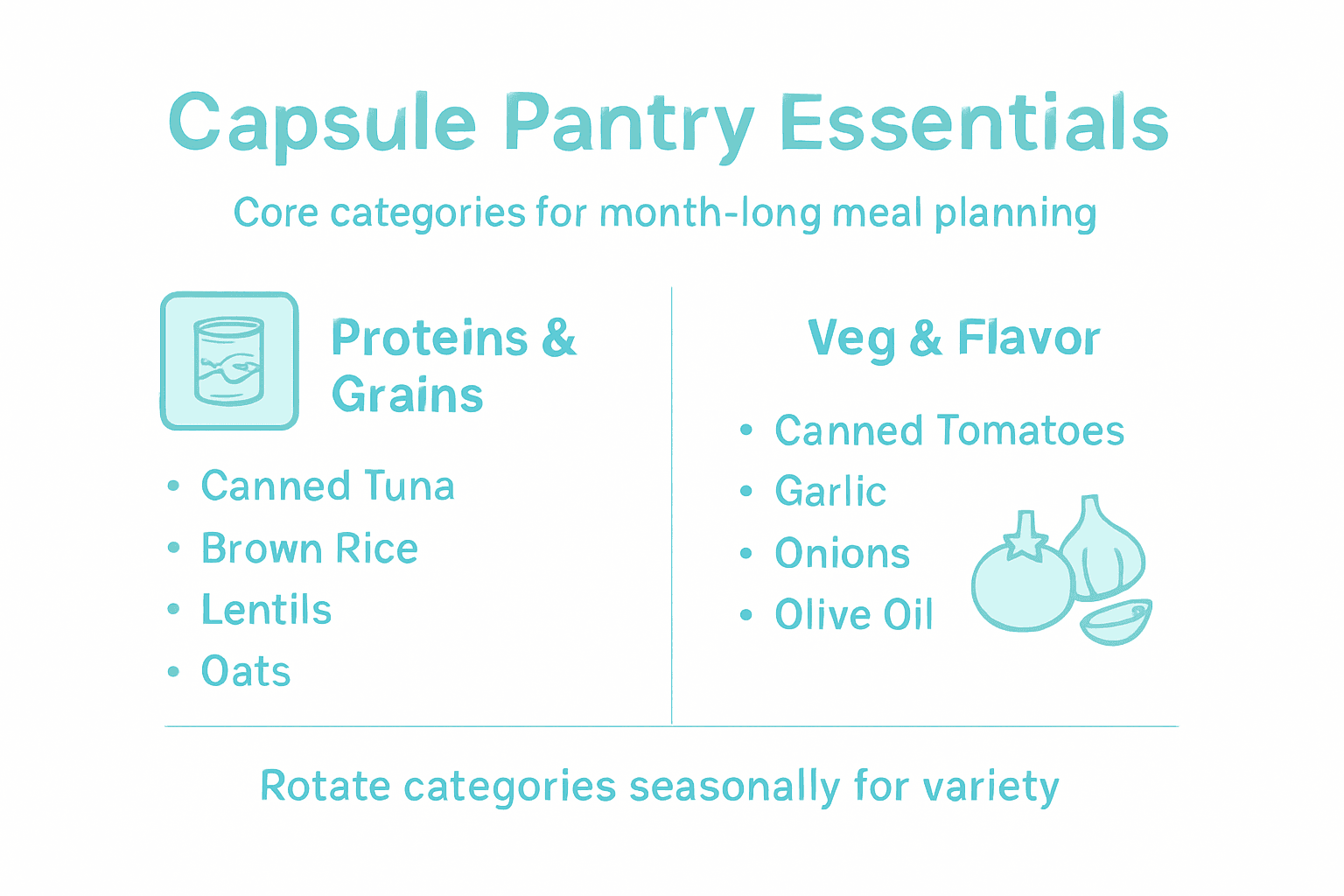
The 20-ingredient strategy typically breaks down across several categories. Proteins might include canned tuna, chicken, black beans, and eggs. Grains could feature brown rice, quinoa, and rolled oats. Starches like potatoes and sweet potatoes add substantial meal foundations. Canned tomatoes, coconut milk, and broths provide liquid bases for soups, sauces, and stews. Aromatics such as garlic, onions, and ginger create flavor depth across multiple dishes.
Your pantry’s magic happens through creative combination. A can of black beans, some rice, and spices become a Mexican-inspired bowl. The same beans with different seasonings could create a Mediterranean salad. Eggs can transform from breakfast scramble to lunch frittata to dinner quiche. This approach isn’t about limitation but about intelligent, flexible cooking that adapts to your mood, schedule, and nutritional needs.
Pro tip: Rotate your 20 ingredients seasonally to prevent flavor fatigue and maintain excitement in your meal planning.
Meal Planning Strategies for Families
Family meal planning requires strategic approaches that balance nutrition, time, and budget constraints. The capsule pantry method transforms meal preparation from a daily stress into a streamlined, enjoyable process. By creating a systematic approach to food selection and preparation, families can reduce last-minute decision fatigue and maintain healthier eating habits.
Successful meal planning involves several key strategies. First, conduct a weekly inventory of your capsule pantry ingredients. Assess what you already have and plan meals that utilize those items. Create a flexible menu that allows for substitutions and spontaneity. Consider preparing some components in advance, like cooking grains or chopping vegetables, to reduce daily cooking time. Involve family members in meal selection to increase engagement and reduce potential resistance to new dishes.
The most effective meal planning goes beyond just creating a menu. It involves understanding your family’s nutritional needs, preferences, and schedules. Batch cooking becomes a powerful tool, allowing you to prepare multiple meals simultaneously. This approach saves time, reduces cooking stress, and ensures healthy meals are always available. By mixing and matching your 20 capsule pantry ingredients, you can create diverse meals that keep everyone satisfied and excited about mealtime.
Pro tip: Designate one evening each week for meal planning and prep to create a smooth, stress-free cooking routine.
Common Mistakes and How to Avoid Them
Meal planning mistakes can derail even the most well-intentioned capsule pantry strategy. Understanding these pitfalls is crucial to maintaining an efficient and sustainable food management system. The most common errors often stem from impulse buying, poor organization, and a lack of strategic planning.
One significant mistake is overbuying specialty ingredients that rarely get used. Instead of purchasing trendy items that sound good in the moment, focus on versatile staples that can be transformed into multiple dishes. Another frequent misstep is failing to regularly inventory your pantry. This leads to duplicate purchases, forgotten ingredients expiring, and unnecessary spending. Develop a habit of conducting a weekly pantry check, noting what you have and what you genuinely need.
Organization plays a critical role in capsule pantry success. Ineffective pantry management can quickly undermine your entire meal planning approach. Group similar items together, use clear containers, and implement a first-in-first-out system to prevent food waste. Consider labeling shelves and using transparent storage solutions that allow you to see exactly what you have. Avoid the temptation to stock up on items just because they’re on sale if they don’t align with your family’s actual eating habits.
Pro tip: Create a simple digital or physical tracking system to monitor your pantry inventory and prevent unnecessary purchases.
Simplify Your Kitchen and Meal Planning with a Capsule Pantry
Struggling to keep your pantry organized while juggling family meals that feel repetitive or stressful The concept of a capsule pantry with 20 essential ingredients is a powerful way to reclaim calm and create easy meal variety without overwhelm. This article highlights the importance of having a curated set of versatile staples to reduce waste save money and eliminate last-minute food decisions. At Simple Neat Home we understand how kitchen organization combined with thoughtful meal planning transforms daily routines into enjoyable moments.
Explore our Kitchens Archives | Simple Neat Home for practical ideas on setting up your kitchen for success. Dive into our Quick Meals Archives | Simple Neat Home to discover simple recipes that maximize your capsule pantry ingredients. Ready to take control today? Start crafting a streamlined pantry and meal plan that brings your family together while reducing stress and clutter.
Frequently Asked Questions
What is a capsule pantry?
A capsule pantry is a curated selection of essential ingredients designed to simplify meal preparation and reduce food waste by allowing you to create diverse dishes from a limited number of versatile staples.
How can I create a capsule pantry with just 20 ingredients?
Start by selecting 20 versatile ingredients from core categories like proteins, grains, legumes, aromatics, oils, and seasonings, ensuring each item can be used in multiple recipes across different cuisines.
What are some common mistakes to avoid when building a capsule pantry?
Avoid overbuying specialty ingredients that aren’t multipurpose, neglecting regular inventory checks that lead to food waste, and poor organization which can undermine your meal planning efforts.
How does meal planning with a capsule pantry help families?
Meal planning with a capsule pantry streamlines the cooking process, reduces last-minute decision fatigue, and allows families to prepare healthier meals efficiently by utilizing a consistent set of ingredients.
Recommended
- 10 Pantry Staple Recipes That Make Organized Cooking Actually Possible | Simple Neat Home
- 6 Steps to Organize Pantry for Maximum Efficiency | Simple Neat Home
- 10 Genius Ways to Organize a Small Pantry | Simple Neat Home
- Meal Prep Made Simple: 10 Easy Recipes (+ Storage Solutions That Actually Work) | Simple Neat Home