For Couples: Navigating Minimalism When Your Partner Isn’t on Board—Step-by-Step Success
Disagreements over clutter are one of the top sources of tension for American couples sharing a home. When one partner loves the idea of minimalism and the other resists, every closet and countertop can become a battleground. Finding harmony in these situations matters because clutter affects daily peace, your budget, and your relationship. This guide delivers clear, practical steps for couples seeking real solutions to blend minimalist ideals and maintain shared happiness.
Table of Contents
- Step 1: Assess Readiness And Set Shared Goals
- Step 2: Communicate Openly About Minimalism Benefits
- Step 3: Define Personal And Shared Spaces
- Step 4: Implement Small Decluttering Projects Together
- Step 5: Celebrate Progress And Adjust As Needed
Quick Summary
| Clear Insight | Practical Explanation |
|---|---|
| 1. Set Shared Minimalism Goals | Discuss individual views on minimalism to establish common goals that respect both partners’ values and hopes. |
| 2. Communicate Openly About Benefits | Use empathetic communication to help your partner see how minimalism can reduce stress and improve your shared life. |
| 3. Define Personal and Shared Spaces | Establish boundaries for personal and shared areas to foster individual expression while maintaining a clutter-free home. |
| 4. Start with Small Decluttering Projects | Engage in quick, fun decluttering tasks together to build momentum and make the process enjoyable for both partners. |
| 5. Celebrate Progress and Adjust | Regularly acknowledge accomplishments and be flexible with strategies to ensure the journey feels rewarding for both. |
Step 1: Assess Readiness and Set Shared Goals
Setting shared goals is your first crucial step in navigating minimalism together. Your mission? Understanding each other’s perspectives and creating a unified vision that works for both of you.
Start by scheduling a relaxed conversation where both partners can openly discuss their feelings about minimalism. Exploring individual perspectives and hopes is key. Ask yourselves some honest questions: What does minimalism mean to each of you? What are your biggest concerns? What outcomes are you hoping to achieve?
Next, focus on identifying your shared values. Look for common ground like reduced stress, more financial freedom, or creating a peaceful home environment. Write these down together. Maybe you both want to spend less time cleaning or want more quality time instead of managing stuff. Breaking down your goals into specific areas like kitchen, bedroom, or workspace can make the process less overwhelming.
Remember that compromise is essential. Your partner might not want to get rid of everything, and that’s okay. The goal is finding a balanced approach that respects both perspectives. A couples therapist recommends regular goal reviews to ensure you stay aligned and supportive of each other.
Here’s a summary of common challenges couples face on their minimalism journey and strategies for overcoming them:
| Challenge | Common Cause | Approach to Overcome |
|---|---|---|
| Differing definitions | Personal values/history | Open conversations |
| Emotional attachment | Sentimental value of belongings | Empathy and compromise |
| Uneven motivation | Varying readiness to minimize | Set shared small goals |
| Decluttering overwhelm | Too much to tackle at once | Start with small projects |
| Maintaining progress | Busy schedules or old habits | Regular check-ins and tweaks |
Pro tip: Create a shared vision board or document where you both can track progress and celebrate small wins in your minimalism journey.
Step 2: Communicate Openly About Minimalism Benefits
Communicating about minimalism requires a delicate balance of passion and patience. Your goal is to help your partner understand the transformative potential of minimalism without making them feel attacked or judged.
Open and honest communication plays a critical role in sharing minimalism’s true value. Start by listening to your partner’s concerns and fears. What makes them hesitant? Is it worry about losing sentimental items? Concerns about feeling restricted? Understanding their perspective creates a foundation of empathy.
When discussing benefits, focus on personal impact rather than abstract concepts. Share specific examples of how minimalism has improved your life or could enhance your shared experience. Talk about reduced stress from less clutter, more financial flexibility, easier home maintenance, and increased quality time together. Use concrete stories that illustrate these advantages instead of lecturing or presenting minimalism as an all-or-nothing lifestyle.
Framing minimalism as a collaborative journey rather than a strict set of rules can make your partner more receptive. Suggest small experiments like decluttering one drawer together or trying a 30-day minimal challenge that feels low pressure and fun. Celebrate small wins and be patient with the process.
Pro tip: Create a shared vision board highlighting the lifestyle and experiences you both want minimalism to help you achieve.
Step 3: Define Personal and Shared Spaces
Drawing clear boundaries between personal and shared spaces is crucial when adopting minimalism as a couple. This step helps you create a harmonious living environment that respects individual needs while maintaining a clutter-free home.
Defining personal and shared spaces plays a critical role in minimalist relationships, allowing each partner to feel heard and valued. Start by identifying areas where each person needs personal freedom. Maybe you want a small workspace or a special shelf for your favorite books, while your partner might want a corner for their hobby supplies. These personal zones become sacred spaces that remain untouched during shared decluttering sessions.
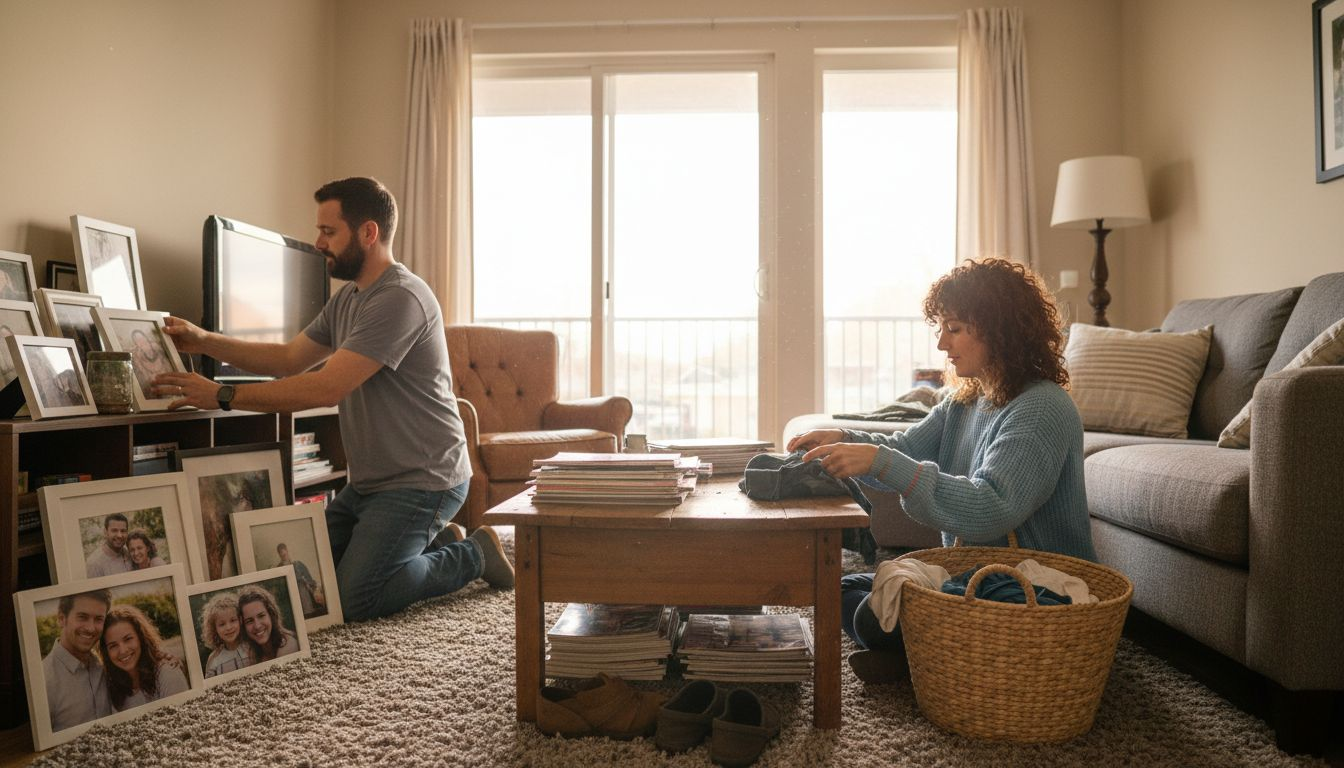
Couples are discovering innovative ways to integrate individual and collective spaces through intentional design. Establish clear guidelines for shared areas like the living room, kitchen, and bedroom. Create a system where both partners have equal say in what stays and what goes. Consider using storage solutions that are visually appealing and functional, allowing each person to contribute to the space’s design.
Remember that compromise is key. Some items might have sentimental value to one partner but feel like clutter to another. Approach these discussions with empathy, finding creative solutions like taking photos of sentimental items or storing a limited number of meaningful pieces.
This table clarifies typical personal and shared spaces, with their roles in a minimalist home:
| Type of Space | Example Area | Key Benefit |
|---|---|---|
| Personal Space | Home office desk | Individual expression |
| Shared Space | Living room | Joint comfort and utility |
| Personal Space | Hobby corner | Creative freedom |
| Shared Space | Kitchen | Collaborative use |
Pro tip: Create a shared digital or physical map of your home highlighting personal and shared zones to maintain clear boundaries and mutual understanding.
Step 4: Implement Small Decluttering Projects Together
Tackling minimalism as a team means starting small and building momentum together. Your goal is to create collaborative decluttering experiences that feel fun, low pressure, and mutually rewarding.
Begin with quick decluttering tasks that take just 10 minutes to prevent overwhelm. Choose areas that are neutral ground like a shared kitchen drawer, bathroom cabinet, or entryway closet. Make it a game where you both participate equally. Set a timer, put on some music, and challenge each other to see who can clear out more unnecessary items without being too aggressive about personal belongings.
Consider creating a friendly decluttering challenge that motivates both of you. Maybe aim to fill one donation bag per week or clear out 20 items in 20 days. Track your progress together and celebrate small victories. The key is making minimalism feel like a shared adventure rather than a chore. Talk through each item, share stories, and be supportive of each other’s decisions.
Remember that patience and humor are your best tools. Some days will go smoothly, while others might feel challenging. Stay flexible and keep the mood light. If one partner feels uncomfortable, pause and revisit the project later.
Pro tip: Take before and after photos of your decluttering projects to visually track your progress and remind yourselves how far you have come.
Step 5: Celebrate Progress and Adjust as Needed
Reaching milestones in your minimalism journey is about recognizing growth and staying flexible. Your path is not about achieving perfection but creating meaningful change together.
Celebrating progress helps foster resilience and motivation throughout your minimalist transition. Schedule regular check-ins where you both reflect on what worked, what challenged you, and how you want to move forward. Maybe you cleared out a closet, reduced monthly shopping, or found creative storage solutions. Acknowledge these wins no matter how small they seem.
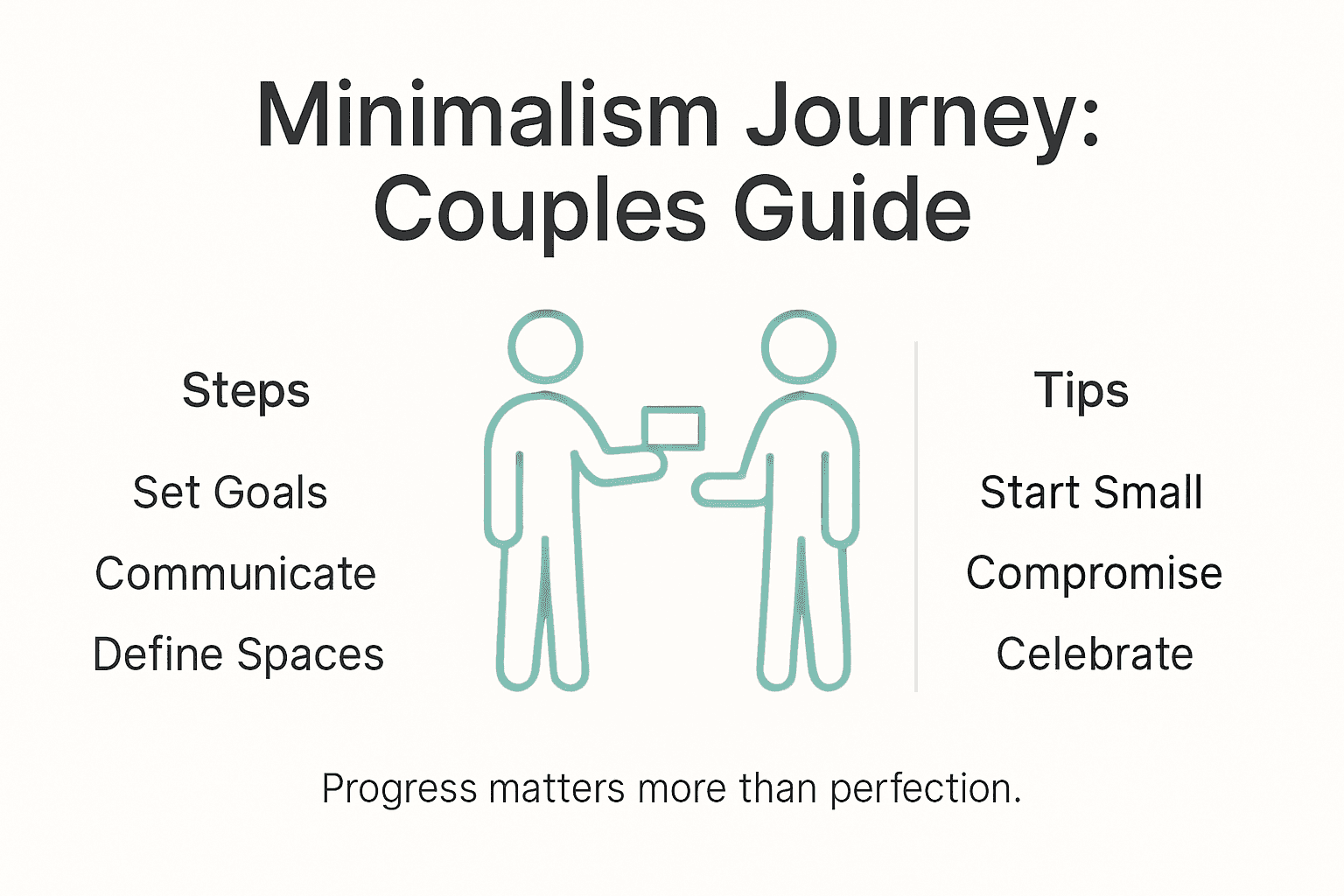
Embracing progress as an ongoing process means being kind to yourselves and each other. If certain strategies are not working, modify them. Not every approach will fit perfectly, and that is completely okay. Some weeks you might declutter enthusiastically, while other times you need a break. Communicate openly about your feelings, adjust expectations, and maintain a sense of teamwork.
Remember that minimalism looks different for every couple. Your version might involve keeping more sentimental items or moving more slowly than others. The goal is creating a home that feels peaceful and intentional for both of you.
Pro tip: Create a shared digital journal or scrapbook documenting your minimalism journey to help you appreciate how far you have come.
Find Harmony in Your Minimalism Journey Together
Navigating minimalism when your partner is hesitant can be challenging. The article highlights key struggles like differing definitions of minimalism, emotional attachments, and the need for patient communication and shared goal-setting. If you want to transform those challenges into opportunities for growth you need practical support tailored to both of your needs. At Simple Neat Home we understand the importance of taking small approachable steps toward decluttering and creating a peaceful home environment that respects personal and shared spaces.
Explore our Minimalism Archives | Simple Neat Home for expert advice on easing into minimalism together. You can also find helpful strategies in our Decluttering Archives | Simple Neat Home designed to make team decluttering projects feel manageable and rewarding. Start your journey to reclaim calm today and discover how simple changes unlock balance and joy for you and your partner.
Frequently Asked Questions
How can I assess my partner’s readiness for minimalism?
Start by having an open conversation about your feelings and definitions of minimalism. Discuss what each of you hopes to gain, like reduced stress or a peaceful home, to gauge your partner’s readiness and willingness to engage.
What steps can we take if my partner is reluctant about decluttering?
Begin with small decluttering projects that feel less overwhelming. Try tackling a shared space like a single drawer and agree on a timeline—set aside just 10 minutes and see how it goes.
How should we approach goal-setting for our minimalism journey?
Schedule a relaxed discussion to establish shared goals related to minimalism. Aim to identify common values, such as financial freedom or less stress, to create a unified vision that respects both partners’ perspectives.
How can we maintain progress in our minimalism efforts over time?
Set regular check-ins to review your progress and celebrate small wins, which helps foster motivation. Try meeting every two weeks to discuss what is working and make adjustments as needed.
What if our definitions of minimalism differ significantly?
Encourage open conversations to explore your individual definitions of minimalism. Use empathy to understand each other’s views, and focus on finding compromises that honor both partners’ values and concerns.
How can we celebrate our progress without feeling pressured?
Focus on recognizing achievements, no matter how small, by scheduling celebratory moments after completing decluttering projects. Consider keeping a shared journal or scrapbook that captures progress and milestones throughout your minimalism journey.
Recommended
- 10 Things I’ve Stopped Buying Since Going Minimalist
- What is Minimalist Living? Understand Its Essence | Simple Neat Home
- Role of Minimalism at Home – Creating Calm Spaces | Simple Neat Home
- Understanding the Advantages of Minimalism at Home | Simple Neat Home
- 10 Perfect Matching Robe Sets for Couples to Elevate Comfort – Lotus Linen