Role of Decluttering Checklists: Simplifying Home Organization
Most American households report feeling stressed by clutter, with over 50 percent admitting their homes are disorganized most of the time. This ongoing battle with possessions affects daily routines and even long-term well-being. Learning the truth about decluttering checklists and dispelling common myths can help you shift from constant frustration to practical control, offering simple tools to reclaim your peace of mind and transform any living space.
Table of Contents
- Defining Decluttering Checklists And Common Myths
- Checklist Types For Different Decluttering Needs
- How Decluttering Checklists Streamline Home Tasks
- Common Pitfalls And How To Avoid Them
- Choosing Or Creating The Right Checklist
Key Takeaways
| Point | Details |
|---|---|
| Decluttering is a Thoughtful Process | It’s about evaluating possessions and keeping what adds value, rather than just discarding items. |
| Ongoing Practice | Effective decluttering is not a one-time event; it requires consistent effort and mindful decision-making. |
| Personalized Checklists are Essential | Utilize room-based or category-based checklists tailored to your organizational style for effective decluttering. |
| Avoid Common Pitfalls | Address emotional attachments and set realistic expectations to prevent overwhelm during the decluttering journey. |
Defining Decluttering Checklists and Common Myths
Decluttering checklists are strategic roadmaps designed to help you systematically organize and simplify your living spaces. Unlike casual tidying, these checklists provide a structured approach to managing possessions and creating functional environments. Academic research on consumer behavior reveals that effective decluttering goes beyond surface-level cleaning—it’s about intentionally curating your personal space.
Myth 1: Decluttering is Just Throwing Things Away
Contrary to popular belief, decluttering isn’t about mindlessly discarding items. It’s a thoughtful process of evaluating your belongings and keeping what genuinely adds value to your life. The goal is creating space that supports your lifestyle, not achieving a sterile, empty environment. Some key principles include:
- Assessing each item’s practical and emotional significance
- Understanding the difference between sentimental attachment and necessary storage
- Creating systems that prevent future unnecessary accumulation
Myth 2: Decluttering is a One-Time Event
Another common misconception is that decluttering happens in a single weekend. In reality, it’s an ongoing practice that requires consistent effort and mindful decision making. 10 Key Questions to Ask Yourself When Decluttering can help you develop a sustainable approach to managing your possessions.
Successful home organization isn’t about perfection—it’s about progress. By understanding these myths and adopting a strategic approach, you can transform your living spaces into calm, functional environments that truly support your daily life.
Checklist Types for Different Decluttering Needs
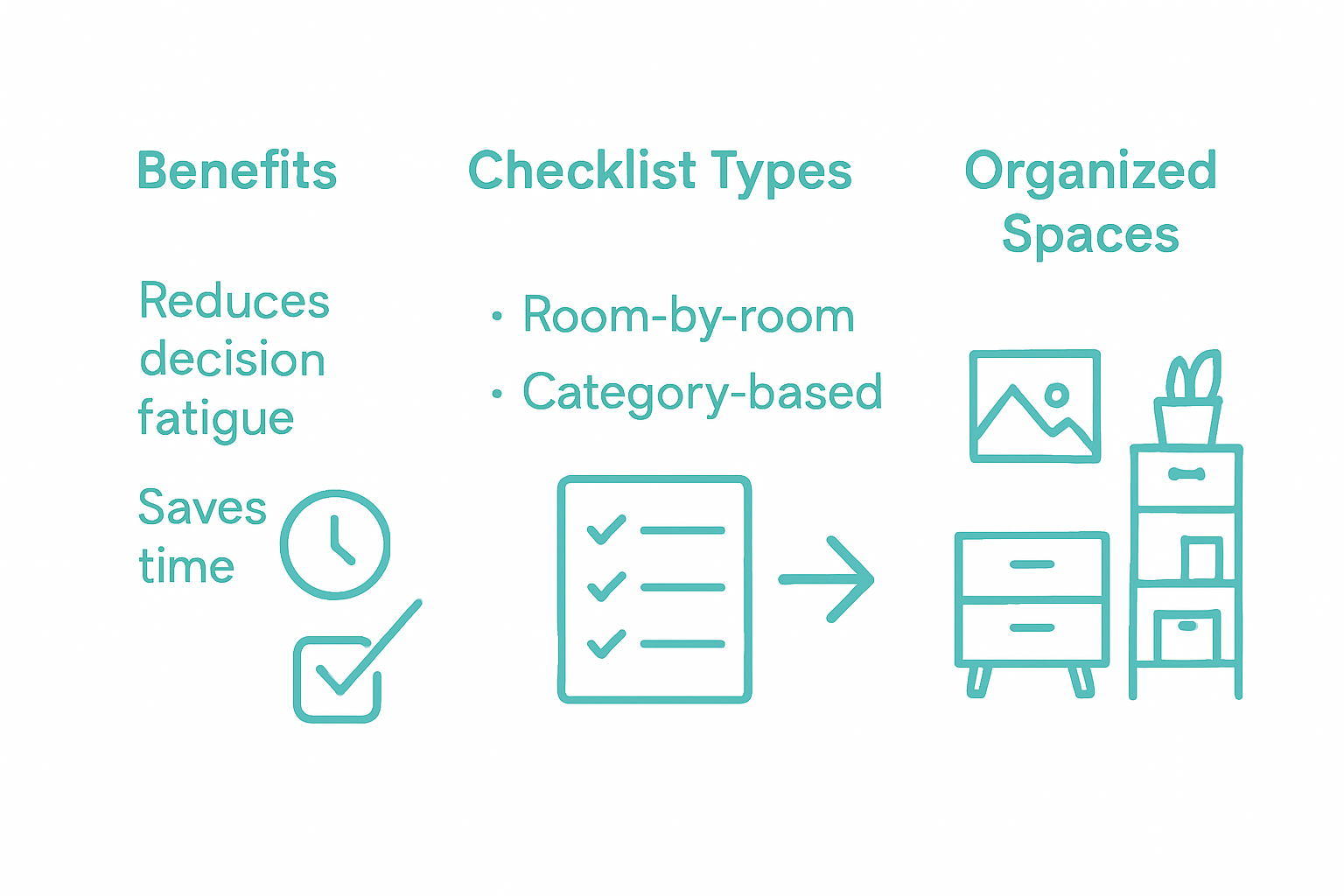
Decluttering isn’t a one-size-fits-all process. Different living spaces and personal organizational styles require unique approaches to managing possessions effectively. Comprehensive room-by-room decluttering methods demonstrate that strategic planning can transform chaotic spaces into streamlined environments.

Room-Based Checklists
Room-based checklists provide a systematic method for tackling clutter in specific areas of your home. These targeted approaches help you focus on one space at a time, preventing overwhelm. Key characteristics include:
- Breaking down large tasks into manageable sections
- Identifying specific problem areas within each room
- Creating targeted strategies for different types of spaces (kitchen, bedroom, home office)
Category-Based Checklists
Specialized decluttering methods like the KonMari approach offer an alternative to room-based strategies. Instead of focusing on physical locations, these checklists organize items by category:
- Clothing
- Books and documents
- Sentimental items
- Kitchen supplies
- Electronics and digital clutter
This method allows you to see the total volume of similar items across your entire home, making it easier to make ruthless decisions about what to keep.
Whether you choose a room-by-room or category-based approach, the key is finding a system that matches your personal organizational style and home layout. 100 Things to Declutter Right Now can provide additional inspiration for jumpstarting your decluttering journey, helping you create a more organized and peaceful living environment.
How Decluttering Checklists Streamline Home Tasks
Systematic approaches to home organization reveal that decluttering checklists are powerful tools for transforming chaotic living spaces into efficient, stress-free environments. These strategic documents do more than simply list tasks—they provide a psychological framework that breaks down overwhelming organizational challenges into manageable steps.
Psychological Benefits of Structured Decluttering
Decluttering checklists offer significant mental advantages by reducing decision fatigue and providing clear, actionable guidance. When you have a predetermined plan, you eliminate the mental friction that often prevents people from starting organizational projects. Key psychological benefits include:
- Reducing anxiety about home organization
- Creating a sense of control and accomplishment
- Minimizing decision-making stress
- Providing a clear roadmap for progress
Efficiency Through Systematic Planning
Room-by-room decluttering strategies demonstrate how structured approaches can dramatically improve home organization efficiency. By breaking down complex tasks into smaller, achievable steps, checklists help you:
- Prioritize areas that need immediate attention
- Track your progress systematically
- Prevent becoming overwhelmed by large organizational projects
- Maintain motivation through visible achievements
Time Management and Productivity
Effective decluttering checklists are essentially time management tools. They help you allocate your energy strategically, ensuring that you focus on the most impactful organizational tasks. By providing a clear sequence of actions, these checklists transform what might feel like an insurmountable challenge into a series of simple, achievable steps. The result? A more organized home and a significantly reduced mental load.
Common Pitfalls and How to Avoid Them
Decluttering can quickly become overwhelming when approached without a strategic mindset. How to Declutter When You Don’t Have Time highlights the importance of understanding common obstacles that can derail your organizational efforts.
Emotional Attachment Challenges
One of the most significant barriers to effective decluttering is emotional attachment to possessions. Many people struggle to let go of items that hold sentimental value or represent past memories. Strategies to overcome this include:
- Taking photographs of sentimental items before releasing them
- Setting a strict limit on keepsake storage
- Asking yourself objective questions about item utility
- Recognizing the difference between memory and physical object
Procrastination and Perfectionism
Two major pitfalls that prevent successful decluttering are procrastination and perfectionism. Perfectionists often become paralyzed by the desire to complete the entire project perfectly, while procrastinators continually delay getting started. Effective approaches to combat these challenges include:
- Breaking tasks into tiny, manageable steps
- Setting realistic time-bound goals
- Accepting that progress is more important than perfection
- Implementing a “15-minute rule” for daily decluttering
Unrealistic Expectations
Many people sabotage their decluttering efforts by setting unrealistic expectations. They imagine transforming their entire home in a single weekend, which leads to frustration and burnout. The Ultimate Guide: How to Declutter Your Home, Step by Step emphasizes the importance of creating sustainable, long-term organizational habits. Remember, decluttering is a journey, not a destination. Approach the process with patience, self-compassion, and a commitment to continuous improvement.
Choosing or Creating the Right Checklist
Creating an effective decluttering checklist requires understanding your unique organizational needs and personal style. 7 Essential Tips for Your Decluttering Checklist 2025 provides insights into developing a personalized approach that works specifically for your home and lifestyle.
Assessing Your Personal Organizational Style
Before selecting or creating a checklist, it’s crucial to evaluate your personal strengths and challenges. Different personalities require different organizational strategies. Consider these key factors:
- Your available time and energy levels
- Your home’s specific layout and problem areas
- Personal habits and typical clutter patterns
- Emotional attachment to possessions
- Work and family commitments
Customization Strategies
A truly effective decluttering checklist isn’t a one-size-fits-all solution. Successful checklists should be adaptable and tailored to your specific circumstances. Customization techniques include:
- Creating modular sections you can mix and match
- Building in flexibility for unexpected challenges
- Adding personal motivation triggers
- Incorporating reward systems for completed tasks
- Allowing room for adjustment based on progress
Digital vs. Physical Checklist Considerations
Choosing between digital and physical checklists depends on your personal preferences and organizational style. Digital checklists offer easy tracking and portability, while physical checklists provide a tangible sense of progress. Hybrid approaches can combine the best of both worlds, helping you stay motivated and organized throughout your decluttering journey.
Simplify Your Home Organization with Expert Decluttering Checklists
Struggling to conquer clutter and maintain a calm living space is a common challenge for many. This article highlights how using structured decluttering checklists can break down overwhelming tasks into manageable steps and reduce decision fatigue. If you find yourself facing emotional attachment to belongings or feeling stuck trying to create lasting organizational habits, you are not alone. The key is developing a personalized, sustainable system that fits your unique home layout and lifestyle.
Explore our Decluttering Archives | Simple Neat Home to discover practical checklists and expert tips that align perfectly with the strategies discussed here. You will also find valuable guidance on organizing specific spaces in our Organization Archives | Simple Neat Home. Ready to take control and turn your home into a peaceful retreat? Start your journey towards clutter-free living with resources tailored to help you reclaim calm from chaos.
Frequently Asked Questions
What is the purpose of decluttering checklists?
Decluttering checklists serve as strategic roadmaps to help you systematically organize and simplify your living spaces, providing a structured approach to managing your possessions and creating functional environments.
How do decluttering checklists help reduce decision fatigue?
These checklists provide clear, actionable steps, reducing mental friction and decision fatigue by eliminating the overwhelming feeling often associated with starting organizational projects.
Are decluttering checklists a one-time solution?
No, decluttering is an ongoing practice that requires consistent effort. Effective checklists promote sustainable habits rather than focusing solely on one-time clean-outs.
How can I customize a decluttering checklist to fit my needs?
You can create a personalized checklist by assessing your organizational style, considering your specific home layout, and incorporating flexibility and motivation triggers that align with your unique circumstances.
Recommended
- Simple Living Tips: Guide to Unneeded Items | Simple Neat Home
- 7 Essential Tips for Your Decluttering Checklist 2025 | Simple Neat Home
- The Ultimate Guide: How to Declutter Your Home, Step by Step
- 5 Simple Steps to Declutter Your Closet | Simple Neat Home
- 7 Essential Tips for Minimalist Nursery Design – KariStudio
- Instrukcja projektowania garderoby krok po kroku – Emmi Kuchnie – meble kuchenne na wymiar, szafy komandor, kuchnie bydgoszcz, meble na wymiar bydgoszcz, stolarz bydgoszcz


