Why Menu Planning Will Change the Way You Handle Meal Prep for Families
It’s 5:15 PM on a Tuesday. You’re standing in front of the refrigerator, door hanging open, staring at a half-empty jar of pickles, three limp carrots, and a package of ground beef that you think is still good. The kids are asking for snacks for the tenth time, your brain feels like it has fifty tabs open, and the easy way out: ordering pizza for the second time this week: is calling your name like a siren song.
I’ll be the first to admit that I used to be a total "recipe hoarder." I had Pinterest boards overflowing with three-course meals and stacks of cookbooks I never actually opened. My kitchen was a chaotic dance of "what can I throw together in ten minutes?" followed by the inevitable guilt of another takeout bag in the trash. It’s exhausting, isn't it? That constant mental weight of deciding what to feed your family is a heavy load to carry every single day.
But here is the good news: it doesn't have to be this way. Menu planning isn't about being a perfect "Pinterest mom" or spending your entire Sunday chopping onions. It’s about creating a system that works for you, not against you. It’s about finding that serene moment where you know exactly what’s for dinner, the ingredients are ready, and you can actually enjoy those evening hours with your family.
Let’s walk through how to turn that kitchen chaos into a calm, predictable routine.
1. Start Where You Are (And Be Kind to Yourself)
Before we get into the nitty-gritty of lists and labels, I want you to take a deep breath. Menu planning is a journey, not a destination. It’s a marathon, not a sprint. If you’ve never planned a meal in your life, don’t try to plan 21 meals for the upcoming week. You’ll burn out before you even hit Tuesday.
I started by just planning three dinners a week. That’s it. On the other nights, we had "fend for yourself" leftovers or very simple sandwiches. By lowering the bar, I actually stuck to it.
Ask yourself: What would my ideal, peaceful environment look like at 6:00 PM?
Imagine a kitchen where the counters are clear, a healthy meal is simmering away, and you aren't rushing to the store for a missing ingredient. That’s the goal. We’re looking for harmony, not perfection. If you find your kitchen is too cluttered to even start, you might want to check out our 30 Day Declutter Challenge to clear the decks first.
2. Plan With Your Calendar, Not Against It
The biggest mistake I ever made was planning a complex, hour-long lasagna recipe on the same night my kids had soccer practice and I had a late work meeting. Talk about a recipe for disaster!
Now, the very first thing I do is pull out my family calendar.
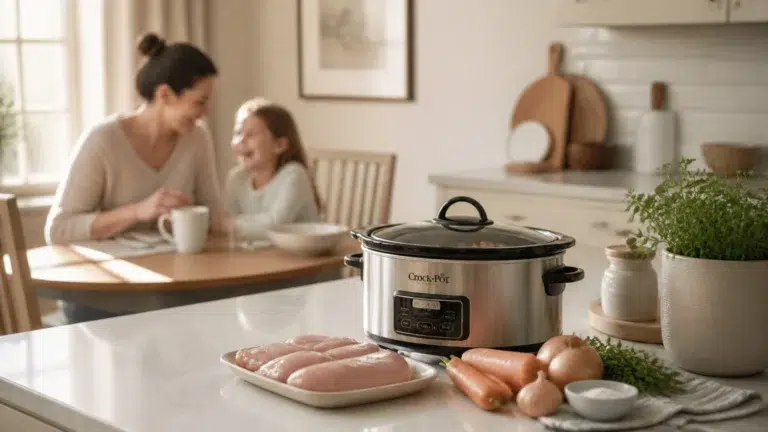
- The "Crazy" Nights: On nights with sports or late meetings, plan for "dump-and-go" slow cooker meals. These are absolute lifesavers. You throw everything in the pot in the morning, and by 6 PM, your house smells amazing and dinner is served.
- The "I Can Actually Cook" Nights: Save the new recipes or slightly more involved meals for the nights you actually have an extra thirty minutes.
- The "Fridge Reset" Night: Usually Fridays or Saturdays, this is when we eat whatever is left or do a "Kitchen Sink" pasta.
By matching your meals to your energy levels and schedule, you stop fighting against your own life. You can explore more about managing these busy routines in our Family Meals section.

3. Shop Your Own Pantry First
One man’s trash is another man’s treasure: or in this case, that box of quinoa at the back of the pantry is your "free" dinner for Wednesday! Before you even think about going to the store, see what you already have.
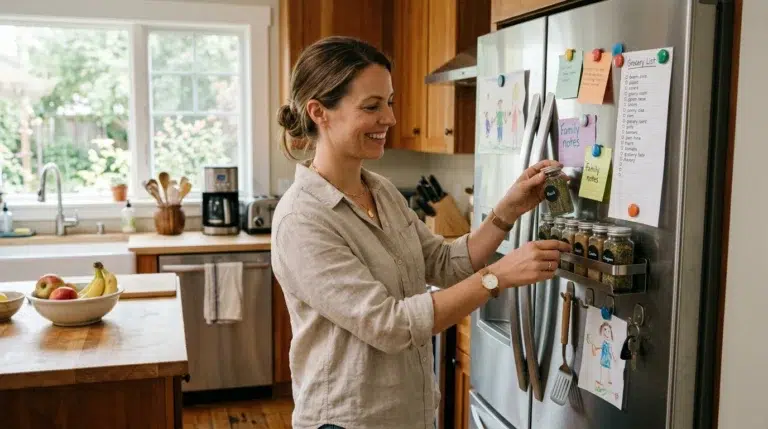
I used to be a chronic "double-buyer." I’d come home with a new jar of cumin only to find three others hiding in the spice rack. It’s a waste of money and space. A deep kitchen clean and organization session can help you see exactly what you've been "hoarding" in those back corners.
Try this quick pre-planning routine:
- The Fridge Peek: Check for produce that needs to be used up.
- The Freezer Find: Did you freeze half a bag of peas or a pack of chicken breasts last month? Use them!
- The Pantry Scan: Build a meal around that half-box of pasta or the canned black beans.
By using what you have, you’ll save a significant amount on your grocery bill and keep your pantry from overflowing.
4. Master the Art of the "Smart" Grocery List
Once you know what you’re making, it’s time for the list. A random scrap of paper usually leads to forgetting the one thing you actually needed (why is it always the eggs?).
I find it helpful to organize my list by the layout of the store. Produce first, then dairy, then the aisles. This prevents you from zigzagging across the store while your toddler starts to lose their cool in the cart.

Positive steps for your list:
- Stick to the plan: If it’s not on the list, it doesn't go in the cart (unless it’s a genuine emergency).
- Check for staples: Make sure you aren't low on milk, bread, or coffee: the essentials that keep the household running.
- The "One-Treat" Rule: To keep kids (and yourself) happy, allow for one unplanned "fun" item. It prevents the feeling of deprivation.
5. Embrace the "Dump-and-Go" Strategy
If you want to truly change the way you handle meal prep, you need to fall in love with your slow cooker. At Simple Neat Home, we are huge fans of strategies that save time without sacrificing nutrition.
Think about "Component Cooking." Instead of prepping five different meals, prep components that can be used in multiple ways.
- The Protein Batch: Cook a large batch of ground turkey or shredded chicken. Use half for tacos on Monday and the other half for a pasta sauce or salad on Thursday.
- The Prep Party: Chop all your onions, peppers, and carrots at once. It takes 15 minutes now but saves you 5 minutes every single night of the week.
- The Snack Station: Wash your fruit the second you get home from the store so it's ready for grab-and-go snacks.
These small wins add up. When the hard work is already done, the "chore" of cooking feels more like a simple assembly.

6. The Grocery Store Trap (and How to Avoid It)
We’ve all been there: you go in for milk and come out with $100 worth of "seasonal specials" and three types of gourmet crackers you didn't know existed. This is where the mental load of a busy parent can really sabotage your budget.
- Don't shop hungry: It’s a cliché for a reason. Everything looks delicious when your stomach is growling.
- Shop solo if possible: I know, I know: sometimes you have no choice but to bring the whole crew. But if you can snag 30 minutes alone to shop, you’ll be faster, more focused, and less likely to grab "peace-keeping" snacks.
- Grocery Pickup is your friend: If you struggle with impulse buys, use a pickup service. You can see your total in real-time and remove items if you’ve gone over budget. It’s a game-changer for staying organized.
7. Involve the Whole Family
You don’t have to do this alone! In fact, involving the kids is one of the best ways to get them to actually eat what you cook.
- The Choice Method: Ask your kids, "Do you want tacos or spaghetti on Tuesday?" Giving them a choice within a set of healthy options makes them feel empowered.
- The Prep Party: Even little ones can wash vegetables or tear lettuce. Older kids can help with stirring or setting the table.
- The Cleanup Crew: Make a rule that the cook doesn't clean. If you handled the prep and the cooking, someone else handles the dishes.
Creating a joint cleaning routine for the kitchen reduces the household stress and distributes the load fairly. It turns a solitary task into a shared family moment.
8. The Emotional Reward: Peace at the Table
Why do we do all of this? Is it just to save $20 on groceries or ten minutes of chopping? No. We do it for the feeling of peace.
When you aren't stressed about what to cook, you can focus on who you are eating with. Family meals are a time for connection. It’s where you hear about the funny thing that happened at recess or the project your spouse is working on. It’s the heartbeat of a happy home.
When you walk into your kitchen at the end of a long day and see a plan in place, you can finally breathe freely. That sense of order is the foundation for a serene evening where you can actually relax.
9. The Weekly Reset
Every Sunday afternoon, I spend about 20 minutes doing what I call the "Kitchen Reset." I clear the counters, wipe down the stove, and check my meal plan for the week ahead.
It’s a way to close the door on last week’s chaos and open the door to a fresh start. There is something so serene about waking up on Monday morning knowing that the fridge is stocked, the plan is set, and you are ready for whatever the week throws at you.
You are absolutely capable of this. It’s not about being perfect; it’s about making one positive step today. Maybe today your step is just writing down three meals. That is enough. Be kind to yourself, and remember that a simple, neat home is built one small habit at a time.
You’ve got this!