The Art of Intentionality: How to Define Your Enough at Home
Over 60 percent of American parents say clutter adds stress to their daily lives, yet finding calm at home often feels impossible. With endless responsibilities, many wonder how to create a peaceful environment that truly supports their family’s well-being. Discover proven steps for intentional living, from clarifying your values to reassessing your space, designed to help American parents regain control and cultivate a home that feels organized and meaningful.
Table of Contents
- Step 1: Clarify Your Values And Priorities
- Step 2: Assess Your Current Home Environment
- Step 3: Identify What “Enough” Means To You
- Step 4: Set Realistic Boundaries And Limits
- Step 5: Verify Your Progress Toward A Calm Home
Quick Summary
| Key Insight | Explanation |
|---|---|
| 1. Clarify your values | Identify your core values to guide decisions and create a meaningful home environment. Reflect on what truly matters to you. |
| 2. Assess your home environment | Conduct a room-by-room evaluation to identify areas that support or hinder your well-being. Look for clutter and maintenance issues to address. |
| 3. Define ‘enough’ for yourself | Understand what sufficiency means to you, breaking free from societal pressures. Distinguish between needs, wants, and what you can release. |
| 4. Set realistic boundaries | Establish clear limits in your physical space, emotional interactions, and time management to maintain your well-being and personal balance. |
| 5. Track your progress | Monitor changes in your home environment and emotional responses over time. Celebrate small improvements towards creating a calm, intentional living space. |
Step 1: Clarify your values and priorities
Understanding your core values is like creating a personal compass that guides your life decisions and helps you build a meaningful home environment. This step will help you identify what truly matters to you and align your daily actions with those fundamental beliefs.
Start by setting aside some quiet time for honest self reflection. Grab a notebook and ask yourself powerful questions about what brings you genuine satisfaction. What moments make you feel proud? What type of person do you want to be? Values are the things that you believe are important in the way you live and work, serving as an internal navigation system for your choices.
To dig deeper, create three columns in your notebook. Label them Personal, Family, and Professional. Under each column, write down experiences or interactions that have felt truly meaningful. Look for patterns that reveal what you care about most. Maybe you value connection, creativity, learning, or making a positive impact. These insights will help you understand your core values and increase awareness of personal values affecting lifestyle decisions.
Remember that values are ongoing motivations rather than rigid checklists. They can evolve as you grow and gain life experience. The goal is to create alignment between what you believe and how you actually spend your time and energy.
Pro tip: Review your values list every six months and adjust as needed to ensure they still resonate with your current life stage and personal growth.
Step 2: Assess your current home environment
Taking a deliberate look at your living space is crucial for creating an intentional home that supports your well-being. This step will help you understand your current environment and identify areas that need attention or improvement.
Begin by walking through each room with a critical yet compassionate eye. A healthy home is one that is dry, clean, safe, well-ventilated, pest-free, and free of contaminants. Grab a notebook and create a room-by-room assessment. For each space, ask yourself key questions. Is the area cluttered? Does it feel overwhelming? Are there items that no longer serve a purpose or bring you joy?

Consider your home from multiple perspectives. Look at functionality how well does each space support your daily activities? Examine emotional impact how do you feel when you enter different rooms? Notice the physical condition of your space. Are there maintenance issues like peeling paint, drafty windows, or storage challenges? Pay attention to how your environment affects your mood and productivity. Some areas might feel energizing while others might feel draining or stressful.
The goal is not perfection but awareness. You are creating a snapshot of your current living situation that will guide your intentional decluttering and reorganization journey.
Here’s a comparison of signs that your home environment is supporting or hindering well-being:
| Supportive Home Signs | Hindering Home Signs |
|---|---|
| Spaces feel calming | Rooms cause stress or overwhelm |
| Enough storage for essentials | Frequent clutter accumulates |
| Lighting boosts mood | Poor light lowers motivation |
| Maintenance issues addressed | Repairs often ignored |
Pro tip: Take photos of each room before you start your assessment to help you track your progress and maintain objectivity.
Step 3: Identify what “enough” means to you
Intentional living is a lifestyle grounded in conscious choices that reflect one’s core values and beliefs, and understanding what “enough” truly means for you is a transformative process of self discovery. This step will help you break free from societal pressures and define sufficiency on your own terms.
Start by exploring the emotional and practical dimensions of “enough” in different areas of your life. Imagine your ideal living space and daily experience. What does contentment look like for you? Enoughness denotes a state of contentment derived from having and being sufficient without comparison or desire for excess. This might mean having fewer possessions that truly spark joy, creating more mental space, or reducing commitments that drain your energy.
Reflect on areas where you feel overwhelmed or constantly striving. Are there spaces in your home or aspects of your lifestyle where you’ve accumulated things out of habit or external expectations? Consider creating three lists: what you need, what you want, and what you can release. Be honest about the difference between genuine necessities and items that no longer serve your current life stage. The goal is not minimalism for its own sake, but creating a purposeful environment that supports your well-being and personal growth.
Pro tip: Practice asking yourself “Does this genuinely add value to my life?” before making any new purchase or holding onto existing possessions.
Step 4: Set realistic boundaries and limits
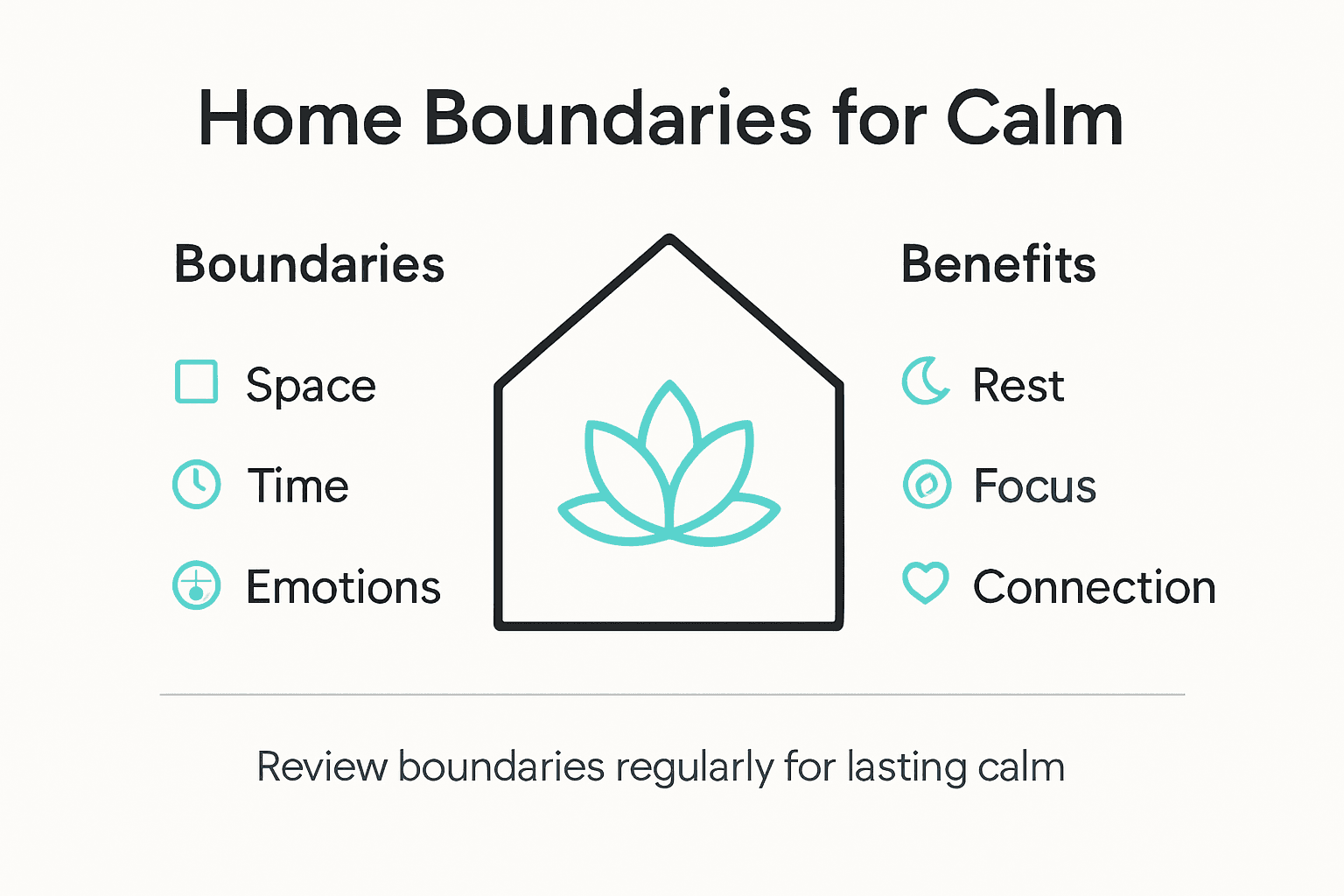
Setting boundaries involves identifying what you will and will not tolerate in various areas such as physical space, emotional limits, and time management. This step is about creating clear guidelines that protect your energy, respect your values, and help you maintain a sense of balance in your home and personal life.
Healthy boundaries are limits on your time, physical space, and emotions that support your health and well-being. Start by mapping out specific areas where you need stronger limits. This might include physical boundaries like creating quiet spaces in your home, emotional boundaries around conversations and interactions, or time boundaries that protect your personal and work life. Consider which relationships or commitments currently drain your energy and where you need to establish clearer expectations.
Practice communicating your boundaries with kindness and clarity. This doesnt mean being confrontational but rather being direct and consistent. Use simple statements that clearly express your needs. For example instead of feeling overwhelmed by constant requests say something like “I appreciate you thinking of me, but I cant take on any additional commitments right now.” Remember that setting boundaries is a skill that improves with practice. Some people might initially resist your new limits, but staying consistent is key to creating lasting change and protecting your personal well-being.
Here’s how common types of boundaries help create a balanced home:
| Boundary Type | Purpose | Example Application |
|---|---|---|
| Physical | Protects personal space | Setting a quiet area for reading |
| Emotional | Safeguards feelings | Limiting negative conversations |
| Time | Preserves time and focus | Designating work-free hours |
| Commitment | Prevents overload | Declining additional obligations |
Pro tip: Write down your key boundaries in a journal to help you internalize and remember them during challenging moments.
Step 5: Verify your progress toward a calm home
Verifying progress toward calmness at home can involve practicing the PATH method: Pause to reflect, Acknowledge your current state, Track your improvements, and Honestly assess your journey toward a more intentional living space.
Maintaining mental health and calmness at home includes self-care practices such as regular exercise, healthy eating, and relaxation activities. Create a simple tracking system to monitor your progress. This might include a monthly journal where you document changes in your home environment, your emotional response to your space, and the effectiveness of the boundaries and limits you have set. Ask yourself reflective questions like How do I feel when I walk into different rooms? Am I spending time in ways that align with my values? Are my spaces supporting or hindering my well-being?
Be compassionate with yourself during this process. Progress is not about perfection but about consistent small improvements. Look for subtle shifts like feeling more relaxed in your home, experiencing less mental clutter, or finding it easier to maintain the boundaries you have established. Remember that creating a calm home is an ongoing journey of intentional living.
Pro tip: Take periodic photographs of your living spaces to visually track the physical and emotional transformations in your home.
Embrace Intentional Living and Transform Your Home Today
Feeling overwhelmed by clutter and searching for what “enough” truly means at home? This article highlights your challenge of defining personal sufficiency while aligning your living space with your core values. You are striving to create calmness by setting clear boundaries and evaluating what possessions and commitments genuinely add value to your life.
At Simple Neat Home, we understand these emotional hurdles and are here to help you reclaim peace from chaos. Explore our trusted decluttering tips and proven organizing strategies designed to support your journey toward intentional living. Start making mindful choices that reflect your priorities today and take the first step to crafting a home that feels truly enough.
Frequently Asked Questions
How do I identify my core values at home?
To identify your core values, take a quiet moment for self-reflection. Write down experiences that bring you joy and a sense of purpose, categorizing them into Personal, Family, and Professional areas for clarity.
What steps can I take to assess my home environment?
Begin by walking through each room with a critical eye. Create a room-by-room assessment in a notebook, noting any clutter or maintenance issues, and consider how each space affects your mood and daily activities.
How can I define what ‘enough’ means for my home?
To define ‘enough,’ think about what brings you contentment and well-being in your living space. Create three lists: what you need, what you want, and what you can release, regularly revisiting them to refine your understanding.
What are effective ways to set boundaries in my home?
To set boundaries, clearly identify areas where you need limits, such as personal space or time for relaxation. Communicate these boundaries with kindness and consistency, ensuring they protect your energy and align with your values.
How do I track my progress in creating a calm home?
To track progress, maintain a monthly journal where you document changes and your emotional responses to your home environment. Regularly assess how well your living spaces are supporting your well-being, and be patient with the journey.
When should I review my core values and home assessment?
Review your core values and home assessment every six months to ensure they still resonate with your life stage and personal growth. This practice will help you stay aligned with what matters most to you as your circumstances evolve.
Recommended
- Minimalist Living: Transforming Chaos Into Calm at Home | Simple Neat Home
- Role of Minimalism at Home – Creating Calm Spaces | Simple Neat Home
- Do This One Thing Before Starting to Declutter | Simple Neat Home
- Understanding the Advantages of Minimalism at Home | Simple Neat Home


