Beyond the Mudroom: Why Every Busy Family Needs a Dedicated “Drop Zone” This Year
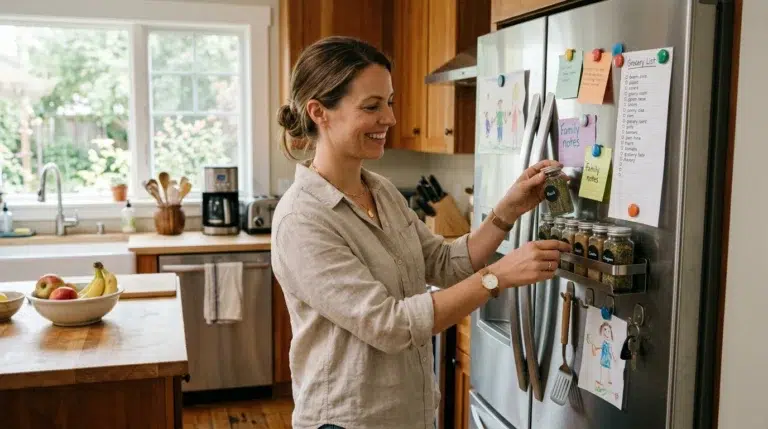
I have a confession to make. For years, my kitchen island wasn’t actually a place for meal prep or morning coffee. It was a 6-foot-long monument to "I'll Deal With This Later." It was where permission slips went to die, where my keys played hide-and-seek under grocery receipts, and where stray socks somehow found a permanent home.
Sound familiar?
We’ve all been there. You walk through the door after a long day, arms full of bags and brain full of "to-dos," and the first horizontal surface you see becomes a victim of the "The Great Dump." Before you know it, the clutter has spread from the front door to the dining table, and the peaceful evening you imagined is replaced by a frantic search for the library books that are due tomorrow.
But here is the good news: you don’t need a massive, Pinterest-perfect mudroom to fix this. In fact, most of us don’t have the square footage for a dedicated room filled with custom lockers. What you actually need: and what is becoming the biggest home trend of 2026: is a Drop Zone.
What is a Drop Zone, anyway?
Think of a Drop Zone as the "buffer" between the chaotic outside world and your serene inner sanctuary. Unlike a traditional mudroom (which often feels like a heavy, secondary construction project), a Drop Zone is a high-functioning system that can live anywhere: a narrow hallway, a corner of the kitchen, or even a small space just inside the garage door.
It’s a intentional "landing strip" designed to catch the items you carry in every single day before they have a chance to migrate deeper into your home. It’s about creating a flow that works with your family’s natural habits, not against them.
The Emotional Magic of the "Landing Strip"
Why is this such a big deal right now? Because our homes are more than just places to store stuff; they are our retreat from a busy world. When you walk through the door and immediately see a mountain of shoes and a stack of bills, your brain stays in "high-alert" mode.
By creating a dedicated spot for the transition, you’re telling your brain: “The workday is over. We are home. You can breathe now.”
When every backpack has a hook and every key has a bowl, the morning rush transforms from a frantic marathon into a calm walk to the car. You aren't just organizing your shoes; you're organizing your peace of mind. It’s about finding harmony in your daily routine and giving yourself permission to relax the moment you step inside.

The 5 Essential Elements of a Family-Friendly Drop Zone
To make a Drop Zone actually work for a busy family, it needs to be simple enough for a tired toddler (or a tired parent!) to use without thinking. Here are the five pieces of the puzzle:
1. Hooks at Two Heights
This is a game-changer! Don't just put hooks at eye level for adults. Install a second row of hooks about three feet off the ground. When kids can reach their own hooks, they take ownership of their gear. It’s a small, positive step toward independence that saves your back from picking up backpacks off the floor ten times a day.
2. The "Breathable" Shoe Station
In 2026, we’re moving away from plastic bins and toward natural, warm materials. Use woven seagrass or bamboo baskets tucked under a simple bench. They look beautiful, but they also hide the dirt and let your shoes air out.
3. The "Action-Only" Mail Sorter
Stop the "procrastination pile" before it starts! Place a small mail sorter in your Drop Zone with only three slots: Action (bills to pay, forms to sign), File (keep for later), and Toss (the circulars and junk). If it doesn't fit in those three, it doesn't belong on the counter.
4. A Tech-Free Charging Hub
Consider making your Drop Zone the place where phones and tablets "go to sleep" for the night. A small, discreet charging station prevents cords from cluttering up the kitchen and helps your family disconnect from screens during dinner.
5. The "Launchpad" Tray
Keep a small bowl or tray specifically for keys, sunglasses, and wallets. It’s the last thing you touch before you leave, ensuring you never have to play "Where are my keys?" while the car is idling.

How to Set Your Zone Up This Weekend
Ready to reclaim your kitchen counter? Setting up a Drop Zone is a journey, not a sprint. You don't need to buy a whole new furniture set today. Follow these simple, achievable steps:
- Observe the "Natural Landing": Where does your family already drop their things? If they always dump bags in the kitchen, try to build your zone there rather than trying to force them to use a foyer they never visit.
- Clear the Canvas: Take ten minutes to declutter the area you’ve chosen. Remove the out-of-season coats and the shoes that don't fit anymore. We want only the "daily drivers" here.
- Start with Vertical Space: Hooks are your best friend. They get things off the floor and into your line of sight. Even if you only have two feet of wall space, you can fit four hooks.
- Incorporate Softness: Choose baskets or bins that make you feel good. 2026 is all about "warmer minimalism": using natural textures like wood and jute to create a space that feels homey rather than clinical.
- Test and Tweak: Use your new system for a week. If the mail still ends up on the floor, maybe your mail sorter needs to be closer to the door. Be kind to yourself; organizing is a living process!

You’ve Got This!
Remember, the goal isn't a "perfect" home that looks like a museum. The goal is a home that supports you and your family. A Drop Zone is a simple, practical way to reduce the mental load of parenting and create a space where everyone feels at ease.
By taking this small step today, you're not just clearing a hallway: you're creating a more serene, welcoming environment for the people you love most. You are more than capable of bringing order to the chaos, one hook at a time.
If you're feeling inspired to keep the momentum going, check out our 30-Day Declutter Challenge to see how small daily wins can transform your entire home!