The ADHD-Friendly Home: Why Neuro-Inclusive Systems Are the Secret to Staying Organized
How many times have you "put away" your car keys in a drawer, only to spend twenty frantic minutes searching for them the next morning? Or maybe you’ve bought a third bottle of ketchup because the first two were hiding behind the giant jar of pickles you haven't touched since 2024?
If that sounds like your Tuesday morning, I want you to take a deep breath. You aren’t "bad" at organizing. You aren't lazy. And you definitely aren't alone. In fact, my own "doom drawer" (that’s Didn’t Organize, Only Moved) used to be so full that I couldn't even close it. I used to feel like a failure every time a guest walked in, but then I realized something life-changing: the problem wasn't my brain. It was the system.
Traditional organization advice often tells us to hide everything away behind closed doors and inside opaque boxes to create a "clean" look. But for many of us: especially those of us with ADHD or other neurodivergent traits: out of sight literally means out of mind.
That’s where neuro-inclusive organization comes in. These systems aren't just for people with a diagnosis; they are the secret weapon for any busy family looking to reduce decision fatigue and finally feel some peace at home.
What is a Neuro-Inclusive Home?
At its heart, a neuro-inclusive home is one designed to work with your brain’s natural tendencies rather than fighting against them. It’s about creating a space that feels intuitive, reduces the "mental load," and makes it as easy as possible to put things back where they belong.
Think about your home right now. Are there "hot spots" where clutter always seems to land? Maybe it's the kitchen island or the bottom step of the stairs? Instead of getting frustrated that things aren't in their "proper" place, neuro-inclusive design asks: Why is it landing here, and how can we make this spot functional?
When we shift our focus from "perfect aesthetics" to "practical flow," the whole energy of the house changes. You move from a state of constant catching up to a state of harmony.
The Battle with Object Permanence
For many neurodivergent individuals, "object permanence" (or more accurately, object constancy) can be a bit of a struggle. If you can't see it, your brain basically deletes the file. This is why we leave the mail on the counter or the laundry on the chair: we’re afraid if we put it away, we’ll forget it exists.
Standard organization systems are often built on the idea of hiding "visual noise." While that sounds lovely in a magazine, it’s a recipe for chaos in a real, busy household. When you hide your daily essentials in a dark cupboard, you’re adding a layer of "friction" to your life. You have to remember where it is, open the door, move something out of the way, and then find it.
By the time you've done all that, your brain is already tired.

Step 1: The Magic of Visible Storage
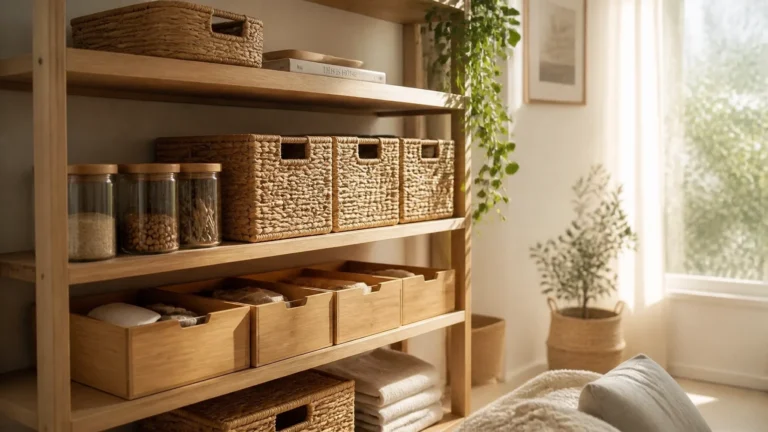
The single biggest shift you can make is moving toward visible storage. This doesn't mean having "stuff" everywhere; it means using clear containers and open shelving so your brain can "scan" a room and instantly know what’s available.
Clear Bins are Your Best Friend
Whether it's the bathroom vanity or the kitchen pantry, clear acrylic bins are a game-changer. They allow you to categorize items while keeping them visible.
- In the pantry: Group snacks, pastas, and baking supplies into clear bins.
- In the bathroom: Use clear bins for skincare, first aid, and hair accessories.
- In the playroom: Clear bins for LEGOs or doll accessories mean the kids can actually find what they want to play with (and put it away later!).
When you can see that you’re low on granola bars just by glancing at the shelf, you’ve removed a massive chunk of mental stress. Check out our organization category for more ideas on how to implement these systems.

Step 2: Stop the "Hanger Hassle" with Hooks
If you’re anything like me, the idea of carefully sliding a shirt onto a hanger feels like a marathon when you’re tired. What happens? The shirt ends up on the "closet chair."
Neuro-inclusive systems focus on reducing friction. We want to make it as easy to put something away as it is to drop it on the floor.
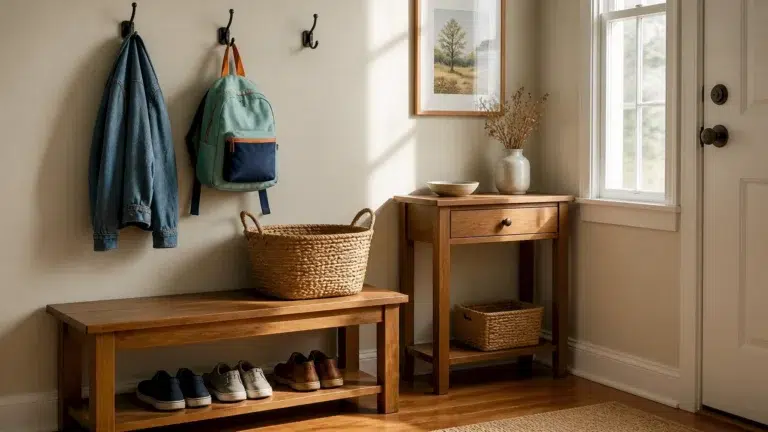
- Hooks over Hangers: In the entryway, use sturdy wall hooks for coats and bags. Even in the bedroom, a few hooks for "half-worn" clothes can keep the floor clear.
- No-Lid Baskets: For items like socks, pajamas, or even towels, consider baskets without lids. Just dropping them in is a one-step process.
Imagine walking through your front door and simply hanging your bag on a dedicated hook. No opening a closet, no finding a hanger: just a single, positive step that keeps your hallway serene and walkable.
Step 3: Create Dedicated "Drop Zones"
We all have natural "landing spots" for our stuff. Instead of fighting your family to stop putting things on the kitchen table, put a "Drop Zone" right there.
A Drop Zone (or Launchpad) is a designated area near the entrance of your home where everything "out-the-door" lives. This includes keys, wallets, school bags, and mail. By centering these items in one spot, you eliminate the morning "where is my…?" hunt.
- The Mail Tray: One tray for "To Action" and one for "To Recycle."
- The Key Bowl: A decorative bowl or a small hook right by the door.
- The Bag Station: A dedicated shelf or hook for each family member.
When everyone knows exactly where their essentials live, the house breathes a collective sigh of relief. You’re no longer the "search and rescue" team for every missing shoe!

Step 4: Labeling for the Visual Brain
Labels are the roadmap of an organized home. But for a neuro-inclusive space, they need to be big, bold, and simple.
If you have young children or family members who are very visual, consider picture labels. A small icon of a sock on a drawer is much faster for the brain to process than the word "SOCKS."
For the rest of us, keep the categories broad. Instead of "Paperclips," "Staples," and "Rubber Bands," try one bin labeled "OFFICE SUPPLIES." The more specific the category, the harder it is to maintain. We’re aiming for "good enough," not "museum-grade."
Maintenance: It’s a Journey, Not a Destination
I’ll let you in on a secret: no system stays perfect forever. Life happens! The kids get sick, work gets busy, or you just have a week where your brain feels like it’s full of bees.
That’s why we focus on micro-routines. Instead of a massive four-hour cleaning spree, try a "10-minute reset" every evening. Put on a favorite song, grab a "belongs elsewhere" basket, and just do what you can.
If a system isn't working: if the mail is still piling up on the counter: don't blame yourself. Just ask, "How can I make this easier?" Maybe the mail bin needs to be bigger, or maybe it needs to be moved three feet to the left.

Final Thoughts: You’ve Got This!
Creating an ADHD-friendly, neuro-inclusive home isn't about being "perfect." It’s about creating a space where you can breathe freely, where your family can thrive, and where the "background noise" of clutter is finally turned down.
When you simplify your systems, you’re giving yourself the gift of time and mental energy. You’re making room for the things that actually matter: like family movie nights or a quiet cup of coffee in a space that feels like a sanctuary.
Ready to start your journey? Check out our 30-Day Decluttering Guide for more step-by-step help. You are capable, you are resilient, and your home is going to feel amazing!
Stay neat, stay simple, and be kind to yourself.