Digital Minimalism: Reclaiming Focus in a Noisy World
More than 80 percent of American adults feel overwhelmed by constant digital demands. For tech-savvy North Americans juggling endless notifications and digital clutter, the quest for balance is real. By debunking myths about digital minimalism and highlighting practical ways to reclaim focus, this guide empowers you to reshape your relationship with technology for greater wellbeing and efficiency.
Table of Contents
- Defining Digital Minimalism And Common Myths
- Types Of Digital Clutter And Their Impact
- Core Principles For Simplifying Your Digital Life
- Step-By-Step Process To Declutter Devices
- Risks Of Digital Overload And Common Pitfalls
- Maintaining Minimalism With Realistic Habits
Key Takeaways
| Point | Details |
|---|---|
| Understanding Digital Minimalism | Digital minimalism emphasizes intentional and purposeful technology use to enhance personal productivity and well-being. |
| Recognizing Digital Clutter | Identifying and managing various types of digital clutter, such as email overflow and social media distractions, is crucial for maintaining focus. |
| Implementing Core Principles | Employing strategies like selective engagement, boundary setting, and mindful consumption can significantly improve your digital interactions. |
| Continuous Reflection | Maintaining digital minimalism requires ongoing assessment and adjustment of digital habits to align technology use with personal values. |
Defining Digital Minimalism and Common Myths
Digital minimalism represents a strategic approach to technology use that prioritizes intentionality and purpose. Researchers from Örebro University define digital minimalism as a deliberate practice of reducing digital engagement to regain control of time and attention in our increasingly connected world.
At its core, digital minimalism challenges the widespread assumption that more technology automatically means better productivity or connectivity. Instead, this philosophy advocates for purposeful digital interaction, where individuals critically evaluate each technological tool’s genuine value in their lives. Unlike complete digital abstinence, digital minimalism encourages thoughtful, strategic technology use that aligns with personal values and goals.
Common myths about digital minimalism often mischaracterize the approach as extreme or impractical. Many people assume digital minimalism means completely abandoning smartphones or disconnecting from online communities. However, research from psychology experts reveals it’s actually about making intentional choices, reducing digital noise, and creating space for meaningful experiences. The goal isn’t total elimination but rather cultivating a healthier, more mindful relationship with technology.
Pro tip: Start your digital minimalism journey by conducting a week-long audit of your digital habits, tracking screen time and identifying apps or platforms that truly add value to your life.
Types of Digital Clutter and Their Impact
Digital clutter encompasses the overwhelming accumulation of digital content and interactions that fragment our attention and reduce productivity. The United Nations Conference on Trade and Development’s Digital Economy Report highlights several critical types of digital clutter, including excessive information, redundant digital content, and overloaded digital services that create significant cognitive strain.

Typically, digital clutter manifests in several key categories. Email overflow represents one primary form, with thousands of unorganized messages consuming mental bandwidth. Social media noise creates another layer of distraction, where endless scrolling and notifications interrupt focused work. Cloud storage chaos emerges when digital files are saved haphazardly across multiple platforms, making retrieval difficult and creating unnecessary digital complexity.
Digital preservation experts explain that unmanaged digital data not only creates immediate cognitive challenges but also poses long-term risks to personal and professional information management. The impact extends beyond individual productivity, potentially compromising data integrity, creating security vulnerabilities, and limiting our ability to efficiently access and utilize critical information. Digital clutter transforms from a minor annoyance into a systemic challenge that can significantly impede personal and organizational effectiveness.
Here is a summary of common types of digital clutter and their potential impacts:
| Type of Digital Clutter | Example Issues | Impact on Productivity | Long-Term Risks |
|---|---|---|---|
| Email overflow | Thousands of unread emails | Distracts from urgent tasks | Data loss or security gaps |
| Social media noise | Endless notifications | Reduces concentration | Privacy concerns |
| Cloud storage chaos | Disorganized files | Hinders information access | Difficult data recovery |
Pro tip: Conduct a quarterly digital cleanup by systematically deleting unnecessary files, unsubscribing from irrelevant email lists, and consolidating your digital storage into a single, well-organized cloud platform.
Core Principles for Simplifying Your Digital Life
Digital minimalism is fundamentally about creating intentional technology interactions that align with your core values and personal goals. The DQ Institute’s global digital competency framework emphasizes the importance of strategic digital engagement, focusing on skills that help individuals control their digital environment rather than being controlled by it.
The core principles of digital simplification revolve around three key strategies. First, selective engagement means critically evaluating each digital tool and platform, keeping only those that genuinely add value to your life. This involves ruthlessly eliminating apps, subscriptions, and digital services that consume time without providing meaningful benefit. Second, boundary setting requires establishing clear rules about when and how you interact with technology, such as designating specific times for email checking or social media use, and creating technology-free zones in your home and personal spaces.
The third principle centers on mindful consumption. This means being intentional about the digital content you consume, prioritizing quality over quantity. Instead of mindlessly scrolling through endless feeds, choose content that educates, inspires, or genuinely entertains you. By applying these principles, you transform your relationship with technology from one of passive consumption to active, purposeful interaction that supports your personal and professional growth.
Pro tip: Conduct a monthly digital audit by reviewing all your digital subscriptions, apps, and online accounts, ruthlessly removing anything that doesn’t directly contribute to your personal or professional development.
Compare these core strategies for simplifying your digital life:
| Principle | What It Involves | Benefit | Example Practice |
|---|---|---|---|
| Selective engagement | Keep only valuable apps/tools | Reduces digital overload | Uninstall unused subscriptions |
| Boundary setting | Establish clear tech rules | Improves work-life balance | Schedule device-free hours |
| Mindful consumption | Prioritize quality content | Enhances learning, focus | Follow educational channels |
Step-by-Step Process to Declutter Devices
Digital device decluttering requires a systematic approach to streamline your technological ecosystem. The U.S. Department of Homeland Security’s digital declutter checklist provides an essential framework for methodically reducing digital chaos and improving overall cyber hygiene.
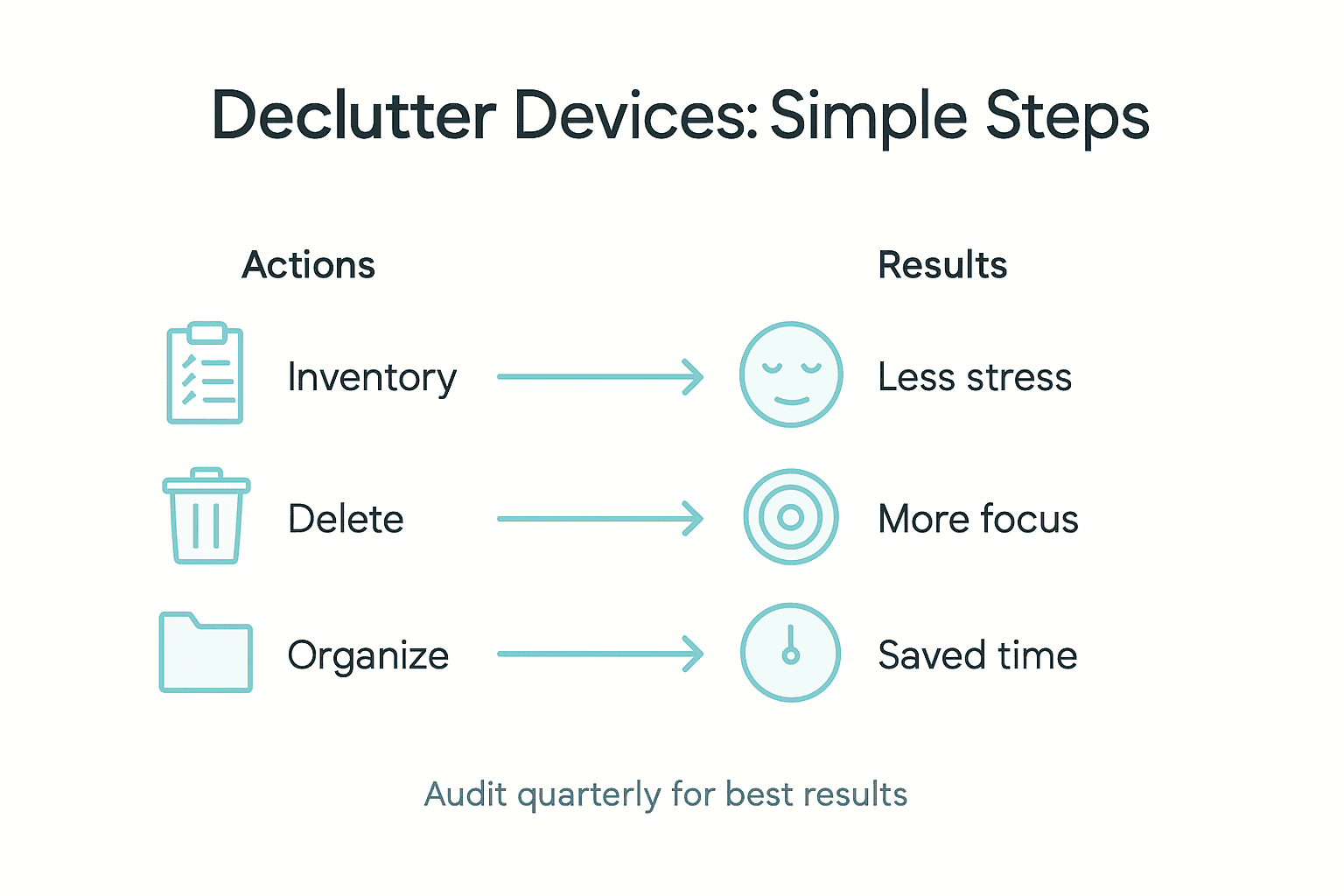
Begin with a comprehensive inventory assessment. Carefully review all your devices – smartphones, tablets, laptops, and desktop computers – and list every installed application, digital file, and online account. Categorize these items into essential, occasionally used, and unnecessary groups. Focus on eliminating redundant applications, outdated files, and unused digital subscriptions that consume storage and mental energy. This initial audit helps you understand the true scope of your digital landscape and prepares you for targeted decluttering.
The Oak Park Public Library’s four-step digital organization guide recommends a strategic approach to file management. Create a logical folder structure with clear, descriptive names that make file retrieval intuitive. Delete duplicate files, archive old documents, and consolidate scattered information into centralized, well-organized digital spaces. Implement a consistent file naming convention that allows quick identification and reduces future digital clutter. Remember that effective digital decluttering isn’t just about deletion, but about creating an intentional, streamlined digital environment that supports your productivity and peace of mind.
Pro tip: Schedule a quarterly digital cleanup day where you systematically review and optimize your digital spaces, treating your devices like a well-maintained living environment.
Risks of Digital Overload and Common Pitfalls
Digital overload represents a growing psychological and productivity challenge in our hyperconnected world. Comprehensive research from multiple psychological studies reveals the profound negative impacts of constant digital connectivity, demonstrating how unchecked technology consumption can dramatically undermine mental well-being and personal effectiveness.
The primary risks emerge through several interconnected mechanisms. Constant notifications and information streams create cognitive fragmentation, where attention becomes perpetually divided, preventing deep focus and meaningful work. This persistent state of digital interruption triggers increased stress responses, reduces cognitive performance, and gradually erodes our ability to concentrate. Multitasking, once celebrated as a productivity skill, actually diminishes mental efficiency, causing what researchers call “switch cost” – the mental energy expended when rapidly changing between different digital tasks.
Cybersecurity experts from the National Institute of Standards and Technology highlight additional systemic pitfalls in digital consumption. These include over-reliance on technological solutions without understanding their limitations, ignoring user experience in digital design, and underestimating individuals’ need for clear, intuitive guidance. Such systemic issues compound personal digital overload, creating environments that overwhelm rather than empower users. The result is a complex ecosystem where technology increasingly controls human behavior instead of serving human needs.
Pro tip: Implement a daily “digital detox” window of at least 90 minutes where all notifications are silenced and devices are placed out of immediate reach, allowing your brain to reset and reclaim focused attention.
Maintaining Minimalism With Realistic Habits
Digital minimalism is not a one-time achievement but an ongoing journey of intentional adaptation. Recent academic research reveals the dynamic nature of maintaining digital boundaries, emphasizing that sustainable technology management requires continuous reflection and flexible strategies as life circumstances evolve.
Successful digital minimalism hinges on developing realistic, incremental habits rather than attempting radical overnight transformations. This means creating small, manageable changes that gradually reshape your relationship with technology. Start by identifying specific digital triggers that disrupt your focus, such as automatic social media checks or compulsive email refreshing. Replace these habits with intentional, time-bound interactions that align with your personal and professional goals. Implement techniques like scheduled check-in times, app usage limits, and designated device-free zones to create sustainable boundaries.
Educational experts recommend a behavior change approach that focuses on understanding the underlying motivations behind digital consumption. This involves conscious reflection on how technology serves or undermines your core values. Regularly assess your digital interactions by asking critical questions: Does this app or online activity genuinely contribute to my well-being? Am I using technology as a tool or being used by it? By maintaining this reflective practice, you transform digital minimalism from a rigid set of rules into a flexible, personalized framework for intentional living.
Pro tip: Create a monthly digital habit review where you audit your technology use, celebrate progress, and consciously adjust your strategies to maintain meaningful digital boundaries.
Reclaim Your Focus by Simplifying Your Digital and Physical Spaces
The challenge of digital clutter and constant distractions can make it feel impossible to regain control over your time and attention. This article highlights how digital minimalism calls for intentional technology use and mindful consumption to reduce cognitive strain and improve productivity. You deserve a calm, clear environment that supports your goals and well-being.
At Simple Neat Home, we understand that reclaiming focus means more than just managing your devices. It also involves organizing and decluttering your living spaces so they work for you and not against you. Explore our Minimalism Archives | Simple Neat Home for practical tips on embracing simplicity and thoughtful living. Discover actionable strategies in our Decluttering Archives | Simple Neat Home to clear physical chaos and create harmony. Start transforming your habits today and cultivate a peaceful lifestyle. Take the first step now toward a less noisy world and a more focused, intentional life.
Frequently Asked Questions
What is digital minimalism?
Digital minimalism is a strategic approach to technology use that prioritizes intentionality and purpose, encouraging individuals to evaluate the value of their digital tools and interactions.
How can I identify digital clutter in my life?
Common types of digital clutter include email overflow, social media noise, and disorganized cloud storage. Conducting regular audits of your digital habits can help you recognize and reduce this clutter.
What are some core principles of digital minimalism?
The core principles include selective engagement with technology, boundary setting for device use, and mindful consumption of digital content, all aimed at aligning technology use with personal values and goals.
How can I start decluttering my digital devices?
Begin with a comprehensive inventory assessment, categorizing your apps and files into essential, occasionally used, and unnecessary groups. Focus on eliminating redundancies and establishing a clear folder structure for easy file retrieval.
Recommended
- Understanding the Advantages of Minimalism at Home | Simple Neat Home
- What is Minimalist Living? Understand Its Essence | Simple Neat Home
- Role of Minimalism at Home – Creating Calm Spaces | Simple Neat Home
- Minimalist Living: Transforming Chaos Into Calm at Home | Simple Neat Home


