Is Your Home Making You Stressed? 5 Biophilic Tips to Bring the Outside In
Does your living room ever feel like it’s closing in on you? I’ve been there. Last Tuesday, I found myself standing in the middle of my kitchen, surrounded by a mountain of mail, three rogue LEGO sets, and a layer of dust that seemed to have appeared overnight. I felt my shoulders creeping up toward my ears, and my breath getting shallow.
In that moment, I realized it wasn't just the "mess": it was the environment itself. Our homes are supposed to be our sanctuaries, but often, they end up feeling like another item on the "to-do" list.
What if I told you that you don't need a total home makeover or a professional cleaning crew to find your peace again? Sometimes, the answer isn’t more plastic bins; it’s a little more nature. This is where biophilic design comes in. It’s a fancy word for a very simple concept: bringing the outdoors, in.
Science (and my own frayed nerves!) tells us that when we connect our indoor spaces to the natural world, our stress levels drop. We feel more focused, more creative, and: most importantly: more at home.
Ready to turn your home from a stress-box into a serene retreat? Here are five gentle, practical steps to help you and your family breathe a little easier.
1. Let the Sun Shine In (and Stay In!)
Light is the ultimate mood-lifter. Think about how much better you feel on a crisp, sunny morning compared to a gloomy, overcast afternoon. Our bodies are hardwired to thrive on natural light.
When our homes are cluttered, we often hide the mess behind heavy curtains or blinds, which just makes the space feel smaller and darker. It’s time to let the light lead the way.
- Keep it minimal: Swap out those heavy drapes for sheer curtains or simple blinds that let the light filter through.
- The Mirror Trick: Place a mirror across from a window. It’s like adding a second window to the room! It bounces the light around and makes even the tightest hallway feel airy.
- Zone your life: Try to place your kids’ homework desk or your favorite reading chair near a window. Exposure to daylight is linked to better moods and even better sleep: something every busy parent needs!
If you're looking for more ways to lighten the load, our cleaning routines can help you keep those windows (and everything else) sparkling without the stress.

2. Embrace the "Green Zone"
You don’t need a green thumb to bring plants into your home. I used to be a certified "plant killer," but then I discovered the magic of low-maintenance greenery.
Adding plants isn't just about decor; it’s about air quality and mental clarity. Research shows that just being around plants can lower your cortisol levels.
- Start small and sturdy: Look for "unkillable" plants like Snake Plants, ZZ Plants, or Pothos. They are incredibly forgiving and look beautiful.
- Group for impact: Instead of scattering one tiny pot here and there (which can actually look like more clutter), create a "green zone." Group a few plants at different heights on a shelf or a plant stand. It creates a lush focal point that feels intentional.
- Kitchen Herbs: A small windowsill herb garden is a double win. It adds greenery to your kitchen and provides fresh flavors for those family meals.

3. Swap Plastic for Nature’s Textures
We’ve all been there: buying a dozen plastic bins because we think they’ll finally "solve" the clutter. But too much plastic can make a home feel cold and clinical.
Biophilic design encourages us to use natural materials like wood, stone, wool, and wicker. These textures feel good to the touch and bring a sense of "grounding" to a room.
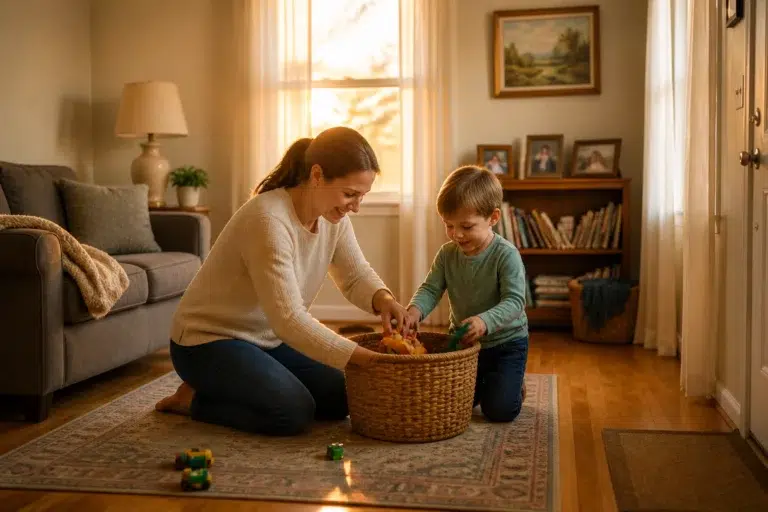
- The Woven Basket Hack: Use seagrass or jute baskets for toy storage or shoe drops in the entryway. They hide the chaos just as well as plastic, but they look like part of the decor.
- Natural Fibers: Consider a cotton throw or a wool rug. These natural materials are durable for families but provide a tactile softness that helps you relax.
- Wood over Metal: When choosing small furniture or shelving, opt for wood tones. Wood adds a warmth that metal or laminate just can’t replicate.
Need help deciding what stays and what goes before you start basket-buying? Check out our decluttering guides for a step-by-step plan.

4. Engage All Your Senses
Biophilic design isn't just about what you see; it’s about what you hear and smell, too. Our homes are often filled with the "noise" of modern life: the hum of the fridge, the ping of notifications, the roar of the vacuum.
Bringing in natural sensory cues can mask that "busy" noise and replace it with something restorative.
- Scent of the Forest: Use a diffuser with essential oils like cedarwood, pine, or eucalyptus. These scents can actually trick your brain into feeling like you’re taking a walk in the woods.
- Soundscapes: If your neighborhood is noisy, try playing a "rainforest" or "ocean waves" soundscape at a low volume. It’s incredibly calming for kids during wind-down time.
- Fresh Air: Whenever the weather allows, crack a window. The movement of fresh air and the sound of birds chirping outside is a natural reset button.
5. Create a "Refuge" Spot
In nature, animals look for "refuge": places that feel safe, enclosed, and protected. We need those too! In a busy family home, it’s easy to feel like every square inch belongs to the kids or the chores.
Creating a small "refuge" spot is a vital part of biophilic design. It’s a place where you can retreat and feel shielded from the world for a few minutes.
- The Cozy Corner: It doesn’t have to be a whole room. A comfortable chair tucked into a corner, a soft lamp, and a small plant nearby is all you need.
- Kid-Friendly Retreats: Create a "reading nook" for your little ones with floor cushions and a low shelf of books. It gives them a place to self-regulate when they’re feeling overwhelmed by the day.
- Organized Peace: Keep these refuge spots strictly clutter-free. Use closed storage (like a wooden cabinet or a lidded basket) to hide any "visual noise" nearby.
For more inspiration on creating spaces you truly enjoy, browse through our decorating ideas.

A Journey, Not a Destination
Remember, organizing your home and bringing in these natural elements is a journey, not a sprint. You don’t have to do it all by Monday morning. Start with one window, or one plant, or one wicker basket.
As you slowly weave these biophilic tips into your home, you’ll notice a shift. The "chaos" might still happen: because, let’s be real, we have families!: but your home will become a place that helps you handle that chaos with a little more grace and a lot more peace.
You are doing a great job managing it all. Be kind to yourself, let the light in, and enjoy the harmony of a home that finally feels like yours again.
Stay simple, stay neat!