The Power of Negative Space in Home Design
Over 60 percent of American homeowners admit their living spaces feel cluttered at least once a week. Balancing family life and busy routines often leaves little energy for serenity at home. Understanding how negative space works in minimalist design can be your secret to transforming disorder into calm. Discover how intentional empty areas not only create visual breathing room but also help you feel less overwhelmed, creating a peaceful retreat where every item has a clear purpose.
Table of Contents
- Defining Negative Space In Home Design
- Types Of Negative Space In Interior Design
- Role Of Negative Space In Creating Calm
- Practical Tips For Using Negative Space
- Common Mistakes When Applying Negative Space
- Balancing Minimalism And Functionality
Key Takeaways
| Point | Details |
|---|---|
| Understanding Negative Space | Negative space in home design refers to intentional empty areas that enhance balance and visual impact without creating barrenness. |
| Types of Negative Space | Negative space can be categorized into micro, macro, active, and passive types, each serving unique purposes in creating a harmonious environment. |
| Promoting Calm through Design | Strategic use of negative space can reduce anxiety and create psychological buffers, transforming spaces into tranquil sanctuaries. |
| Common Design Mistakes | Overcrowding spaces and misunderstanding the purpose of negative space can lead to chaotic, cramped environments. |
Defining Negative Space in Home Design
When you first hear the term negative space, you might imagine something missing or empty. But in home design, it’s actually a powerful technique that transforms how we perceive and experience our living environments. Negative space refers to the intentional empty areas between design elements that create balance, visual breathing room, and strategic focus.
Think of negative space like the silence between musical notes. Just as those quiet moments make music more meaningful, empty spaces in your home make your design elements more impactful. Negative space isn’t about leaving rooms barren, but about creating purposeful gaps that help guide the eye, reduce visual clutter, and enhance the overall aesthetic harmony. These empty spaces help define boundaries and relationships between furniture, artwork, and architectural features.
In practical home design, negative space serves several crucial functions. It prevents rooms from feeling overwhelming by allowing visual rest, creates a sense of openness, and helps highlight your most important design elements. Imagine a living room where every surface is packed with decor. Exhausting, right? By strategically incorporating negative space, you create breathing room that makes your space feel larger, calmer, and more intentionally designed.
Pro tip: Start practicing negative space design by removing one decorative item from each room and observing how the space feels more balanced and intentional.
Types of Negative Space in Interior Design
Interior designers recognize that negative space isn’t a one-size-fits-all concept. Instead, it’s a nuanced strategy with different approaches that serve unique purposes in home design. Negative space is typically categorized into several distinct types, each playing a specific role in creating balanced, harmonious environments.
The first key classification is between micro and macro negative space. Micro negative space refers to the small gaps between design elements like furniture placement, artwork, or decorative objects. These tiny spaces prevent a cluttered feeling and help individual pieces stand out. Macro negative space, on the other hand, involves larger open areas in a room that create a sense of breathing room and visual calm. Active and passive negative space provide additional design strategies for creating intentional, functional living spaces.
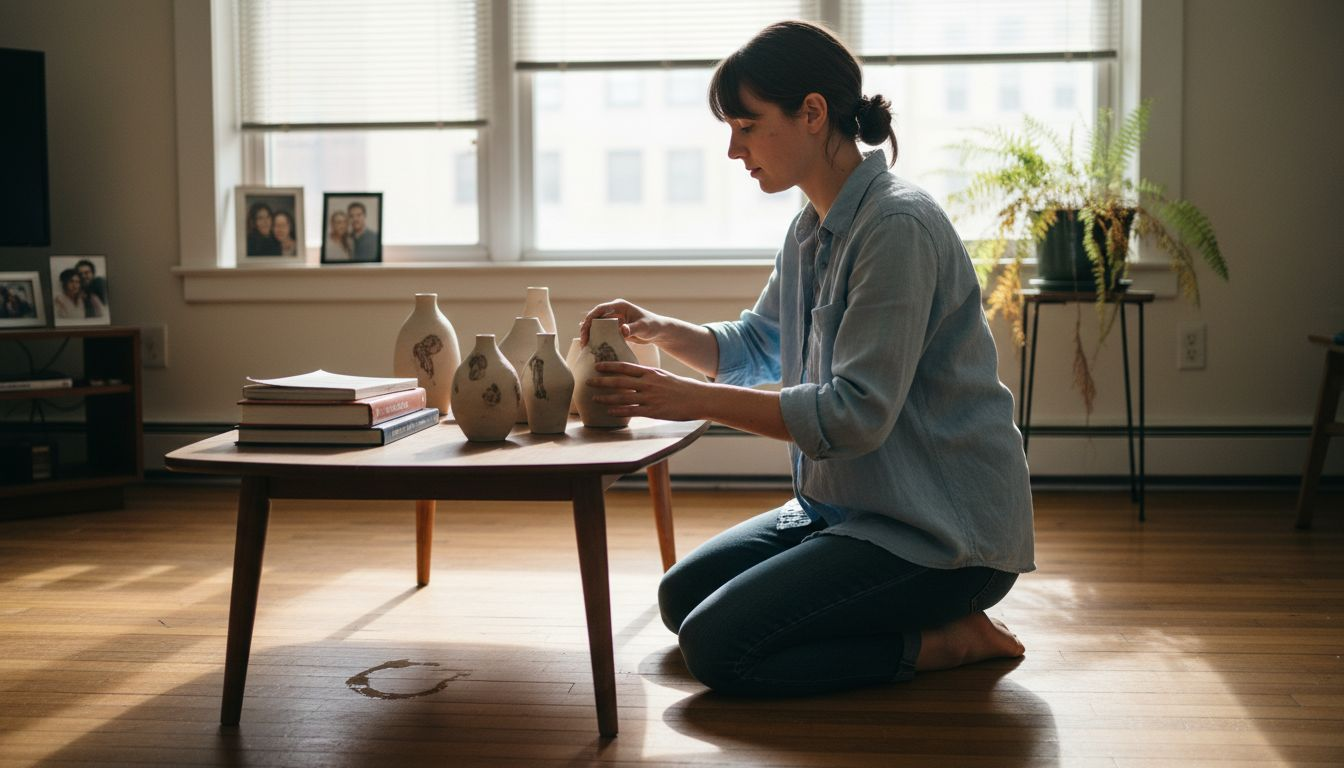
Active negative space serves a deliberate structural purpose, guiding movement through a room and drawing attention to specific design elements. Think of a hallway where strategic furniture placement naturally leads your eye and movement. Passive negative space, conversely, exists primarily for aesthetic relief – those open areas that make a room feel peaceful and uncluttered. By understanding and balancing these different types of negative space, you can transform a room from feeling cramped and chaotic to serene and purposeful.
Pro tip: Take a photo of your room and use a digital editing tool to blur out objects, helping you visually assess the negative space distribution and balance.
Here’s a comparison of negative space types and their effects in home design:
| Type of Negative Space | Description | Design Impact |
|---|---|---|
| Micro Negative Space | Small gaps between items | Highlights individual pieces |
| Macro Negative Space | Large open room areas | Creates spaciousness and calm |
| Active Negative Space | Shapes movement and focus | Guides flow and attention |
| Passive Negative Space | Provides aesthetic relief | Increases peace and balance |
Role of Negative Space in Creating Calm
In our increasingly chaotic world, home design has become more than just arranging furniture – it’s about creating sanctuaries that actively support mental well-being. Psychological research reveals how negative space reduces anxiety by providing visual and mental breathing room, helping us feel more grounded and peaceful.
Negative space acts like a mental reset button in our living environments. By intentionally leaving areas uncluttered, we create psychological buffers that counteract sensory overload. These deliberate empty spaces signal to our brain that not every inch needs to be filled, which can dramatically lower stress levels. Thoughtful spatial design evokes feelings of tranquility by preventing visual chaos and allowing our minds to relax and decompress.
Think of negative space as emotional architecture. It’s not about having empty rooms, but strategically creating zones of calm that help our nervous system downregulate. By reducing visual noise, we create environments that feel spacious, calm, and intentional. Minimalist design principles leverage negative space to transform homes from mere living spaces into restorative retreats that support mental and emotional health.
Pro tip: Start by removing 30% of decorative items from each room and observe how the space immediately feels more breathable and serene.
Practical Tips for Using Negative Space
Effective interior design strategies transform negative space from an afterthought into a powerful design tool. Think of negative space not as empty area, but as an intentional design element that breathes life into your home. By understanding how to manipulate these open areas, you can create rooms that feel simultaneously dynamic and peaceful.
Start by practicing the art of subtraction. Look at each room and deliberately remove one or two decorative items that don’t serve a functional purpose. This doesn’t mean creating barren spaces, but rather being strategic about what you keep. Creating intentional empty areas involves understanding the balance between objects and the space surrounding them. Use techniques like lean and stack to highlight these open zones, allowing each piece of furniture or artwork to have its own visual breathing room.
Consider implementing the 60-30-10 rule when designing with negative space. Allocate 60% of your room to negative space, 30% to primary furniture pieces, and 10% to accent pieces or decorative elements. This approach ensures your space feels open and uncluttered while still maintaining visual interest. Pay special attention to traffic paths, ensuring there’s enough room to move comfortably without bumping into furniture. Negative space isn’t just about aesthetics – it’s about creating functional, livable environments that support your daily life.
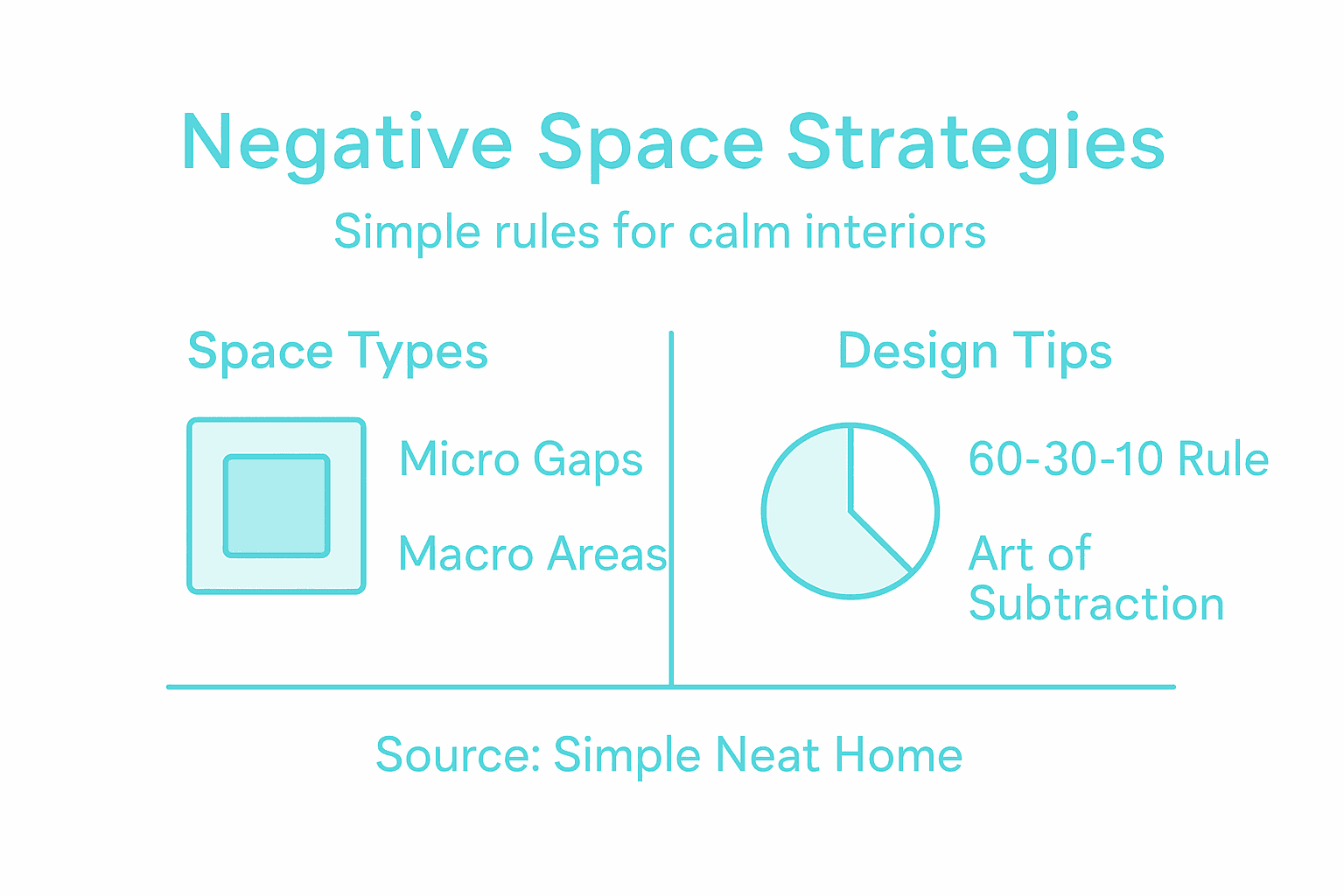
Pro tip: Take a photo of each room, then use a digital editing tool to digitally remove 50% of the objects – this will help you visually understand how negative space can transform your living environment.
Below is a summary of practical strategies for using negative space and their benefits:
| Strategy | How to Apply | Benefit |
|---|---|---|
| 60-30-10 Rule | Allocate 60% empty space | Maximizes openness |
| Art of Subtraction | Remove non-essential decor | Reduces visual clutter |
| Traffic Path Planning | Maintain clear walkways | Improves room function |
| Digital Visualization | Edit photos to test layouts | Aids space assessment |
Common Mistakes When Applying Negative Space
Common design errors can transform negative space from a strategic tool into a design disaster. Many homeowners mistakenly view open areas as wasted space, frantically filling every corner with furniture, decorative items, or unnecessary clutter. This approach suffocates a room’s potential, creating environments that feel cramped, chaotic, and visually overwhelming.
One of the most significant missteps is misunderstanding the purpose of negative space. Negative space is not about emptiness, but about creating intentional breathing room that allows design elements to shine. Homeowners often overcrowd spaces, believing that more decorations equal more style. In reality, this approach does the opposite – it creates visual noise that distracts from the room’s true potential. The key is understanding that every object needs room to ‘breathe,’ and not every wall needs a painting, every surface a knick-knack.
Another critical mistake is failing to maintain balance between positive and negative spaces. This means not just randomly leaving areas empty, but strategically using space to guide movement, highlight important design elements, and create a sense of calm. Think of negative space like the pauses in a musical composition – without them, the music becomes overwhelming and loses its impact. The same principle applies to home design. Your goal should be creating harmony, not filling every possible inch with stuff. Pay attention to traffic flow, ensure furniture has room to ‘float,’ and remember that sometimes less truly is more.
Pro tip: Before adding any new item to a room, remove two existing items first – this will help you maintain a balanced, intentional approach to negative space.
Balancing Minimalism and Functionality
Strategic space design transforms minimalism from a stark aesthetic into a living, breathing approach to home environments. Minimalism isn’t about creating empty rooms, but about intentionally curating spaces that serve your lifestyle while maintaining visual clarity. Every item should have purpose, every space should breathe, and every design choice should enhance both beauty and usability.
The art of balancing minimalism requires a nuanced understanding of your personal needs. Inclusive design principles emphasize creating spaces that are simultaneously simple and adaptable. This means selecting furniture with clean lines that offer multiple functions, choosing neutral color palettes that create visual calm, and ensuring each room has enough negative space to feel open while still supporting daily activities. Imagine a living room where a sleek sofa doubles as a storage unit, or a dining table that can easily transform for work or entertainment.
Functionality in minimalist design isn’t about compromise – it’s about intelligent choices. Start by conducting a ruthless inventory of your space, identifying items that truly serve you. Keep objects that spark joy and serve practical purposes, removing anything that doesn’t meet both criteria. Pay attention to storage solutions that blend seamlessly with your design, like hidden cabinets or multi-purpose furniture that maintains clean lines while providing maximum utility. The goal is creating an environment that feels effortless, where design and function dance together in perfect harmony.
Pro tip: Adopt the one-in-one-out rule: for every new item you bring into your home, remove another, ensuring your space remains intentional and clutter-free.
Discover Calm and Balance Through Thoughtful Negative Space
Struggling with a cluttered home that leaves you feeling overwhelmed or anxious The article highlights the powerful role of negative space to create intentional breathing room and visual calm. If your goal is to transform chaotic areas into serene environments that support your well-being then embracing strategies like the 60-30-10 rule and the art of subtraction can make a real difference. Negative space is more than empty rooms it is the foundation of a home that feels peaceful and purposeful.
At Simple Neat Home you will find practical tips and inspiration to help you master this balance. Dive into our Minimalism Archives | Simple Neat Home for expert advice on decluttering and intentional design. Explore creative ideas in our Decorating Archives | Simple Neat Home to make your open spaces truly shine. Start reclaiming calm from your space and your mind today at Simple Neat Home. Your sanctuary awaits.
Frequently Asked Questions
What is negative space in home design?
Negative space refers to intentional empty areas between design elements that create balance, visual breathing room, and strategic focus in a home environment.
How can negative space improve my living space?
Negative space can make your space feel larger and more peaceful by preventing visual clutter and enhancing the overall aesthetic harmony of your home.
What are the different types of negative space in interior design?
Negative space is typically categorized into micro negative space (small gaps between items), macro negative space (large open areas), active negative space (which shapes movement and focus), and passive negative space (which provides aesthetic relief).
How can I effectively incorporate negative space in my home?
To effectively incorporate negative space, practice the art of subtraction by removing non-essential decorative items, follow the 60-30-10 rule for space allocation, and ensure clear traffic paths for improved functionality.