Fun Ways to Teach Kids Sustainable Living at Home
Every parent faces that moment when toys spill from closets, grocery bags pile up, and a wave of clutter makes eco-friendly living feel out of reach. Teaching your children about sustainable living while keeping your household organized is more than managing stuff—it is about making thoughtful choices that honor both your home and the planet. Discover how simple routines, creative activities, and small shifts can nurture eco-conscious habits and create a calmer, more connected family life in North America.
Table of Contents
- Defining Sustainable Living for Families
- Creative Activities to Foster Eco-Consciousness
- Incorporating Green Habits in Daily Routines
- Teaching Through Decluttering and Organization
- Avoiding Common Pitfalls in Eco-Education
Key Takeaways
| Point | Details |
|---|---|
| Sustainable living is achievable | Families can make small, intentional changes that collectively have a significant positive impact on the environment. |
| Engage children through experience | Kids develop eco-consciousness by participating in hands-on activities rather than through lectures. |
| Incorporate green habits into routines | Simple daily actions foster sustainability and create a calmer, more organized home environment. |
| Decluttering teaches sustainability | Involving children in decluttering helps them understand value and responsible consumption, linking personal choices to environmental impact. |
Defining Sustainable Living for Families
Sustainable living for families isn’t about being perfect. It’s about making thoughtful choices that honor both your home and the planet. At its core, sustainable family living means creating a household where you acknowledge planetary limits while celebrating the environment. Think of it like this: you’re not trying to become an environmental scientist overnight. You’re simply shifting your daily routines in ways that reduce waste, conserve energy and water, and build stronger connections to nature. These aren’t massive overhauls. They’re conscious tweaks that add up to real impact.
What makes sustainable living for families special is that your home becomes a miniature ecosystem. Every choice you make ripples outward. When you teach your kids to turn off lights, sort recycling, or eat less packaged food, you’re not just saving money on your utility bills. You’re raising the next generation with values that’ll shape how they live for decades to come. Sustainable living means understanding how lifestyle choices affect the world and finding ways to minimize harm while promoting good. This includes everyday actions like reducing food waste, choosing sustainable fashion options, and educating younger generations about why these choices matter.
The beautiful part? Sustainable family living doesn’t demand sacrifice. It demands intention. You’re not giving things up so much as you’re making swaps. Instead of single-use plastic bags, you grab cloth ones. Instead of tossing stale bread, you turn it into homemade breadcrumbs. Instead of buying new clothes constantly, you teach kids to care for what they own. These shifts lower stress, reduce clutter, and help you reclaim the calm from chaos in your home. When your household operates with sustainability in mind, everything feels lighter. Less stuff. Less guilt. Less overwhelm. More space for what actually matters.
Here’s a summary of common sustainable swaps and their positive household impacts:
| Sustainable Swap | Primary Benefit | Household Impact |
|---|---|---|
| Cloth bags vs. plastic | Reduces waste | Less trash, tidier spaces |
| Upcycled food scraps | Saves money | Fewer overflowing bins |
| Caring for owned items | Extends product life | Reduced clutter, less spend |
Pro tip: Start with just one area of your home this month, whether it’s the kitchen, bathroom, or your kids’ closets, and implement sustainable swaps there before expanding to other rooms.
Creative Activities to Foster Eco-Consciousness
Your kids don’t need lectures about the environment to care about it. They need to experience it. When children get their hands dirty in a garden, watch trash sort into different bins, or build something new from old materials, something clicks. Creative activities to foster eco-consciousness include nature walks, hands-on workshops on recycling and composting, community gardens, and eco-friendly fairs. These experiences actively engage children and communities, helping them connect with biodiversity, waste reduction, and sustainable living in ways that feel fun rather than preachy. The key difference? Kids aren’t being told what to think. They’re discovering it themselves.
One of the most powerful approaches is getting your children involved in student-led eco-friendly projects like waste audits, community garden initiatives, and creative upcycling challenges. A waste audit sounds fancy, but it’s simple: your kid spends a week tracking what your family throws away, then brainstorms how to reduce it. A community garden means your family grows food together while learning where nutrition actually comes from. Upcycling challenges turn old jeans into a tote bag or plastic bottles into planters. These projects do more than teach environmental awareness. They foster critical thinking, collaboration, innovation, and real-world application of sustainability principles. Your child develops ownership over environmental impact instead of feeling like they’re just following rules you set.
The beauty of these activities is that they naturally reduce household clutter while building eco-consciousness. When your kids upcycle, they’re looking at what you own differently. They’re seeing potential instead of waste. When they compost, they understand why you’re not buying as much packaging. When they garden, they appreciate why you’re choosing less processed foods. These connections transform sustainability from abstract to tangible. Your home becomes calmer and more organized not because you forced it, but because your family collectively decided it matters. Plus, these are activities you’re doing together, which means less screen time and more actual connection with your kids. That’s the real win here.
Compare creative eco-activities for families and the key skills they develop:
| Activity | Eco-Skill Learned | Additional Benefit |
|---|---|---|
| Community gardening | Food system awareness | Teamwork, nutrition focus |
| Upcycling challenges | Waste reduction | Creativity, resourcefulness |
| Recycling workshops | Sorting materials | Attention to detail |
Pro tip: Start a monthly “upcycling challenge” where each family member takes one item destined for the trash and transforms it into something useful, then share your creations at dinner to celebrate creativity and resourcefulness.
Incorporating Green Habits in Daily Routines
Green habits don’t require a complete life overhaul. They’re built one small decision at a time, layered into the routines you already have. When you brush your teeth, you can turn off the water. When you make breakfast, you can use cloth napkins instead of paper towels. When your family gets ready to go somewhere, you can choose walking or biking over driving short distances. Incorporating green habits in daily routines involves adopting sustainable commuting options, using reusable items to reduce plastic waste, conserving water and energy, choosing eco-friendly products, and practicing mindful consumption to reduce unnecessary purchases. The magic is that these aren’t huge sacrifices. They’re micro-adjustments that, when combined, transform how your household operates.
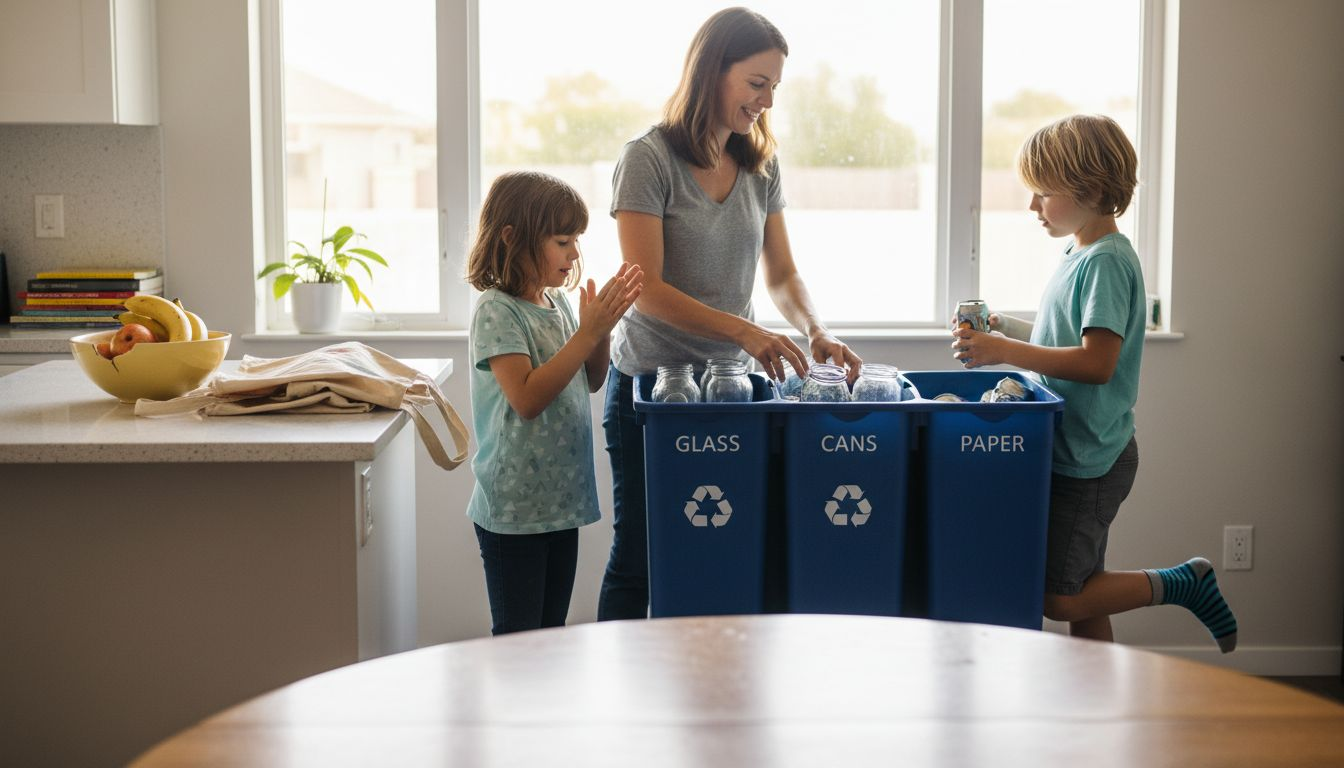
What makes these habits stick is repetition and family involvement. Your kids aren’t going to remember a single lecture about sustainability, but they’ll remember the routine. They’ll remember that Thursday is composting day. They’ll remember that you keep reusable bags in the car. They’ll remember that everyone turns off lights when leaving a room. These become automatic behaviors, not chores. Research shows that sustainable behaviors like conserving energy and reducing waste become ingrained when families create systems and institutional support around them. In your home, that means setting up infrastructure that makes the green choice the easy choice. A compost bin on the counter. Recycling bins clearly labeled. Reusable lunch containers stacked visibly in the fridge.
The connection between green habits and home organization is direct. When you reduce unnecessary purchases, you have less clutter. When you compost food scraps, you have fewer trash bags overflowing. When you use reusable items, you’re not managing piles of single-use products. Your home naturally becomes calmer and more peaceful. Your kids spend less time surrounded by chaos and more time in a space that reflects intentional choices. These routines also teach children that they have power. They’re not helpless. They can make decisions that matter. That sense of agency, combined with the visual calm of an organized home, creates confidence that carries into other areas of their lives.
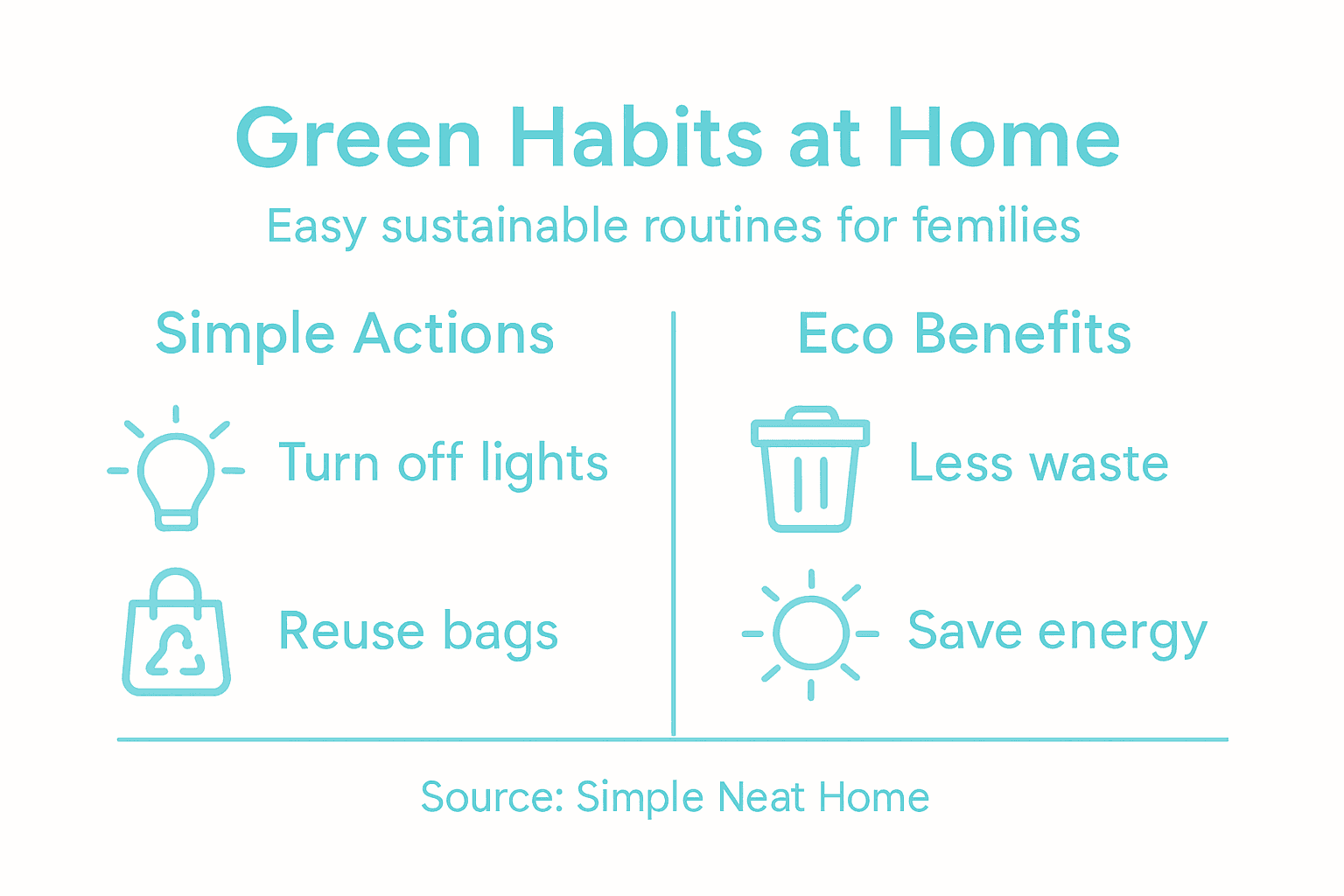
Pro tip: Create a “green habits checklist” on your refrigerator with simple daily tasks like “turn off lights,” “use reusable water bottles,” and “compost scraps,” then let each family member check them off to build accountability and celebrate collective effort.
Teaching Through Decluttering and Organization
Here’s something most parenting books won’t tell you: decluttering is actually a powerful sustainability lesson. When your child sorts through their possessions, decides what they truly use, and donates the rest, they’re learning to be intentional about consumption. They’re understanding that buying less and choosing carefully matters. They’re developing the mindset that every item has value and a purpose. Decluttering and organizing personal spaces improves mental well-being by reducing stress and anxiety while helping children develop focus, discipline, and mindfulness. When you make this a family project rather than something you do to them, it becomes a teaching moment about what really matters.
The beauty of using effective decluttering strategies like sorting, categorizing, and minimizing possessions is that you’re teaching pragmatic life skills alongside environmental values. Your child learns to manage their time, reduce distractions, and take responsibility for what they own. When their bedroom is organized, they can focus on homework instead of staring at piles of stuff they never use. When their closet contains only clothes they actually wear, getting dressed becomes simpler. These organizational wins translate into emotional calm. Less visual chaos means less mental overwhelm. Your child starts to understand that sustainability isn’t just about helping the planet. It’s about creating a peaceful home for themselves.
The key is making decluttering collaborative, not punitive. You’re not forcing them to get rid of things. You’re asking questions. “Do you actually play with this toy?” “Does this shirt fit you anymore?” “Would you rather have space to build Lego creations or a closet stuffed with clothes you don’t wear?” When children make these decisions themselves, they own the outcome. They see the direct connection between letting go of excess and gaining calm, cleaner spaces. They realize that each item they don’t buy is less packaging in the landfill, less money spent, and less stuff to manage. This transforms their relationship with consumption from passive acceptance to active choice. That’s powerful environmental education happening right in your home.
Pro tip: Involve your child in donating items to local shelters or second-hand shops so they see where their items go and understand that decluttering benefits others, not just themselves.
Avoiding Common Pitfalls in Eco-Education
When you’re excited about teaching your kids sustainability, it’s easy to slip into patterns that backfire. One of the biggest mistakes is preaching without practicing. You can’t tell your children to care about the environment while leaving lights on everywhere or buying things thoughtlessly. Kids notice the disconnect instantly. They call it out, sometimes directly, sometimes by simply not taking you seriously. Another common trap is making sustainability feel like punishment or deprivation. If your child believes that eco-friendly living means giving up fun, eating boring food, or wearing uncomfortable clothes, they’ll resent the whole concept. That’s the opposite of what you’re aiming for.
Research reveals that barriers to environmental education include insufficient curriculum integration and inadequate teacher training, which means you need to avoid isolated lessons that feel disconnected from real life. Don’t just teach recycling in a vacuum. Connect it to why you recycle. Don’t just talk about water conservation as an abstract concept. Show your kids the actual water bill and discuss how your family’s choices affect it. Another pitfall is overwhelming kids with apocalyptic climate information. Yes, the environmental crisis is real and urgent. But hitting children with doom and gloom creates anxiety, not motivation. They need to feel empowered, not helpless.
Lack of systemic support also undermines eco-education efforts. Effective sustainability education requires institutional commitment and comprehensive approaches rather than random activities. In your home, this means building systems that make sustainable choices the default, not the exception. It means consistency. Your kids need to see that you care about these values every single day, not just when you’re in “teaching mode.” Also avoid the trap of perfectionism. You don’t need to be a zero-waste household to teach sustainability. You just need to be trying. You need to be making better choices than you did last year. Your kids will learn far more from watching you make imperfect progress than from reading about someone else’s perfect life on social media.
Pro tip: Focus on one or two sustainability practices at a time and make them genuinely stick before adding more, so your children see real results and build confidence rather than feeling overwhelmed by endless new rules.
Make Sustainable Living Fun and Organized for Your Family
Teaching kids sustainable living can feel overwhelming while balancing the chaos at home. This article highlights the challenge of fostering eco-conscious habits through creative activities and daily routines while keeping the family environment calm and clutter-free. Many parents struggle with clutter, managing waste, and creating lasting green habits that truly engage children without adding stress or frustration.
At Simple Neat Home you will discover practical tips for decluttering, organizing, and simplifying your living spaces so that sustainability feels natural and rewarding. Explore our Living Archives for ideas on how to incorporate sustainable swaps and green habits into your everyday routines. Our Family Meals Archives offers meal tips that reduce waste and bring your family together through eco-friendly food choices. Start reclaiming peace and order today and turn your home into a calm, sustainable sanctuary where your kids can learn and grow.
Ready to make lasting changes that inspire your children and simplify your life? Visit us now and begin your family’s sustainability journey with confidence.
Frequently Asked Questions
What are some easy ways to introduce sustainable living to my kids?
Teaching kids sustainable living can start with simple daily habits, such as using cloth bags instead of plastic, composting food scraps, and encouraging them to turn off lights when leaving a room. These practices help them understand the impact of their choices on the environment.
How can I make eco-conscious activities more engaging for my children?
Getting kids involved in hands-on experiences like community gardening, waste audits, or upcycling projects makes learning about sustainability fun and memorable. Letting them lead these activities boosts their interest and commitment to eco-friendly practices.
What are the benefits of decluttering as a family?
Decluttering teaches children the importance of intentional consumption and helps them recognize the value and purpose of their possessions. It also reduces stress and creates a more organized, peaceful home environment, making it easier to adopt sustainable habits.
How can I avoid overwhelming my children with information about sustainability?
To prevent overwhelming kids, focus on one or two sustainable practices at a time and incorporate them into daily routines. Make the learning process enjoyable, and emphasize small, positive changes rather than presenting the topic as a daunting task.
Recommended
- How to Declutter Your Kids Toys the Easy Way
- For Families: How to Create a Minimalist Kids’ Room That Sparks Joy (and Stays Tidy) | Simple Neat Home
- How to Maintain an Organised Home With a Family
- How to Organise Your Child’s Keepsakes | Simple Neat Home
- Go Green: Eco-Friendly Living Tips 🌿