Warm Minimalism: How to Create a Cozy and Inviting Minimalist Home
Nearly 60 percent of American families report feeling stressed by clutter at home. When toys, gadgets, and everyday items take over, it can disrupt comfort and connection for everyone. Making your home a cozy sanctuary starts with practical changes that create calm and make every family moment count. Discover straightforward strategies that help even busy households foster relaxation and togetherness without sacrificing style.
Table of Contents
- Step 1: Assess Your Current Living Space
- Step 2: Declutter Belongings For A Clean Foundation
- Step 3: Select Warm, Minimalist Color And Texture Palettes
- Step 4: Arrange Furniture For Comfort And Connection
- Step 5: Add Personal Touches To Enhance Coziness
- Step 6: Evaluate Your Home’s Inviting Atmosphere
Quick Summary
| Essential Takeaway | Detailed Explanation |
|---|---|
| 1. Analyze Your Living Space | Assess each room for function and clutter before implementing warm minimalism to identify what to keep or remove. |
| 2. Declutter Ruthlessly | Sort belongings into keep, donate, or discard categories to create a clean foundation that promotes simplicity and comfort. |
| 3. Choose Warm Color Palettes | Select a base palette of warm neutrals with a few complementary colors to create an inviting atmosphere without visual chaos. |
| 4. Optimize Furniture Arrangement | Arrange furniture to promote social interaction and clear pathways, using multipurpose pieces to maintain openness and balance. |
| 5. Add Intentional Personal Touches | Incorporate meaningful elements like artwork or textiles to enhance coziness while keeping the space minimalist and uncluttered. |
Step 1: Assess your current living space
Before diving into warm minimalism, you need a clear snapshot of your current home environment. Minimalist design requires evaluating your living space with a critical and honest eye, understanding how each area functions and where unnecessary items accumulate.
Start by walking through your home like a neutral observer. Grab a notebook and document each room’s current state. What items do you use weekly? Which spaces feel cluttered? Look for areas where objects have gathered without purpose. Pay special attention to surfaces like coffee tables, kitchen counters, and entryway consoles where random items tend to pile up. Take photos if it helps you see the space more objectively.
While assessing, consider both visual clutter and functional inefficiency. A truly minimalist space isnt just about removing items its about creating intentional environments that support your lifestyle. An energy efficient home design considers how spaces actually work for you, not just how they look.
Here’s a quick reference guide to common sources of clutter and suggested minimalist solutions:
| Area Prone to Clutter | Common Items Found | Minimalist Solution |
|---|---|---|
| Entryway console | Keys, mail, bags | Add a tray and wall hooks |
| Kitchen counters | Appliances, papers | Store items in cabinets |
| Coffee table | Magazines, remotes | Use baskets or hidden storage |
| Bedroom surfaces | Books, chargers | Limit to essentials and add a drawer |
| Bathroom counter | Toiletries, bottles | Use drawer organizers |
Pro Tip: Use a digital camera or smartphone to capture your current space from multiple angles for a more detached perspective.
Step 2: Declutter belongings for a clean foundation
Creating a warm minimalist home starts with ruthlessly decluttering your belongings. Systematically reducing unnecessary items helps you build a clean foundation that supports both simplicity and comfort.
Begin by emptying each room completely and sorting items into three categories: keep, donate, and discard. Focus on items you have used in the past year and those that genuinely spark joy or serve a specific purpose. Be honest about what you actually need. Ask yourself critical questions about each item such as when you last used it, whether it adds value to your life, and if it aligns with your minimalist goals. Kitchen gadgets, clothing, books, and decorative items are often prime candidates for decluttering.
Conscious consumption supports minimalist living by helping you avoid future accumulation. After your initial purge, implement a one in one out rule to maintain your streamlined space. This means for every new item you bring home, another must be removed to keep your belongings balanced and intentional.
Pro Tip: Create a 30 day waiting period for any new purchases to ensure they truly align with your minimalist lifestyle.
Step 3: Select warm, minimalist color and texture palettes
Minimalist design relies on neutral color palettes that create a calm and inviting atmosphere while maintaining visual simplicity. Think of your color choices as the foundation for a space that feels both clean and incredibly welcoming.
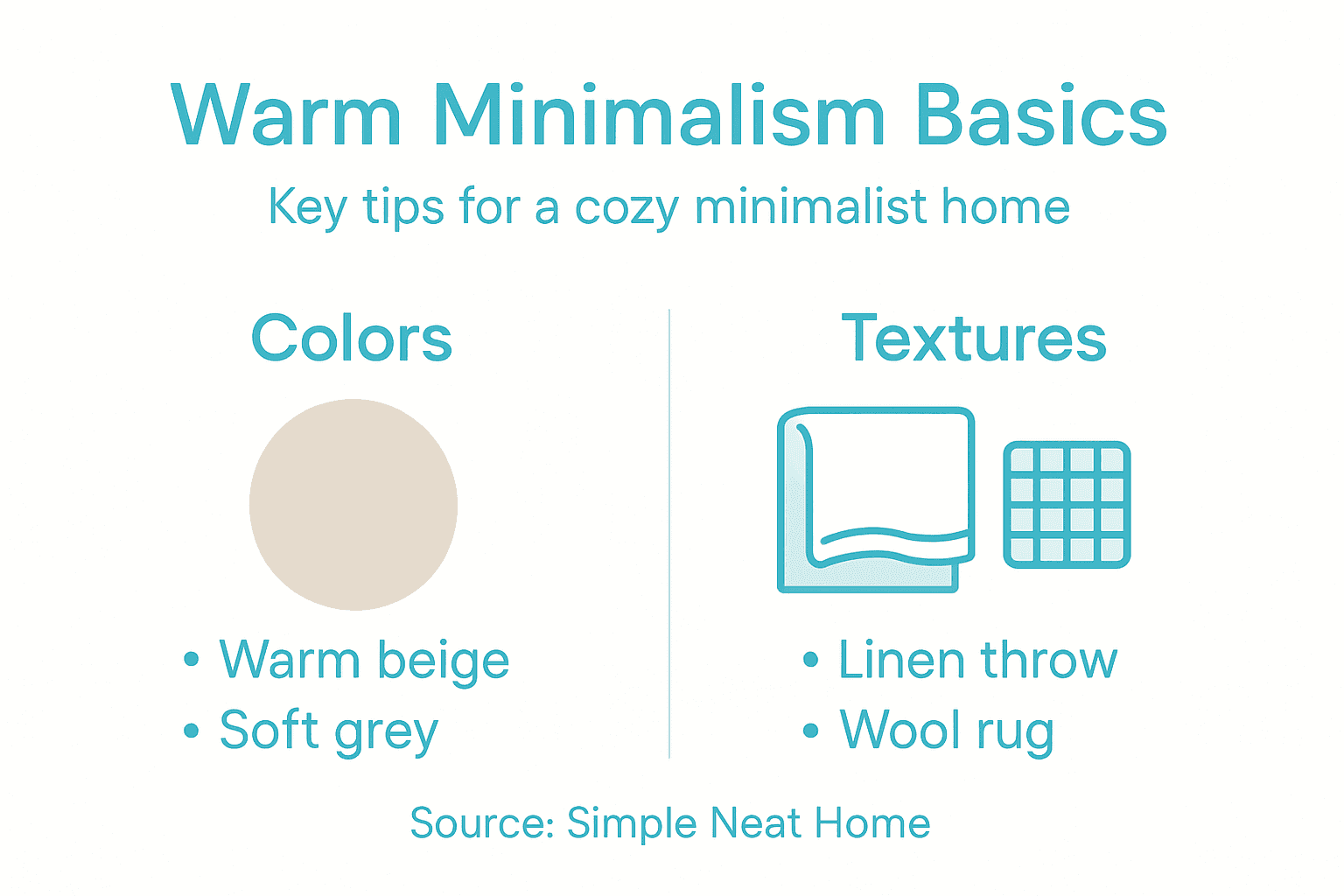
Start by selecting a base palette of warm neutrals whites, soft beiges, light greys, and muted earth tones. These colors provide a serene backdrop that allows natural light to flow through your space. Incorporate texture through natural materials like wool throws, linen curtains, wooden furniture, and soft cotton rugs. The key is creating depth and warmth without visual complexity. Aim for a maximum of three to four complementary colors that work harmoniously together.
Warm minimalist interiors balance simplicity with comfort by thoughtfully layering textures and tones. Introduce subtle variations in your chosen palette through different fabric weights, subtle pattern variations, and strategic placement of natural elements like woven baskets or ceramic pieces. Remember that negative space is just as important as the items you choose to include.
Pro Tip: Create a physical mood board with fabric swatches and color samples to visualize how your chosen palette will feel in your actual living space.
Step 4: Arrange furniture for comfort and connection
Minimalist furniture layouts prioritize social interaction by creating intentional spaces that feel both open and inviting. The goal is to design a room that looks effortlessly clean while encouraging meaningful connections between people.
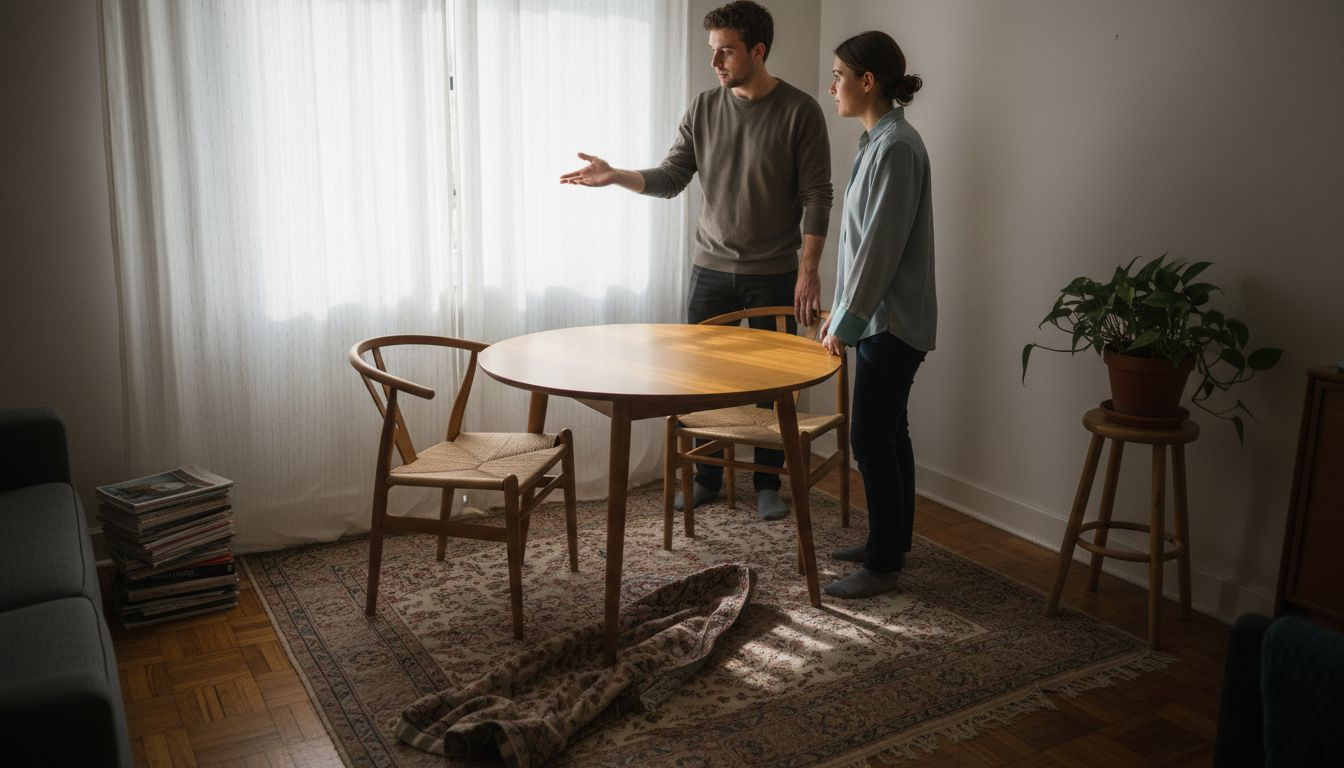
Begin by creating clear pathways and defining conversation zones. Pull furniture away from walls and group seating to create intimate clusters that invite interaction. A central coffee table can anchor the space, while chairs and sofas should be positioned to face each other at comfortable conversational distances. Avoid overcrowding by selecting multipurpose furniture pieces that serve multiple functions and maintain visual lightness. Think streamlined sectionals, slim armchairs, and minimal side tables that provide function without visual clutter.
Small minimalist living rooms require strategic furniture placement that maximizes both comfort and spatial flow. Consider the natural movement patterns in your room and ensure each piece contributes to an overall sense of calm and openness. Use negative space purposefully to create breathing room between furniture pieces, allowing each item to stand out while maintaining a cohesive and tranquil environment.
Pro Tip: Use painter’s tape on the floor to map out furniture placement before moving heavy pieces to visualize the layout and ensure optimal flow.
Step 5: Add personal touches to enhance coziness
Minimalist interiors require intentional personal details that transform stark spaces into warm sanctuaries. Your goal is to introduce meaningful elements that reflect your personality without overwhelming the clean aesthetic.
Choose personal touches with purpose and restraint. Select artwork that speaks to you emotionally rather than filling walls with random decorations. A single large photograph, a handwoven textile from your travels, or a carefully curated bookshelf can add depth and character. Incorporate soft textures through natural materials like a chunky wool throw, linen pillows, or a handmade ceramic vase. These elements should feel carefully considered not randomly scattered.
Focus on quality over quantity when adding personal elements. Each item should tell a story or serve a functional purpose. A vintage family photograph in a simple frame, a handcrafted wooden bowl, or a collection of stones from meaningful places can create visual interest while maintaining the minimalist principle of intentionality. Remember that negative space is just as important as the objects you choose to display.
Below is a summary of ways to add personal touches while maintaining minimalist principles:
| Personal Element Type | Ideal Application | Minimalist Consideration |
|---|---|---|
| Artwork | Feature one large piece | Keep walls mostly clear |
| Textiles | Select wool throws, linen pillows | Opt for subtle patterns |
| Souvenirs | Display handmade ceramics | Limit to meaningful items |
| Books | Curate a small collection | Use simple shelving |
| Photographs | Use single frame displays | Choose neutral frames |
Pro Tip: Rotate your personal items seasonally to keep your space feeling fresh while preventing visual clutter.
Step 6: Evaluate your home’s inviting atmosphere
Home energy assessments reveal comfort levels that transform minimalist spaces from cold to welcoming. Understanding how your home feels requires a thoughtful and intentional approach that goes beyond visual aesthetics.
Start by conducting a sensory walkthrough of your living space. Notice how light moves through rooms at different times of day. Check for drafts near windows and doors that might create uncomfortable temperature variations. Evaluate your lighting options examining whether they create warm pools of illumination or harsh overhead glare. Pay attention to acoustic qualities listen for echoes or sound absorption which can significantly impact how inviting a space feels.
Smart home technologies enhance space comfort by creating dynamic environments that respond to human needs. Consider how your current setup supports or interrupts natural movement and interaction. Are pathways clear? Do furniture arrangements encourage conversation? Do textural elements invite touch and provide visual softness? A truly inviting minimalist home balances clean lines with sensory warmth.
Pro Tip: Take photographs of your space from different angles to help you view your home more objectively and identify areas needing improvement.
Transform Your Home Into a Cozy Minimalist Sanctuary
Struggling to create a warm minimalist home that feels inviting yet uncluttered is a common challenge. This article highlights key steps like decluttering, defining calming color palettes, and thoughtfully arranging furniture to balance simplicity with comfort. If you want to overcome overwhelm and design a space that truly supports your lifestyle, focusing on intentional living and personalized touches is essential.
Explore expert techniques and heartfelt advice at Minimalism Archives | Simple Neat Home to help you declutter with purpose and cultivate a harmonious home environment. Discover practical tips for reorganizing your belongings and crafting the warm ambiance you desire in our Home You Love Archives | Simple Neat Home. Start reclaiming calm today and unlock the secrets to a cozy, welcoming minimalist space.
Begin your transformation now and make your home a haven of peace and purposeful simplicity.
Frequently Asked Questions
What is warm minimalism?
Warm minimalism is a design approach that emphasizes simplicity while creating a cozy and inviting atmosphere in your home. Focus on using neutral color palettes and natural textures to foster comfort while maintaining a clutter-free environment.
How do I start assessing my current living space for warm minimalism?
Begin by walking through your home and observing each room critically. Take notes on areas that feel cluttered and identify objects that are rarely used; consider removing unnecessary items to create a more intentional space.
What should I do to declutter my belongings for a minimalist home?
Systematically sort your belongings into three categories: keep, donate, and discard. Aim to remove items that have not been used in the past year or those that do not add value to your life, which should help in establishing a clean, minimalist foundation.
How can I choose a color palette that supports warm minimalism?
Select a base palette of warm neutrals like soft beiges, light greys, and muted earth tones to create a serene backdrop. Limit your colors to three or four complementary shades and incorporate depth through textures, such as natural materials like wool and linen.
What furniture arrangement works best for a cozy minimalist space?
Arrange furniture to create clear pathways and defined conversation zones, avoiding overcrowding. Aim for intimate groupings, such as positioning sofas and chairs to face each other, which encourages social interaction and maintains an open and inviting space.
How do I add personal touches without cluttering my minimalist home?
Choose meaningful personal elements that reflect your personality, such as a large piece of artwork or a curated bookshelf. Ensure each item tells a story or serves a purpose, keeping surfaces mostly clear to uphold your minimalist aesthetic.
Recommended
- Minimal Home Decor: Creating Calm Spaces That Last | Simple Neat Home
- Minimalist Living: Transforming Chaos Into Calm at Home | Simple Neat Home
- Role of Minimalism at Home – Creating Calm Spaces | Simple Neat Home
- How to Make Your Home More Welcoming | Simple Neat Home