Create a Successful Joint Cleaning Routine
Household cleaning can quickly become a source of tension when one person feels they’re carrying the entire load. Resentment builds, chores pile up, and what should be a shared responsibility turns into a daily battle. A joint cleaning routine offers a practical solution by distributing tasks fairly, building consistent habits, and transforming home care from a burden into a collaborative effort. This guide will show you exactly how to create, implement, and maintain a cleaning system that works for your household, reducing stress while keeping your home organized and welcoming.
Table of Contents
- Why A Joint Cleaning Routine Matters For Families And Couples
- How To Create An Effective Joint Cleaning Routine That Works
- Tools, Tips, And Strategies To Streamline Your Joint Cleaning Routine
- Maintaining Your Joint Cleaning Routine For A Lasting Tidy And Organized Home
- Simplify Your Home Care With Expert Guides And Checklists
- Frequently Asked Questions
Key takeaways
| Point | Details |
|---|---|
| Joint routines reduce conflict | Sharing cleaning responsibilities fairly prevents resentment and builds household harmony |
| Clear task division works | Assigning specific chores to each person ensures nothing gets overlooked |
| Consistent scheduling builds habits | Regular timing transforms cleaning from a chore into an automatic routine |
| Communication drives success | Open discussions about workload and adjustments keep the system functioning smoothly |
Why a joint cleaning routine matters for families and couples
When one person shoulders most of the cleaning work, relationships suffer. The burden creates exhaustion, frustration, and arguments that could be avoided with a better system. Research shows joint cleaning routines help reduce household stress and prevent conflicts over chores, making them essential for healthy shared living.
Coordinated routines deliver tangible benefits beyond just a cleaner home. Tasks get completed faster when multiple people tackle them systematically. You spend less time deciding what needs doing because everyone knows their responsibilities. The mental load decreases dramatically when planning and execution become shared activities rather than one person’s invisible job.
Sharing household work strengthens relationships in surprising ways. Working together toward a common goal builds teamwork and mutual respect. You demonstrate care for your shared space and each other’s time. Children who participate learn responsibility and life skills they’ll carry into adulthood.
“A clean home isn’t just about appearances. It’s about creating a peaceful environment where everyone feels respected and valued.”
Several obstacles typically derail cleaning efforts in shared households:
- Conflicting schedules that make coordination difficult
- Unclear expectations about who does what
- Different cleanliness standards causing friction
- Lack of motivation when tasks feel overwhelming
- Procrastination that lets mess accumulate
These challenges aren’t insurmountable. They simply require intentional planning and honest communication. Establishing daily cleaning habits creates structure that addresses most common pitfalls. The key is building a system everyone understands and agrees to follow.
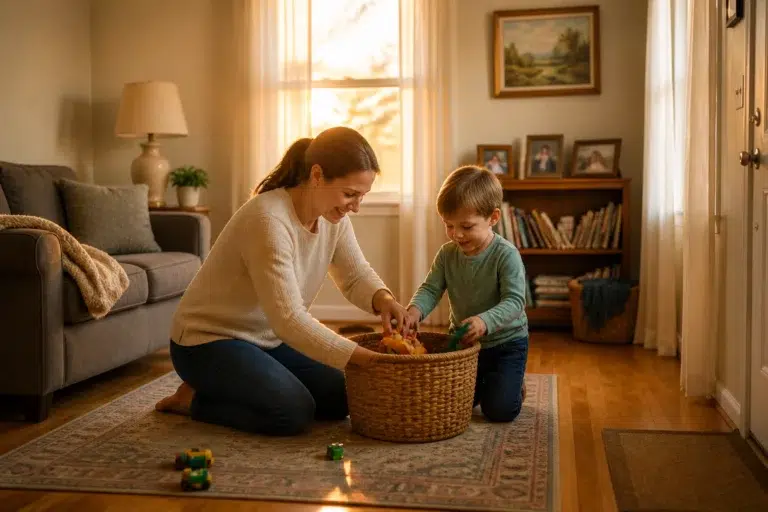
Families with young children face additional complexity. Kids create more mess while having limited cleaning capability. Parents juggle childcare, work, and household management simultaneously. A joint routine that includes age appropriate tasks for children teaches responsibility while lightening the adult load. Even toddlers can put toys in bins or help sort laundry.
The investment in creating a joint cleaning routine pays dividends immediately. You’ll spend less time cleaning overall through improved efficiency. Your home stays consistently tidy rather than cycling between chaos and frantic deep cleaning sessions. Most importantly, you’ll eliminate a major source of household tension, creating more time and energy for activities you actually enjoy together.
How to create an effective joint cleaning routine that works
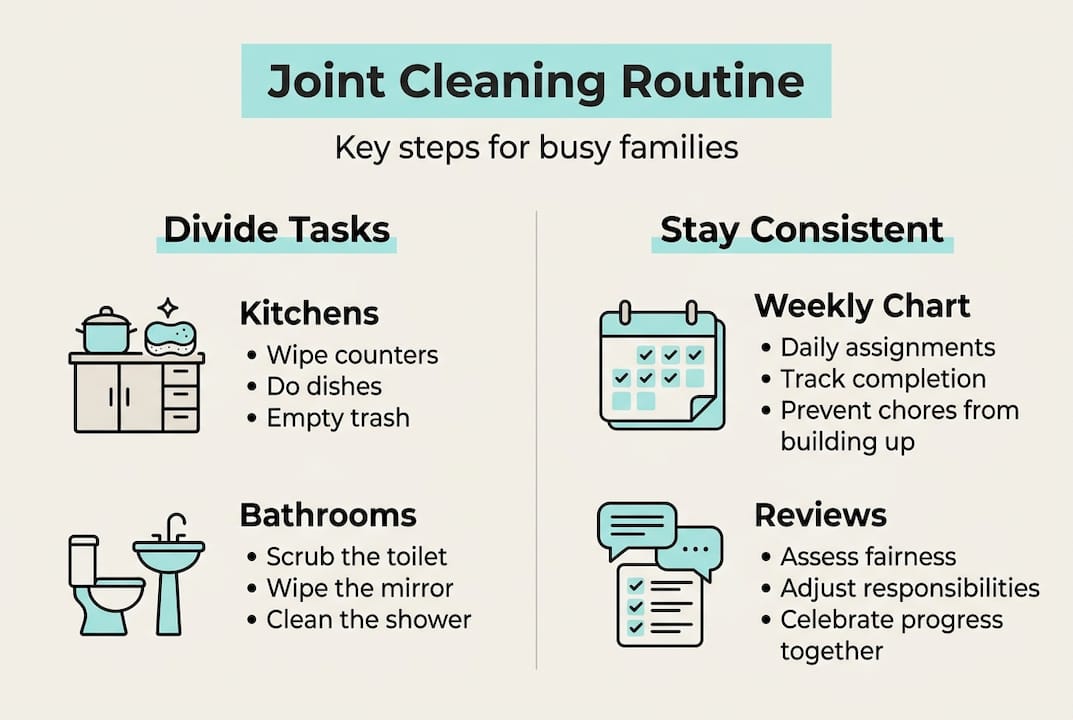
Building a successful routine starts with understanding exactly what needs doing. Walk through your home room by room, listing every cleaning task from daily quick wipes to monthly deep cleaning projects. Don’t skip the invisible jobs like changing air filters or cleaning behind appliances. This comprehensive inventory prevents tasks from falling through cracks.
Follow these steps to establish your system:
- List every cleaning task with realistic frequency estimates
- Assess each person’s schedule, strengths, and preferences honestly
- Divide tasks fairly based on time commitment and difficulty
- Assign specific days and times for each responsibility
- Create a visible schedule everyone can reference easily
- Set a trial period to test and adjust the system
Fair division doesn’t always mean equal. Someone working long hours might handle fewer daily tasks but take on weekend deep cleaning. A person who enjoys cooking might manage kitchen cleanup while their partner tackles bathrooms. The goal is balance that feels equitable to everyone involved, not rigid 50/50 splits that ignore individual circumstances.
Timing matters more than most people realize. Clear task division and consistent scheduling are essential for maintaining effective cleaning routines. Assign bathroom cleaning to Sunday mornings, and it becomes automatic. Leave it vague, and it never happens. Specific scheduling removes decision fatigue and builds genuine habits.
Pro Tip: Match tasks to natural energy levels. Morning people should handle breakfast cleanup and quick tidying. Night owls can tackle dishes after dinner and prep for the next day. Working with your natural rhythms makes consistency easier.
Communication creates the foundation for long term success. Hold a family meeting to discuss the proposed routine before implementing it. Listen to concerns and objections seriously. Adjust based on feedback. When everyone has input in creating the system, they’re far more likely to follow through.
Consider individual preferences during task assignment. Someone who finds vacuuming meditative might happily handle all floor care. Another person might prefer quick daily tasks over lengthy weekend projects. Leverage these differences rather than fighting them. Your kitchen cleaning guide shows how breaking large jobs into manageable pieces makes them less daunting.
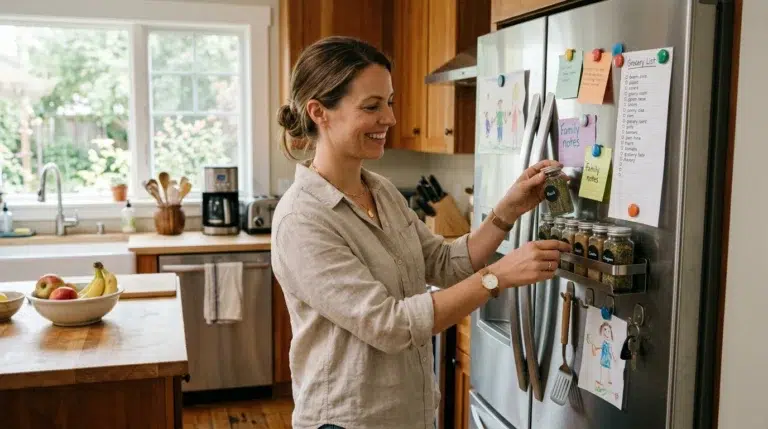
Document your routine clearly. Use a shared digital calendar, a whiteboard in a central location, or a printed schedule on the refrigerator. Visual reminders keep everyone accountable without nagging. Apps designed for chore management can send automatic reminders and track completion.

Build flexibility into your system from the start. Life happens. Someone gets sick, work demands increase temporarily, or unexpected events disrupt schedules. Agree in advance how you’ll handle these situations. Can tasks swap between people? Do some chores wait until next week? Having contingency plans prevents small disruptions from derailing your entire routine.
Tools, tips, and strategies to streamline your joint cleaning routine
The right tools transform cleaning from tedious labor into quick, efficient work. Invest in quality basics that multiple people can use comfortably. Microfiber cloths clean effectively without chemicals and last for years. A good vacuum with attachments handles floors, upholstery, and tight spaces equally well. Using proper tools and cleaning products significantly improves efficiency and outcomes.
Multi-purpose products simplify your cleaning arsenal:
- All-purpose cleaner for counters, appliances, and most surfaces
- Glass cleaner for windows, mirrors, and shiny fixtures
- Bathroom cleaner that tackles soap scum and hard water
- Floor cleaner appropriate for your specific flooring types
- Disinfectant for high touch surfaces and illness prevention
Store cleaning supplies in multiple locations for convenience. Keep bathroom cleaners under each bathroom sink. Maintain a kitchen caddy with frequently used items. Create a main supply closet for refills and specialized products. Easy access eliminates excuses about supplies being too far away.
Rotate responsibilities periodically to prevent boredom and resentment. Switching tasks every month or quarter keeps the routine fresh. Everyone learns all aspects of home care. No single person gets stuck with the worst jobs indefinitely. This rotation also builds appreciation for tasks you don’t usually handle.
| Strategy | Benefit | Implementation |
| — | — |
| Task batching | Complete similar chores together for efficiency | Clean all bathrooms in one session rather than spreading across days |
| Time blocking | Dedicated cleaning periods prevent interruptions | Set 30 minute blocks where everyone cleans simultaneously |
| Maintenance cleaning | Small daily efforts prevent big weekend projects | Wipe counters after use instead of weekly deep cleaning |
| Reward systems | Positive reinforcement maintains motivation | Plan enjoyable activities after completing cleaning goals |
Pro Tip: Play upbeat music during cleaning sessions to boost energy and make tasks more enjoyable. A good playlist can transform the mood completely.
Efficient product combinations save significant time. For tile and grout care, spray cleaner while handling other bathroom tasks, letting it work while you clean the mirror and counter. Wipe it away last for sparkling results with minimal scrubbing. This approach appears throughout our cleaning hacks for busy homes.
Address procrastination before it derails your routine. Break overwhelming tasks into tiny steps. Instead of “clean the kitchen,” think “load dishwasher, wipe counters, sweep floor.” Smaller chunks feel manageable and provide frequent completion satisfaction. Set timers for focused bursts. Commit to just 10 minutes, and you’ll often continue once momentum builds.
Motivation strategies keep everyone engaged:
- Celebrate completion with family activities or treats
- Track progress visually with charts or apps
- Compete friendly for fastest completion times
- Rotate who chooses weekend activities based on participation
- Acknowledge effort publicly and specifically
Uneven effort requires direct but kind conversation. Avoid accusatory language. Focus on the impact and solution rather than blame. “I’ve noticed the bathroom hasn’t been cleaned the last two weeks. Can we figure out what’s making that difficult?” opens dialog better than “You never do your chores.” Sometimes the issue is genuinely forgetting, not unwillingness.
Natural cleaning methods work beautifully for many tasks. Our natural bathroom cleaning tips show how vinegar, baking soda, and essential oils handle most jobs effectively. These options cost less, reduce chemical exposure, and work safely around children and pets. They’re also easier for everyone to use confidently.
Floor care deserves special attention since it’s often the most visible cleaning task. Different surfaces require different approaches. Following floor care best practices prevents damage while keeping floors looking great. Assign floor care based on who’s most detail oriented or who finds the task least annoying.
Maintaining your joint cleaning routine for a lasting tidy and organized home
Sustaining your routine requires ongoing attention and adjustment. What works perfectly in January might need tweaking by June as schedules shift and priorities change. Regular evaluation and adjustment keep cleaning routines effective over time, preventing slow drift back into chaos.
Tracking methods provide accountability without feeling oppressive:
- Simple paper checklists posted in relevant rooms
- Shared digital task apps with completion notifications
- Family calendar with color coded responsibilities
- Weekly review meetings to discuss what’s working
Hold brief routine reviews monthly or quarterly. These don’t need to be formal or lengthy. Fifteen minutes discussing what’s working, what’s frustrating, and what needs changing maintains system health. Ask specific questions. Is the timing still realistic? Are tasks distributed fairly? Does anything need more or less frequency?
Life changes demand routine adjustments. A new job with different hours requires schedule shifts. A baby arriving means temporarily redistributing tasks. Kids growing older means adding their responsibilities and removing parental tasks. Seasonal changes affect cleaning needs, with spring and fall requiring different attention than summer and winter.
| Life Change | Routine Adjustment | Timeline |
| — | — |
| New baby | Reduce non-essential tasks, increase partner support | First 3 months |
| Job schedule change | Shift task timing to match availability | Immediate |
| Child reaches new age | Add age appropriate responsibilities | Gradual over 2-4 weeks |
| Seasonal transition | Adjust deep cleaning focus areas | Each season change |
Celebrate milestones to reinforce positive habits. After maintaining your routine for a month, acknowledge the achievement. Plan something fun together. Recognize individual contributions specifically. “Thank you for consistently handling the kitchen cleanup” means more than generic praise. These celebrations don’t need to be elaborate. Sometimes acknowledgment alone provides powerful motivation.
Setbacks happen to everyone. Someone gets overwhelmed at work and drops their tasks for a week. Illness disrupts everything. Unexpected guests create extra mess. Address these quickly rather than letting resentment build. Temporary adjustments prevent permanent routine collapse. “I know you’re slammed this week. I’ll cover your tasks if you handle mine next week” demonstrates flexibility and teamwork.
Habit formation takes consistent time. Research suggests anywhere from 21 to 66 days for new behaviors to become automatic. Expect the first month to feel effortful and require conscious attention. Push through this initial resistance. Once habits solidify, your routine runs almost on autopilot, requiring minimal mental energy to maintain.
Children benefit enormously from participating in household routines. Age appropriate tasks teach responsibility, build competence, and contribute to family functioning. Toddlers can put toys away. Elementary students can set the table and fold laundry. Teenagers can handle complete room cleaning and meal preparation. Starting young creates lifelong skills and work ethic.
Your decluttering guide for calm home complements cleaning routines beautifully. Less stuff means less to clean, organize, and maintain. Regular decluttering sessions, scheduled like any other household task, prevent accumulation that makes cleaning harder. A quarterly purge of unused items keeps your home manageable.
Technology can support your routine without overcomplicating it. Smart home devices can remind you when filters need changing. Robotic vacuums handle daily floor maintenance automatically. Shared calendar apps keep everyone synchronized. Use technology as a tool, not a replacement for communication and commitment.
The ultimate measure of success isn’t perfection. Your home won’t always be spotless. Some weeks will be harder than others. Success means having a system that generally works, reduces conflict, and keeps your home reasonably clean and organized. It means everyone contributes fairly and feels respected. That’s the real goal.
Simplify your home care with expert guides and checklists
Creating an effective joint cleaning routine is just the beginning of a well organized, stress free home. Simple Neat Home offers comprehensive resources to support every aspect of your home care journey. Our detailed guides break down complex cleaning projects into manageable steps anyone can follow confidently.
Explore our living room decluttering checklist to tackle one of the most visible spaces in your home systematically. We provide room by room strategies that complement your cleaning routine perfectly. Our home organization tips help you maintain order long term, not just achieve temporary tidiness. Discover time saving techniques through our cleaning hacks for busy homes that fit seamlessly into your established routine. Let’s reclaim the calm from the chaos together.
Frequently asked questions
What are the easiest chores to share in a joint cleaning routine?
Start with straightforward tasks like vacuuming, loading the dishwasher, taking out trash, and wiping counters. These require minimal skill and deliver visible results quickly. Match tasks to individual strengths when possible. Someone detail oriented might prefer bathroom cleaning while another person handles faster jobs like sweeping. Beginning with easier shared chores builds momentum and confidence before tackling more complex cleaning projects together.
How can families stay motivated to keep up with their cleaning routine?
Use specific rewards tied to consistent completion, like choosing the weekend movie or planning a special outing. Set realistic expectations that account for busy periods rather than demanding perfection constantly. Celebrate small wins publicly to reinforce positive behavior. Open communication about challenges prevents frustration from building. Adjust workload and timing when life gets hectic rather than abandoning the routine completely. Visual progress tracking through charts or apps provides satisfying feedback that maintains engagement over time.
What if someone consistently avoids their cleaning tasks?
Address the issue directly through calm, private conversation focused on understanding obstacles rather than assigning blame. Ask what’s making the tasks difficult and listen genuinely to the response. Sometimes rotating tasks reduces monotony that causes avoidance. Other times the person needs help breaking large jobs into smaller steps. Revisit your routine agreement to ensure it still feels fair to everyone involved. Consider whether the avoiding person is genuinely overwhelmed with other responsibilities and needs temporary task reduction. Consistent avoidance usually signals a system problem, not a character flaw.
How often should we adjust our joint cleaning routine?
Review your routine monthly for the first three months, then quarterly once it’s established. Make immediate adjustments when major life changes occur like new jobs, babies, or schedule shifts. Small tweaks between reviews are fine when something clearly isn’t working. The goal is maintaining a functional system, not rigidly following an outdated plan. Seasonal changes often require minor adjustments to focus areas and frequency. Listen to feedback from all participants and adapt accordingly rather than forcing a routine that’s causing frustration.
Recommended
- 7 Essential Cleaning Hacks for Busy Homes | Simple Neat Home
- Daily Cleaning Habits for a Healthier, Neater Home Life | Simple Neat Home
- 7 Essential Steps for an Effective Daily Cleaning Routines List | Simple Neat Home
- Easy 30 Minutes a Day Cleaning Schedule | Simple Neat Home
- 7 Best Practices for Floor Care Every Homeowner Should Know
- Essential Guide to Cleaning Window Blinds for a Sparkling Finish